The Shocking Decision That Changed Everything
A Dramatic Final Second Knockdown
In a fight that came down to the final moments, Adrian Yanez delivered what appeared to be a decisive statement against Ricky Simon at UFC Seattle. Just seconds before the closing bell, Yanez executed a devastating knockdown that sent Simon crashing to the canvas. What followed was a flurry of consecutive strikes from Yanez, who appeared to have finally broken through Simon's defense and seized momentum at the most critical moment possible.
For Yanez, this final sequence represented either a potential stoppage victory or at minimum a clear indication that he had won the fight on the judges' scorecards. He had weathered the earlier rounds and delivered when it mattered most, forcing Simon into a purely defensive posture where the veteran fighter could only cover his head and absorb punishment while waiting for the horn to sound. The knockout appeared imminent, yet the referee allowed the action to continue until the final buzzer.
The Judges' Call That No One Expected
When the judges announced their verdict, the result left virtually everyone in attendance and watching at home stunned: majority draw. This controversial outcome meant that two judges scored the fight as even, while one judge apparently gave the fight to either competitor. Given the dramatic final seconds and Yanez's apparent dominance in at least one other round, the decision seemed inexplicable to many observers.
A majority draw represents one of combat sports' most unsatisfying conclusions, particularly when one fighter has clearly shifted momentum in their favor heading into the final bell. Yanez had expected either a victory or a chance to capitalize on a late round success that would have earned him the decision. Instead, he left the octagon with neither a win nor a loss recorded, but the financial and psychological consequences of a draw weighed heavily on him.
Financial Impact Beyond the Scorecards
The Payday Problem
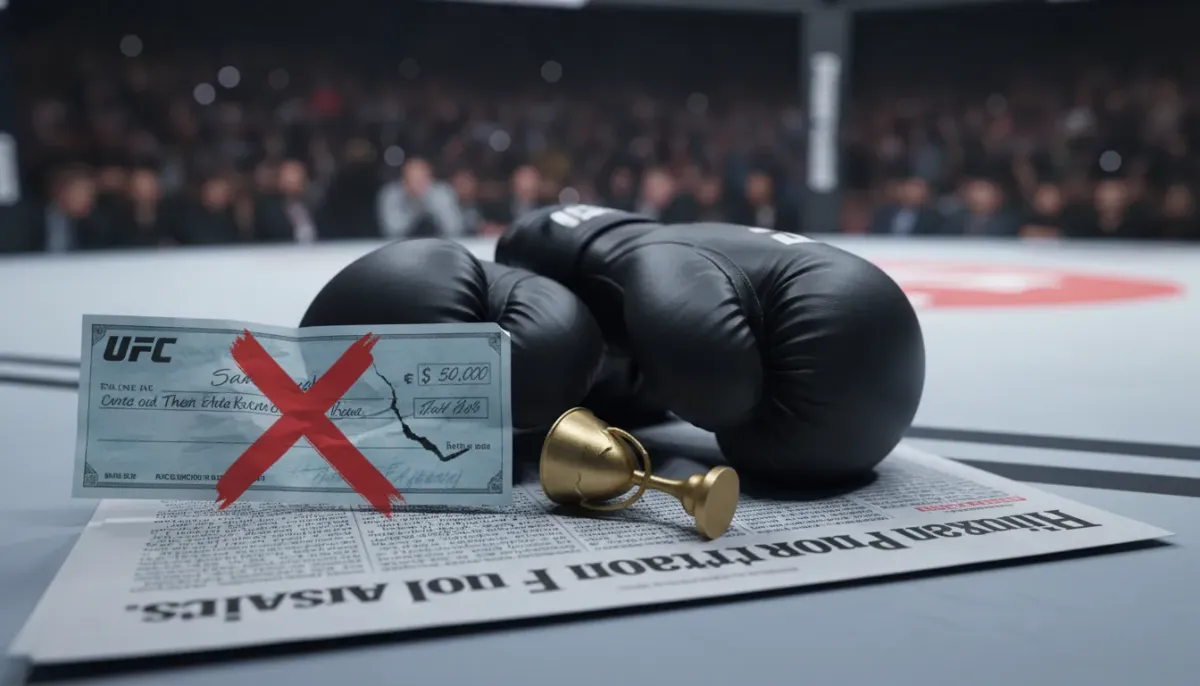
Beyond the bitter taste of the decision itself, the majority draw extracted a significant financial penalty on Yanez that extended far beyond the octagon. As a fighter who did not secure a victory, Yanez received only his show money—essentially payment for simply competing. His win bonus, the financial reward for securing victory, evaporated entirely.
The damage extended even further when considering bonuses. Yanez forfeited the UFC's newly implemented $25,000 finishing bonus that would have been awarded had he secured a stoppage victory. Additionally, he became ineligible for Performance of the Night consideration, which typically awards fighters $100,000 for exceptional performances. What seemed like a dominant performance that should have resulted in financial reward instead left Yanez with only a fraction of his potential earnings for the evening.
Timing Makes It Worse
The financial implications struck particularly hard given Yanez's circumstances. He was returning to active competition after spending more than fourteen months away from the sport, representing a lengthy layoff that made every opportunity to earn crucial for his career and financial stability. Fighters at this level depend on consistent competition and payment to maintain their training camps, medical care, and living expenses.
For someone returning from such an extended absence, a majority draw represented not just a missed opportunity to prove he remained elite, but a devastating loss in earning potential at a time when he needed financial momentum most. This context transformed the decision from a mere controversial scorecard into a significant career and financial setback.
Analyzing the Controversial Outcome
Hometown Bias Questions
In discussing the decision, Yanez pointed to several factors that may have influenced the judges' scorecards. Fighting in Simon's home state, Yanez acknowledged that the environment tilted heavily in favor of his opponent before they even stepped into the octagon. The crowd's energy, the local connection, and various other intangible factors created a challenging atmosphere for the visitor.
Yanez also observed that the referee's positioning and management seemed to favor Simon throughout the bout. He noted instances where the referee appeared positioned more closely to Simon's corner, and he questioned whether consistent application of rules benefited the hometown fighter. These observations reflect a reality that fighters often grapple with when competing outside their home region—the possibility that subjective judging and refereeing decisions may not fall in their favor.
Should the Referee Have Stopped It?
From a technical standpoint, Yanez raised legitimate questions about whether the referee should have halted the action in those final seconds. When Simon was dropped and subsequently covered his head while absorbing consecutive strikes, he offered minimal to no meaningful defense. He was not attempting to escape, counter, or meaningfully protect himself—merely weathering the storm until the bell sounded.
In most combat sports contexts, continued punishment without meaningful defense represents grounds for stoppage. Yanez believed the referee should have stepped in to protect Simon from unnecessary punishment, which would have resulted in a TKO victory. This wasn't a controversial call but rather a fundamental safety consideration that could have changed the entire outcome of the fight.
Adrian Yanez's Perspective on the Loss
Taking Responsibility While Questioning the System
Despite his frustration, Yanez demonstrated maturity by acknowledging his own tactical decisions. He recognized that immediately engaging Simon after the knockdown, rather than stepping back to allow the referee to potentially intervene, may have prevented a stoppage. He could have created distance and allowed the referee to assess Simon's ability to continue, potentially triggering a stoppage without his own involvement.
However, Yanez also recognized the fighter's instinct that drove his decision—once you have an opponent hurt and against the ropes, the natural impulse is to finish rather than wait for official intervention. Yanez respected Simon as a veteran competitor and acknowledged that his immediate clinching after the knockdown may have unintentionally prevented what could have been a stoppage. This self-reflection showed a mature fighter who could separate his frustration with the decision from the reality of his own tactical choices.
The Reality of Fighting at Home for Your Opponent
Yanez spoke candidly about his expectations heading into the fight, explaining that he anticipated potential hometown bias from the moment he entered the venue. He referenced his extensive experience with similar situations in his home state of Texas, where he had witnessed countless controversial decisions that favored local fighters. Going into UFC Seattle, he knew he was swimming upstream against crowd sentiment and potentially biased judging.
What frustrated Yanez most was that despite this knowledge and his obvious preparation, he still expected the judges to apply objective standards. He believed his dominant final seconds and superior overall performance would overcome any hometown bias. The decision to award a majority draw, however, suggested that his faith in impartial judging had been misplaced.
The Path Forward After Disappointment
Immediate Return to Action Desired
Rather than dwelling on the controversial decision, Yanez immediately shifted focus toward his next opportunity. He expressed eagerness to return to competition as soon as possible, viewing another fight as the only way to erase the bitter taste of the majority draw and prove his actual capabilities at the highest level.
Physically, Yanez felt ready for immediate action. Despite the year-plus layoff preceding the Simon fight and the intensity of their battle, he emerged relatively unscathed and expressed confidence in his conditioning and readiness. For Yanez, the solution to the disappointing outcome was simple: get back into the octagon quickly and secure a decisive victory that no judges could dispute.
Potential Next Opponents and Callouts
When discussing potential opponents, Yanez mentioned multiple names but emphasized that his priority was fighting sooner rather than later rather than carefully selecting matchups. He expressed frustration with Christian Quinonez, suggesting that Quinonez had been offered a fight opportunity before Yanez despite their previous failed booking situation. This lingering annoyance made Yanez interested in settling things inside the octagon.
Yanez also acknowledged interest in a potential matchup with established competitor Cody Garbrandt, viewing such a fight as intriguing from a matchmaking perspective. However, his overarching message remained consistent: he wanted back into action immediately, regardless of opponent selection. The majority draw had created enough frustration that simply competing again became more important than strategic opponent selection.
What This Says About MMA Judging
The UFC Seattle majority draw serves as another data point in the ongoing conversation about consistency and quality in MMA judging. Combat sports have long struggled with subjective decision-making, and controversial verdicts continue to plague major events. While hometown bias and referee favoritism are often discussed anecdotally, cases like Yanez versus Simon provide concrete examples that fuel these discussions.
As MMA continues to professionalize and expand globally, the sport's judging systems face increasing scrutiny. Fighters invest years of training, sacrifice their bodies, and dedicate themselves to their craft, only to sometimes see their performances evaluated in ways that seem inconsistent with what observers witnessed. Until judging becomes more standardized and transparent, fighters like Adrian Yanez will continue expressing frustration with decisions that feel subjectively determined rather than objectively assessed.