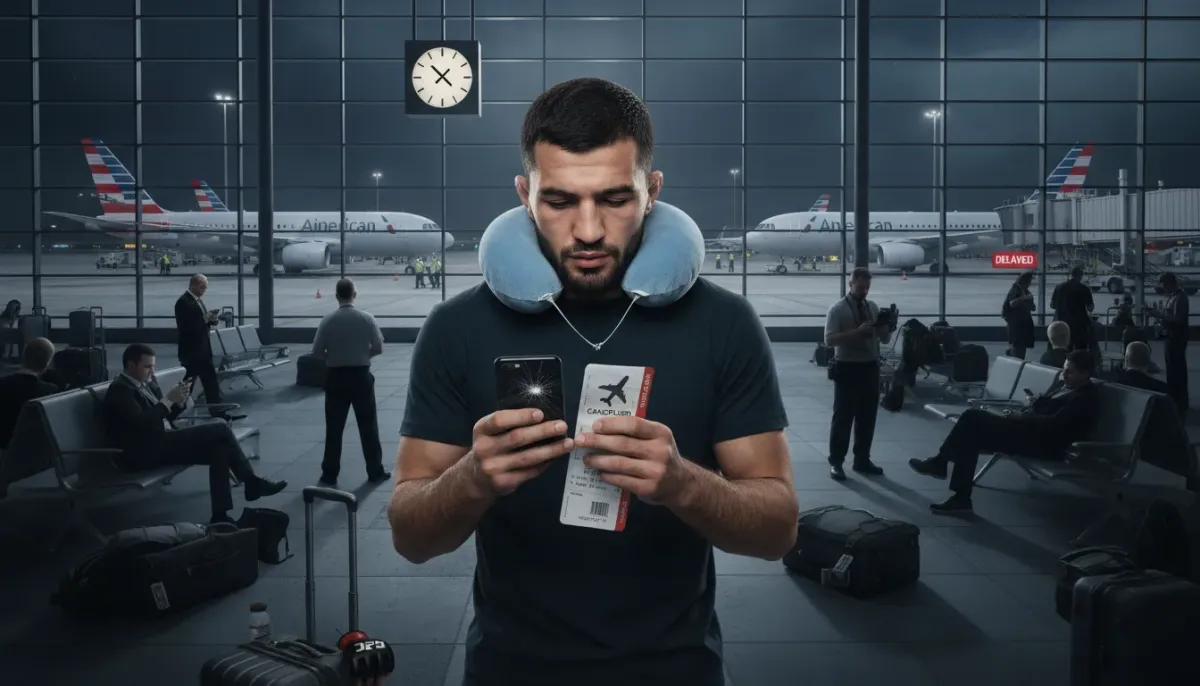
A routine commercial flight took an unexpected turn when UFC lightweight contender Arman Tsarukyan found himself at the center of a dispute with airline crew members. What began as a simple seating inquiry escalated into a confrontation that resulted in the fighter and several members of his team being removed from an American Airlines flight heading to Philadelphia. The incident occurred just hours before Tsarukyan was scheduled to compete at a major combat sports event, forcing a dramatic change of travel arrangements.
The Incident: What Happened on the Tarmac
The Initial Confrontation
Tsarukyan was traveling with an 11-person team when boarding commenced for the American Airlines flight. During the boarding process, the fighter noticed several empty seats scattered throughout the cabin. Recognizing that his assigned seat was positioned next to a teammate who, by Tsarukyan's own account, was quite large, he approached a flight attendant with a straightforward question about whether he could relocate to one of the available seats nearby.
According to Tsarukyan's recollection, the flight attendant's response was less than helpful. Rather than addressing his inquiry directly, the crew member asked him to confirm his assigned seat number. When Tsarukyan responded with "29A," the interaction appeared to leave a negative impression. The fighter described perceiving the attendant's demeanor as dismissive and rude, setting the stage for growing tension between the two parties.
How Things Escalated
Despite the uncomfortable exchange, Tsarukyan decided to proceed with an alternative seating arrangement. He selected seat 30A, which was unoccupied at the time, rather than remaining in his originally assigned location. This decision, while seemingly minor, became the focal point of subsequent events that unfolded during the aircraft's preparation for departure.
The situation further deteriorated when a phone call came through to one of Tsarukyan's teammates. Additionally, another member of his group opened their tray table during the pre-takeoff procedures. When a crew member instructed the passenger to close the table, the situation had already begun spiraling. Tsarukyan and his companions found themselves caught in an escalating situation that ultimately led to three members of his party being escorted off the aircraft. The remaining seven team members were permitted to continue their journey on the original flight.
Official Statement vs. Fighter's Account
American Airlines' Version
American Airlines issued an official statement addressing the removal, citing specific protocol violations as the reason for their crew's actions. According to the airline, Tsarukyan and his associates were not "staying seated while the aircraft is taxiing," which represents a fundamental safety requirement enforced across all commercial aviation. Airlines maintain strict protocols during these critical phases of flight operations to ensure passenger safety and allow crew members to complete their pre-departure responsibilities without interference.
The airline's position emphasized adherence to federal aviation safety standards. From their perspective, the removal was a necessary enforcement action to maintain cabin discipline and ensure compliance with established procedures that apply uniformly to all passengers, regardless of their professional status or circumstances.
Tsarukyan's Side of the Story
The fighter provided a detailed account of events during a pre-fight press conference appearance, presenting his perspective on what transpired. Tsarukyan emphasized that his initial inquiry about seating was reasonable and conducted respectfully. He characterized the flight attendant's response as unnecessarily curt, describing it as "rude" behavior that contradicted basic customer service expectations.
From Tsarukyan's viewpoint, the escalation appeared disproportionate to the situation at hand. He highlighted that his teammate complied immediately when instructed to close the tray table, yet crew members continued to pursue the matter rather than allowing the situation to de-escalate naturally. The fighter's account suggests a fundamental disconnect between passenger expectations regarding crew courtesy and the actual interaction he experienced.
The Resolution: Private Jet and Fight Night Preparation
Quick Pivot to Private Charter
Facing removal from the commercial flight, Tsarukyan's team demonstrated remarkable problem-solving capabilities by securing a private charter aircraft within a short timeframe. The alternative travel arrangement ensured that the fighter and his associates could still reach Philadelphia despite the disruption. Remarkably, the six remaining team members eventually joined them on the private jet, creating an ironic situation where everyone ultimately benefited from enhanced travel accommodations.
The swift resolution highlighted the resources available to professional athletes operating at elite levels of competition. While such contingency measures might be cost-prohibitive for typical travelers, they represent standard practice for high-profile competitors whose schedules cannot accommodate delays or complications.
Impact on the RAF 8 Event
Despite the travel disruption, Tsarukyan successfully arrived in Philadelphia in time for his scheduled obligations. He made an appearance at the pre-fight press conference, where he addressed the incident directly with media and sport observers. His presence demonstrated unwavering focus on his competitive responsibilities, refusing to allow the morning's complications to derail his preparation for the co-main event match against a respected opponent.
The incident, while noteworthy, ultimately proved to be a minor obstacle in Tsarukyan's professional trajectory. His ability to navigate the disruption and maintain his competitive edge underscored the resilience required of elite combat athletes operating under pressure.
Broader Context in Professional Combat Sports
Travel Challenges for MMA Athletes
Commercial aviation presents unique challenges for professional fighters and their teams. Unlike standard passengers, elite combat athletes often travel with larger entourages comprising coaching staff, medical personnel, and support specialists. Seating arrangements that work for typical travelers may prove uncomfortable for individuals accustomed to specific physical requirements for competition preparation.
Airlines enforce standardized protocols uniformly, yet these policies don't necessarily account for the specialized needs of professional athletes. The incident involving Tsarukyan reflects broader tensions between individual customer expectations and institutional safety procedures that prioritize collective passenger well-being over individual circumstances.
Staying Competitive Despite Distractions
What distinguishes elite fighters from recreational competitors is their capacity to maintain focus and composure despite unexpected obstacles. Tsarukyan's ability to rebound from the morning's disruption and still prepare adequately for competition exemplifies professional maturity in combat sports. Unexpected challenges, whether related to travel, opponent changes, or logistical complications, regularly test athletes' mental resilience and adaptability.
Team support systems prove invaluable during such disruptions. Having capable associates who can coordinate alternative arrangements allows fighters to concentrate on mental and physical preparation rather than stress management. The modern combat sports landscape demands not only athletic excellence but also operational sophistication from competitors and their organizations.