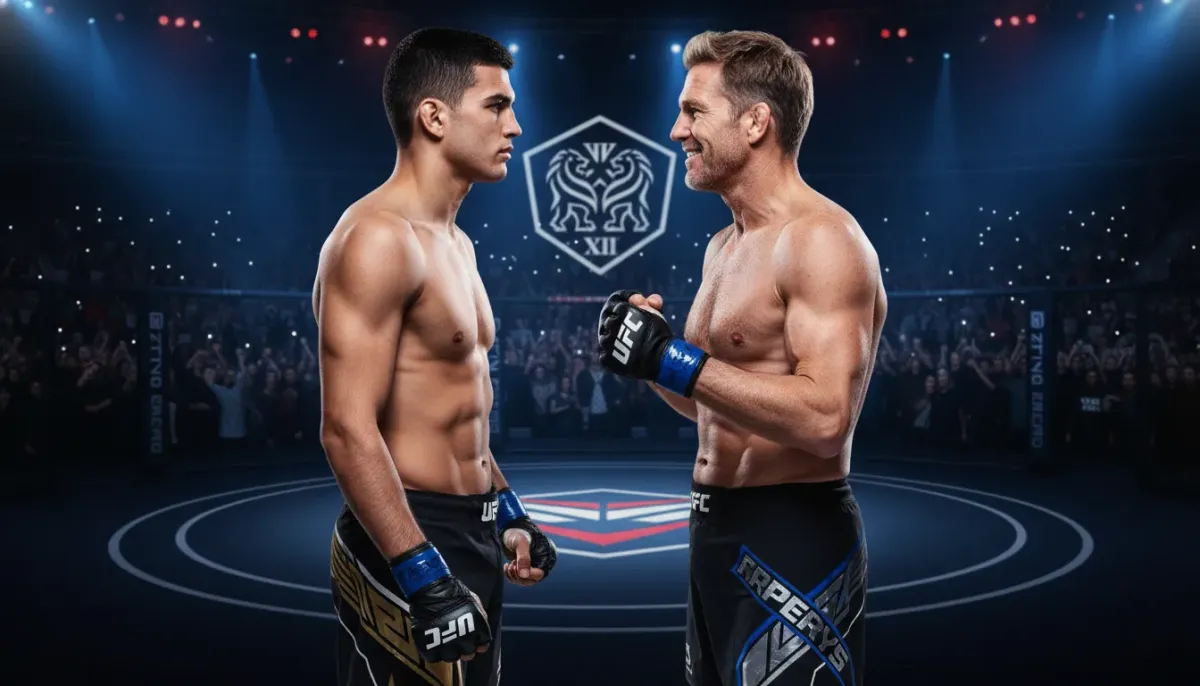
The Unlikely Matchup That Captured Everyone's Attention
When organizers announced that Arman Tsarukyan would face Urijah Faber at RAF 8, few could have predicted the compelling narrative that would unfold. The age disparity alone—17 years separating the combatants—creates an intriguing dynamic rarely seen in modern wrestling competitions. Tsarukyan, at 29 years old, represents the new generation of RAF's rising stars, while Faber, at 46, brings the credibility of a UFC Hall of Famer who refuses to fade quietly into retirement. The younger fighter has established himself as a serious contender in the lightweight division, boasting a 10-2 UFC record. Meanwhile, Faber's legendary status comes from his accomplishments as a former WEC champion and two-time UFC title challenger, now transitioning back to active competition after stepping away from MMA in 2019. This stark contrast in career stages and trajectories set the stage for something far more intriguing than a simple exhibition match.
More Than Just Trash Talk: The Pre-Fight Narrative
Physical Conditioning and Lifestyle Criticism
Faber approached the pre-fight promotional phase with a specific strategy: attacking Tsarukyan's carefully curated public image. The Hall of Famer didn't focus solely on wrestling credentials or technical superiority. Instead, he targeted what he perceived as Tsarukyan's manufactured brand centered around excess and wastefulness. Faber questioned how the younger fighter's team had orchestrated a persona built on extravagant meals, luxury lifestyle displays, and expensive travel arrangements. He specifically referenced the private jet incident, using it as evidence that Tsarukyan prioritized flashy optics over practical financial management. This critique extended beyond simple ribbing—Faber was essentially questioning the authenticity of Tsarukyan's entire public presentation, suggesting that the image had been deliberately constructed to appeal to a certain demographic rather than organically reflecting the fighter's true character.
Tsarukyan's Counterattack on Physique
Rather than defend his lifestyle choices, Tsarukyan pivoted the conversation entirely. The younger fighter shifted from addressing Faber's critiques about excess to attacking the physical conditioning and appearance of his opponent. Tsarukyan made pointed observations about how Faber's physique would appear in competition attire, suggesting that the veteran looked more like a father enjoying retirement than an active wrestler. He employed specific jabs about body composition and fight readiness, even joking about his own father's potential reaction to such an opponent. These comments crossed from standard pre-fight banter into personal territory, creating genuine tension between the two competitors. The strategy effectively reframed the narrative: instead of discussing lifestyle choices, the conversation became about fundamental athletic preparation and whether a 46-year-old could credibly step into the ring against a peak-condition 29-year-old.
The "Dad Bod" Defense
Faber's response to these appearance-based attacks revealed his psychological fortitude. Rather than becoming defensive, he embraced his physique with genuine confidence, reframing his body composition as evidence of a well-balanced life outside the sport. He proudly declared himself the "best dad on the planet" and called his build a "golden dad bod," refusing to apologize for prioritizing family and personal well-being over maintaining a competition-ready physique year-round. This response demonstrated that Faber wasn't intimidated by the physical comparisons. His counter-narrative suggested that athletic conditioning doesn't exclusively define a person's worth or competitive spirit—a perspective that challenged Tsarukyan's assumptions about readiness and preparation.
The Competitive Respect Beneath the Barbs
Faber's Genuine Admiration for the Challenge
Beneath the sarcasm and jibes existed something more substantive: legitimate respect between two competitive athletes. Faber openly acknowledged his admiration for Tsarukyan's dedication to wrestling as a sport, even while questioning certain aspects of the younger fighter's persona. He viewed this matchup not as a final payday or exhibition, but as a genuine test of character and skill. Faber emphasized that wrestling serves a character-building function, allowing competitors to step into uncertainty without guaranteed outcomes. He expressed interest in testing himself against Tsarukyan, motivated by the challenge itself rather than trophy acquisition. This nuanced perspective—simultaneously critiquing Tsarukyan while respecting his competitive fire—suggested that the pre-fight theatrics masked a deeper appreciation for what each fighter brought to the sport.
Tsarukyan's Position in Modern Combat Sports
Tsarukyan's status as one of RAF's most prominent figures cannot be understated. His wrestling credentials are substantial, and his 10-2 UFC record positions him among the lightweight division's elite. The fact that even a decorated Hall of Famer like Faber viewed this as a legitimate competitive test rather than a exhibition or favor speaks to Tsarukyan's credibility in the sport. This wasn't a washed-up fighter chasing nostalgia against a rising star—it was a generational clash between two athletes who genuinely believed they could win.
The Broader Context of Combat Sports Entertainment
Wrestling's Return as a Premium Spectacle
RAF's emphasis on pure wrestling matches represents a significant shift in combat sports entertainment. These competitions appeal to audiences seeking technical proficiency over knockout spectacle. Grappling-focused bouts have gained prominence at the highest competitive levels, attracting both hardcore wrestling enthusiasts and casual viewers interested in legitimate technical competition. Tsarukyan versus Faber exemplified this trend—a pure wrestling contest between two legitimate competitors, stripped of MMA's multiple disciplines. This format allowed each fighter to showcase their expertise in a singular domain, creating appeal for spectators who appreciate technical mastery.
The Psychology of Pre-Fight Banter
The exchange between these fighters illuminated the fine line between manufactured entertainment and genuine competitive fire. Faber's observations about Tsarukyan's brand management revealed how modern fighters must balance authenticity with marketability. The trash talk served dual purposes: genuine competitive motivation and promotional strategy. Whether the barbs reflected authentic animosity or calculated entertainment remains deliberately ambiguous—a feature of contemporary combat sports promotion rather than a weakness. Both fighters appeared to understand this duality, engaging in the psychological games while maintaining underlying respect for each other's abilities.
What's at Stake Beyond Winning
Legacy and Timing
For Faber, this matchup carried significant legacy implications. Stepping back into competition at 46 years old represented a profound statement about his competitive identity. A victory would cement his status as someone whose competitive excellence transcended typical career longevity. For Tsarukyan, facing a true legend provided an opportunity to elevate his status beyond RAF recognition into the broader combat sports conversation. The stakes extended far beyond a single victory—they involved how each fighter would be remembered by the sport's community and what their performance would communicate about their place in their respective eras.