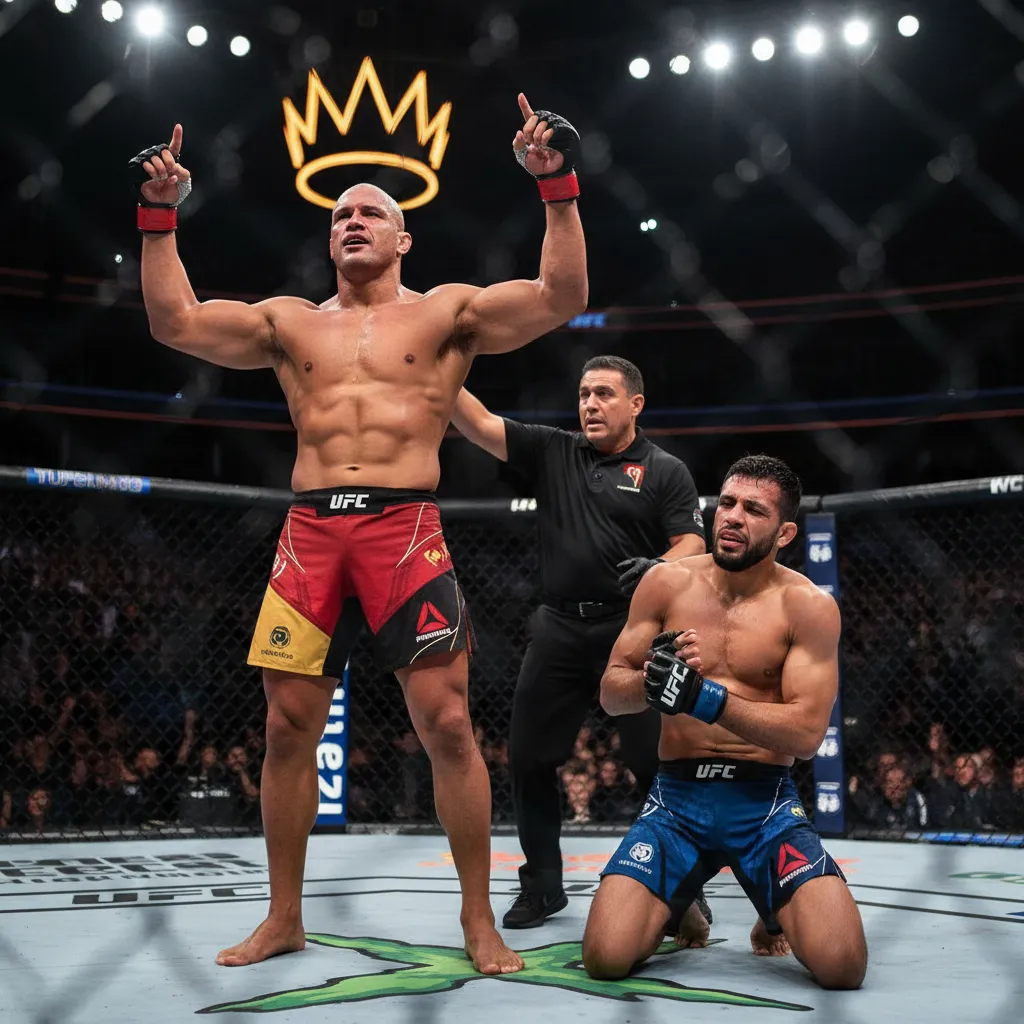
Mario Bautista delivered a commanding performance at UFC Vegas 113, securing a second-round submission victory over Vinicius Oliveira in the main event. The win marked a significant rebound following his loss to Umar Nurmagomedov, which had halted an impressive eight-fight winning streak. By headlining the card, Bautista proved the UFC's confidence in him was well-placed, executing a masterclass that ended with Oliveira tapping to a rear-naked choke.
The Statement Performance at UFC Vegas 113
Bautista's victory represented far more than a simple win—it showcased a fighter ready for elevated competition. After the disappointment of falling to Nurmagomedov, securing main event status carried significant weight. The opportunity to headline demonstrated the UFC's continued belief in his abilities, and Bautista seized the moment with a dominant display of technical proficiency.
The submission finish in the second round highlighted Bautista's refined grappling approach. Rather than engaging in Oliveira's strengths, he systematically worked toward ground control, where his advantages were clearest. The finish wasn't the result of desperate scrambling but rather the logical conclusion of intelligent positional transitions and sequencing.
For Bautista, the performance provided exactly what he needed following a notable setback—a convincing comeback statement that demonstrated growth and adaptability.
The Excuses Narrative - Bautista's Perspective
Pre-Fight Injuries and Personal Responsibility
Oliveira's disclosure about a broken arm sustained during camp became a focal point of post-fight discussion. However, Bautista contests the validity of using injury as an explanation for the performance gap. His argument centers on fighter agency and personal choice. When Oliveira discovered the injury, he faced a decision: withdraw from the fight or proceed despite the setback. By choosing to compete, Bautista argues, Oliveira accepted responsibility for the outcome.
From Bautista's perspective, Oliveira occupied a favorable position within the UFC structure. A six-fight winning streak provided leverage to request additional recovery time. The promotion would likely have accommodated a fighter citing legitimate injury concerns. By proceeding with the fight, Oliveira made a conscious decision that now removes legitimacy from subsequent excuses.
The Weight Cut Question
Oliveira's widely-publicized weight cut challenges added another dimension to the narrative. Cutting approximately 50 pounds to reach bantamweight limit, Oliveira labeled it "the worst weight cut of my career." He publicly discussed training difficulties stemming from the arm injury, creating a narrative suggesting multiple obstacles.
Bautista reframes this through a lens of professional discipline. Significant water weight cuts, in his view, reflect poor between-fight management rather than legitimate circumstances. Maintaining appropriate weight between camps should be standard practice for professionals. When fighters require extreme weight reductions, it indicates insufficient discipline in their lifestyle and preparation, not external misfortune.
Notably, Bautista observed that the sluggish performance during their bout correlated directly with these weight management issues. The size Oliveira brought to the octagon lacked the corresponding strength and explosiveness, suggesting the weight cut had extracted a real physical toll.
Fighting Through Adversity - Bautista's Track Record
A Different Approach to Injuries
Throughout his career, Bautista has competed while managing various physical ailments. However, his methodology differs markedly from fighters like Oliveira. He rarely discusses injuries publicly unless opponents attempt to use circumstances as post-fight justifications. His philosophy acknowledges that perfect health before competition remains exceptional rather than standard.
Bautista draws parallels to previous opponents who similarly cited external factors after defeats. This pattern—attributed losses to weight cuts, injuries, or other circumstances—reveals something about competitive character. In his assessment, true professionals own their performances rather than deflecting responsibility.
Mental Resilience and Accountability
Bautista identifies a behavioral pattern he's observed across multiple opponents: pre-fight trash talk followed by post-fight excuses. Fighters who talk aggressively leading into matchups, then attribute losses to external factors, reveal character limitations that extend beyond physical preparation. The willingness to make excuses suggests mental fragility that ultimately affects performance inside the octagon.
This perspective informs his confidence when facing such opponents. The combination of intimidating demeanor paired with inability to deliver on promises suggests fundamental gaps in competitive toughness.
Breaking Down the Technical Victory
Strategic Game Plan Execution
Bautista's approach at UFC Vegas 113 prioritized intelligent fight management over reckless aggression. He deliberately avoided engaging in striking exchanges where Oliveira possessed advantages. Instead, he systematically worked toward grappling situations where his superiority was clearest.
This calculated strategy demonstrated evolution since his loss to Nurmagomedov. Rather than hunting for quick finishes, Bautista constructed a methodical path to victory, implementing a game plan that minimized risk while maximizing offensive opportunities. The deliberate pacing built momentum while limiting Oliveira's ability to capitalize on explosive striking.
The Submission Sequence
Once the fight reached the ground, Bautista's technical excellence became apparent. His finishing sequence represented refined jiu-jitsu mechanics with seamless transitions flowing logically into one another. The rear-naked choke submission in the second round concluded a series of calculated positional improvements rather than a scramble-based finish.
Bautista's self-assessment of an "A+" performance reflected justified confidence in the execution quality. The clean technical finish, combined with dominant control throughout, substantiated his evaluation.
The Learning Process - What Changed After Nurmagomedov
The loss to Nurmagomedov, despite ending his winning streak, functioned as valuable instructional feedback. Bautista identified specific technical deficiencies, particularly in grappling sequencing and positional flow. Rather than shifting blame, he made concrete adjustments to address these gaps.
At UFC Vegas 113, these improvements manifested clearly. The superior grappling execution and submission technique demonstrated a fighter committed to genuine skill development rather than excuse-making. This approach—taking responsibility for shortcomings and implementing corrections—contrasts sharply with opponents who attribute losses to circumstances.
The combination of finishing a dangerous opponent, executing a superior game plan, and bouncing back from adversity establishes momentum heading forward. Bautista's trajectory from notable loss to dominant main event victory positions him favorably for continued advancement within the division.