A Statement Victory at a New Weight Class
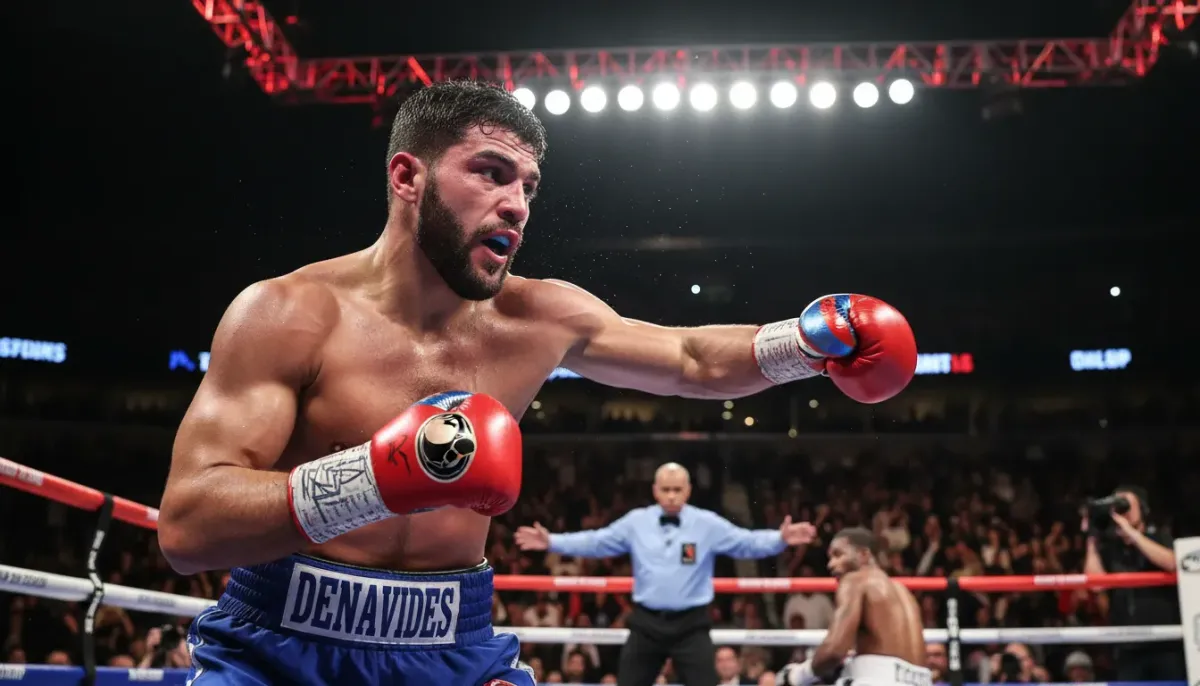
David Benavidez announced his arrival at cruiserweight in emphatic fashion, dismantling challenger Gilberto Ramirez across six rounds to claim the unified WBA and WBO titles. The significance of this performance extended far beyond a simple victory—it represented a statement that Benavidez's elite-level skills translate seamlessly across weight divisions. Despite stepping into the ring considerably lighter than his opponent, the undefeated fighter never appeared disadvantaged, instead imposing his technical superiority from the opening bell through the final moments of combat.
The bout served as the headlining attraction for Cinco de Mayo fight weekend, providing Benavidez with a prominent platform to showcase his credentials as boxing's most dominant 175-pound champion while simultaneously establishing himself as a legitimate force at 200 pounds. What unfolded was a masterclass in controlled aggression and technical boxing, raising important questions about where this fighter's trajectory leads within the professional ranks.
Technical Superiority Defines the Contest
Hand Speed That Overwhelms Across Divisions
Benavidez's most striking attribute throughout the evening proved to be his exceptional hand velocity paired with devastating knockout power. Observers documented multiple instances where the challenger unleashed rapid-fire combination sequences consisting of eight or more strikes, each punch arriving with precision timing and genuine force. This ability to generate both striking volume and impact simultaneously distinguishes truly elite-level competitors from their peers, and Benavidez demonstrated this quality consistently across all six rounds of competition.
The Fourth-Round Turning Point
The fight's critical moment arrived during the fourth round when Benavidez orchestrated a sustained offensive barrage that forced Ramirez to take a knee with seconds remaining in the stanza. What could have signaled an imminent stoppage instead became a testament to Ramirez's championship pedigree, as the defending champion demonstrated the resilience necessary to survive such a moment. Benavidez had clearly inflicted damage, yet the round concluded with both fighters continuing forward into the fifth.
Momentum Shifts in the Fifth Before the Final Assault
Round five offered Ramirez a temporary reprieve as the champion engaged in extended exchanges, momentarily stabilizing the bout through intelligent defensive adjustments. This period, however, represented merely a tactical regrouping rather than any fundamental shift in the fight's direction. When Benavidez resumed his assault in the sixth round, the outcome became inevitable. Strategic combinations targeting Ramirez's already-compromised right eye accumulated cumulative damage until the referee could no longer permit the action to continue. When Ramirez took a knee and declined to answer further, the stoppage victory was sealed.
The Canelo Factor Dominates Post-Fight Discourse
Channeling Momentum Toward the Biggest Showdown
Rather than simply celebrating his cruiserweight breakthrough, Benavidez used his post-fight platform to reignite the perpetual conversation surrounding a potential matchup against Canelo Alvarez. The Mexican standout framed the proposition not as a personal vendetta but rather as the fulfillment of fan desires—a contest between two elite champions that professional boxing should facilitate. His respectful yet assertive tone acknowledged Alvarez's accomplishments while firmly establishing his own credentials as a worthy opponent. Notably, Alvarez was present at the event, adding another layer of context to Benavidez's public advocacy.
Fan Enthusiasm Provides Supporting Evidence
When Benavidez posed the direct question to the assembled crowd—asking whether fans wanted to witness him facing Alvarez—the response proved unambiguous. The roaring approval demonstrated genuine public appetite for this long-elusive contest, suggesting that beyond promotional complications and business considerations, the boxing community fundamentally desires this matchup. Benavidez weaponized this enthusiasm effectively, leveraging crowd sentiment as evidence supporting his case for negotiation with Alvarez's team.
Strategic Flexibility as a Negotiating Tool
Benavidez closed his post-fight interview by emphasizing his willingness to accommodate various contractual specifications. By highlighting his champion status across multiple weight classes and explicitly offering to pursue the bout at light heavyweight if necessary, he removed technical obstacles that have historically complicated negotiations. This positioning as the flexible party willing to compromise on specific details strengthened his public narrative, casting himself as the fighter most committed to actualizing a contest that has remained frustratingly elusive despite years of mutual interest.
Implications for the Cruiserweight Division
Benavidez's dominant cruiserweight debut raises significant questions about divisional power dynamics moving forward. By defeating an established champion so comprehensively despite significant weight considerations, Benavidez has announced himself as a genuine challenger to the division's existing hierarchy. The cruiserweight elite will need to carefully monitor this emerging threat, as Benavidez has demonstrated the technical capability and physical tools to impose his style against competition at this weight class. Whether he pursues additional cruiserweight defenses or ultimately secures the Alvarez showdown remains uncertain, but his inaugural performance at 200 pounds suggests this division's competitive landscape may be undergoing significant transformation.