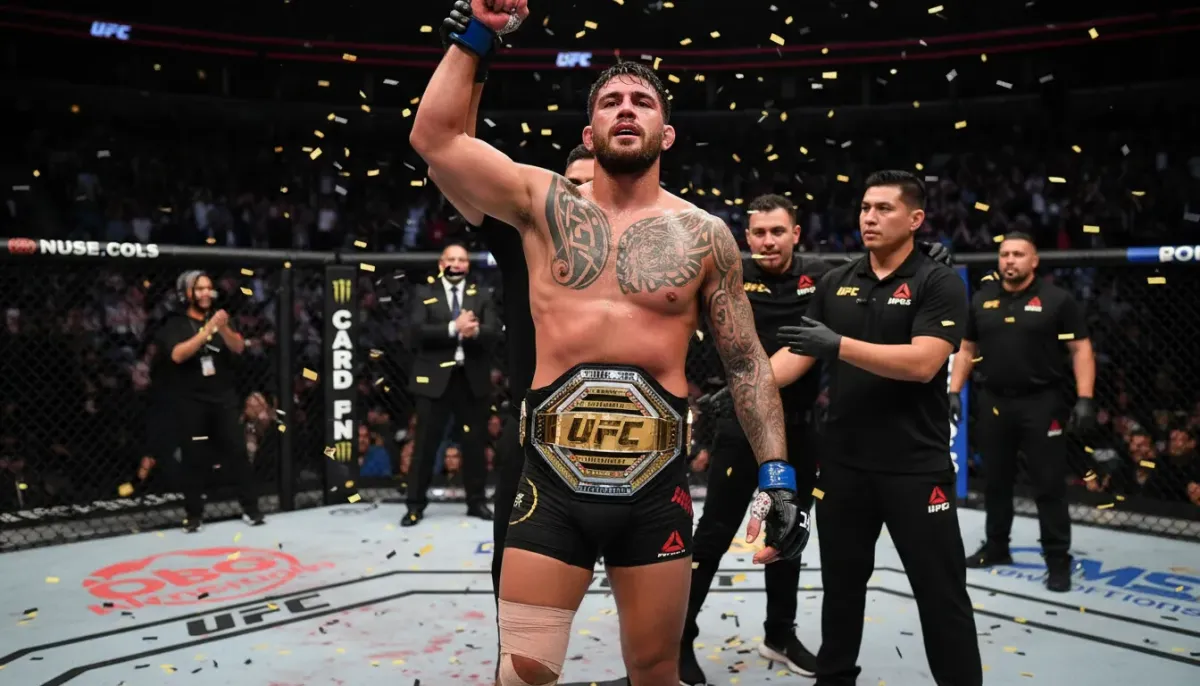
In one of the most extraordinary performances in mixed martial arts history, Carlos Ulberg captured the vacant UFC light heavyweight title despite suffering a catastrophic knee injury early in his bout against Jiri Prochazka at UFC 327. This remarkable victory will be remembered as a defining moment in combat sports, showcasing both the physical resilience and mental fortitude required at the highest levels of competition.
The Moment Everything Changed
A Catastrophic Misstep in Round One
The turning point came mere moments into the opening round when Ulberg made a seemingly routine adjustment in his footwork. As he shifted his weight, his right knee buckled and visibly popped, an injury that would have ended many fighters' performances immediately. The damage was evident from the moment it occurred—Ulberg's leg simply could not support his body weight properly. From that instant forward, every step required careful calculation, and his mobility was severely compromised. What should have been a routine movement became the catalyst for one of MMA's most unlikely championship moments.
Fighting on a Shattered Knee
Once the injury took hold, Ulberg's entire physical framework changed. His footwork, typically a crucial element of any fighter's arsenal, became nearly impossible to execute. The injured leg forced him into a passive stance where movement was limited and defensive positioning became increasingly difficult. Psychologically, this presented an enormous challenge—continuing to fight at championship level while operating on essentially one good leg required extraordinary mental strength. Prochazka, recognizing the vulnerability before him, began systematically targeting the compromised limb with leg kicks, each strike designed to further deteriorate Ulberg's already compromised mobility.
Prochazka's Strategic Approach and Fatal Hesitation
Sensing Blood in the Water
Prochazka demonstrated exceptional ring awareness by immediately identifying and exploiting Ulberg's injury. The former light heavyweight champion increased his forward pressure, knowing that an opponent moving on a damaged knee presents limited defensive options. From a strategic standpoint, everything suggested that the fight was effectively already decided. Conventional wisdom in combat sports dictates that such an advantage—a significantly injured opponent—should be pressed relentlessly until victory is secured. Prochazka possessed both the skill and opportunity to finish the fight decisively.
The Cost of Compassion
In a candid post-fight interview, Prochazka revealed the internal conflict that ultimately cost him the title. When he fully processed the severity of Ulberg's injury, he experienced a moment of mercy that caused him to ease his assault. Rather than continuing to attack the compromised leg and capitalize on clear vulnerability, Prochazka unconsciously reduced his pressure. This single instance of hesitation—born from empathy for an injured opponent—became the pivotal moment of the entire contest. Prochazka later acknowledged that he had the fight won and allowed his emotions to interfere with his championship instincts, a realization that clearly weighed heavily on him.
The Counter That Changed Everything
Setting the Perfect Trap
Despite his physical limitations, Ulberg maintained tactical awareness throughout his ordeal. Before the fight began, he had studied Prochazka's vulnerabilities, particularly noting the former champion's history of susceptibility to calf kicks. Understanding this weakness, Ulberg had initiated his offensive strategy with those precise attacks from the opening moments. Even as injury ravaged his body, Ulberg remained mentally engaged, waiting patiently for an opening. His positioning, though constrained by his damaged knee, was calculated to create opportunities for a counter-striking sequence. This combination of preparation, awareness, and willingness to absorb punishment while seeking one defining opportunity exemplified championship-level thinking under extreme duress.
One Lethal Shot
The moment came when Prochazka, still pressing forward despite his earlier hesitation, committed to his attack. Ulberg, positioned defensively, unleashed a precisely timed check left hook that landed flush. The counter strike caught Prochazka perfectly, dropping him immediately to the canvas. Without hesitation, Ulberg followed his opponent to the ground and unleashed several devastating follow-up strikes. The referee halted the contest at 3:45 of the first round, and Ulberg rose as the new UFC light heavyweight champion—a title earned through one perfect shot executed at exactly the right moment.
From Injured Underdog to Champion
An Improbable Victory
The significance of Ulberg's championship cannot be overstated. He joined an exclusive group of fighters who have captured major titles while operating under severe physical impairment. The magnitude of this achievement extends beyond mere victory statistics—it represents a moment of pure determination meeting opportunity. In the broader context of combat sports history, such performances are rarely documented and even more rarely executed successfully. Ulberg's ascension to champion status under these circumstances will endure as a testament to the unpredictable nature of mixed martial arts competition.
The Champion's Mindset
In his post-fight remarks, Ulberg articulated the mental framework that carried him through this extraordinary test. He emphasized that he never counted himself out despite the obvious severity of his injury. He demonstrated complete faith in his ability to find that single defining moment, and when the opportunity presented itself, he capitalized without hesitation. His confidence in identifying Prochazka's hesitancy and his willingness to execute under duress revealed the psychological makeup that separates champions from other competitors. Ulberg's assertion that