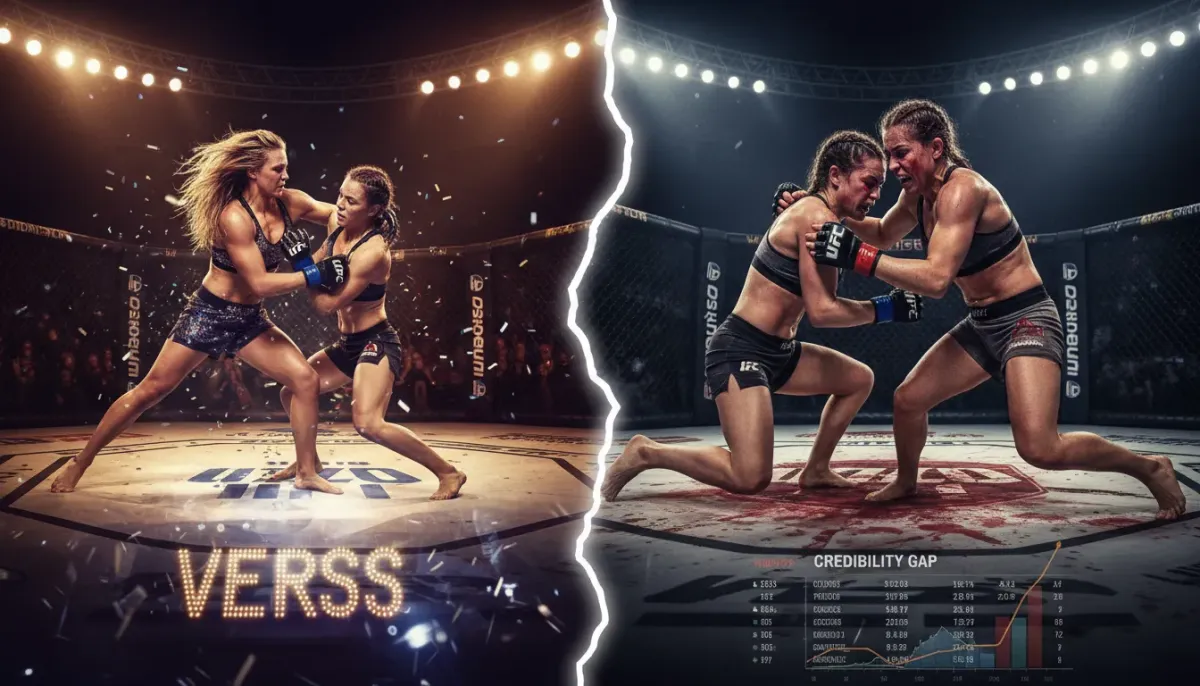
The Netflix Spectacle That's Generating Viewership—But At What Cost?
The May 16 showdown between Rousey and Carano, promoted through Jake Paul's Most Valuable Promotions and Netflix, is positioned to become one of 2026's most-watched combat sports events. Yet massive audience numbers and sporting quality represent two entirely different metrics. The ability to draw viewers doesn't guarantee fans will witness compelling athletic competition, and that distinction matters significantly when evaluating what this event actually represents.
The partnership between MVP and Netflix has generated substantial momentum, positioning this as a landmark event for a new promotional entity entering MMA. However, industry observers are raising legitimate questions about whether audience size will correlate with match quality and long-term credibility for the organization.
Numbers Don't Equal Narrative Quality
Record-breaking viewership figures sound impressive in press releases, but they mask a fundamental problem: neither fighter has competed at elite levels in years. Rousey hasn't fought professionally in a decade, while Carano's last competition occurred in 2009. When separated by 17 years of inactivity, physical deterioration isn't speculation—it's biological reality. The narrative of two legendary athletes facing off becomes significantly less compelling when confronted with the actual limitations aging bodies and extended layoffs impose.
The Physical Reality Behind Extended Absences
Combat sports demand peak physical condition. Skills require constant refinement, reflexes must remain sharp, and competitive muscle memory depends on regular training camps and actual match experience. Years away from competition inevitably create measurable performance gaps.
Rousey's decade-long absence and Carano's 17-year layoff represent unprecedented timelines for fighters returning to professional competition. Unlike athletes in some sports who can maintain competitive relevance during extended breaks, combat athletes face compounding disadvantages. Neural pathways for specific fighting techniques atrophy, cardiovascular conditioning requirements shift, and the psychological aspects of facing opposition create challenges that training camps alone cannot fully address.
The Financial Motivation Nobody's Disputing
Carano's willingness to return after nearly two decades away speaks volumes about her priorities. She departed MMA without any apparent intention of returning—until a substantial financial offer materialized. This isn't criticism; fighters pursuing maximum compensation is entirely logical. However, it does reframe the entire proposition as a commercial transaction rather than a genuine sporting competition driven by competitive passion or athletic ambition.
When athletes return primarily for financial incentives rather than competitive drive, audience expectations require recalibration accordingly.
Echoes of the Celebrity Fight Problem
The Rousey-Carano matchup resonates uncomfortably with Jake Paul's exhibition against Mike Tyson—another event that generated massive pre-event anticipation but ultimately disappointed viewers who expected legitimate athletic drama. The emotional arc follows a predictable pattern: curiosity drives initial interest, reality disappoints expectations, and viewers finish feeling they invested time in spectacle rather than sport.
This pattern reflects a broader problem with celebrity-driven combat events: manufactured hype cannot override fundamental athletic limitations. No amount of promotional intensity compensates when the actual competitors cannot deliver the physical drama audiences expect.
The Uncomfortable Feeling That Lingers
Observers describe a specific discomfort watching competitions they know won't deliver genuine sporting drama. The audience shifts from anticipation to resignation—acknowledging that quality competition is being subordinated to viewership metrics. This psychological response matters because it affects long-term brand perception and audience loyalty.
Paradoxically, these disappointing events may strengthen the UFC's position. When casual viewers become frustrated with manufactured spectacles, they naturally gravitate toward organizations that prioritize legitimate athletic competition. The UFC's roster of actively competing, properly trained fighters becomes the logical alternative for audiences seeking genuine sporting value.
Rousey's Ongoing War of Words with the UFC
Since transitioning to Most Valuable Promotions, Rousey has devoted substantial energy to criticizing her former UFC employers. Her commentary focuses primarily on:
- Dana White and promotional financial decisions
- The UFC's alleged reluctance to match MVP's financial offers
- Criticism of current UFC fighters, particularly women's bantamweight champion Kayla Harrison
Notably, Rousey has invested considerably more time discussing her grievances with the UFC than actually building anticipation for her Carano fight. This dynamic creates an ironic outcome: her negative commentary inadvertently keeps the UFC in the spotlight, effectively promoting the organization she's publicly criticizing.
Threats and Credibility Questions
Rousey's repeated declarations about challenging various UFC fighters, including ongoing rhetoric about Kayla Harrison, lack the weight they once carried. Her extended absence from competition, combined with her adversarial public positioning, makes these proclamations difficult for observers to take seriously. The gap between competitive accomplishment and competitive claims has widened considerably.
The Friendly Dynamic That Undermines Rivalry
During promotional buildup, Rousey and Carano have presented themselves with notable cordiality—appearing more like colleagues than competitors preparing for battle. This friendly dynamic might not significantly impact viewership numbers, but it underscores a fundamental truth: this event operates under different rules than traditional MMA competition.
Authentic sporting rivalries typically feature competitive tension, psychological warfare, and genuine animosity. The absence of this dynamic here reinforces perceptions that the event prioritizes entertainment theater over competitive authenticity. No amount of last-minute promotional intensity could fundamentally alter this underlying reality.
The Sustainability Question for Spectacle-Driven Events
The industry faces an eventual reckoning: how many celebrity-driven events and aging-athlete exhibitions can the market sustain before audiences demand something different? Novelty has expiration dates. Consumers eventually become savvier about distinguishing genuine sporting competition from entertainment theater.
When that market correction occurs—and historical patterns suggest it inevitably will—promotions consistently delivering legitimate athletic contests gain competitive advantages. The UFC's deep roster of actively competing athletes, combined with their established track record of legitimacy, positions the organization advantageously for this eventual shift in audience preferences and industry dynamics.