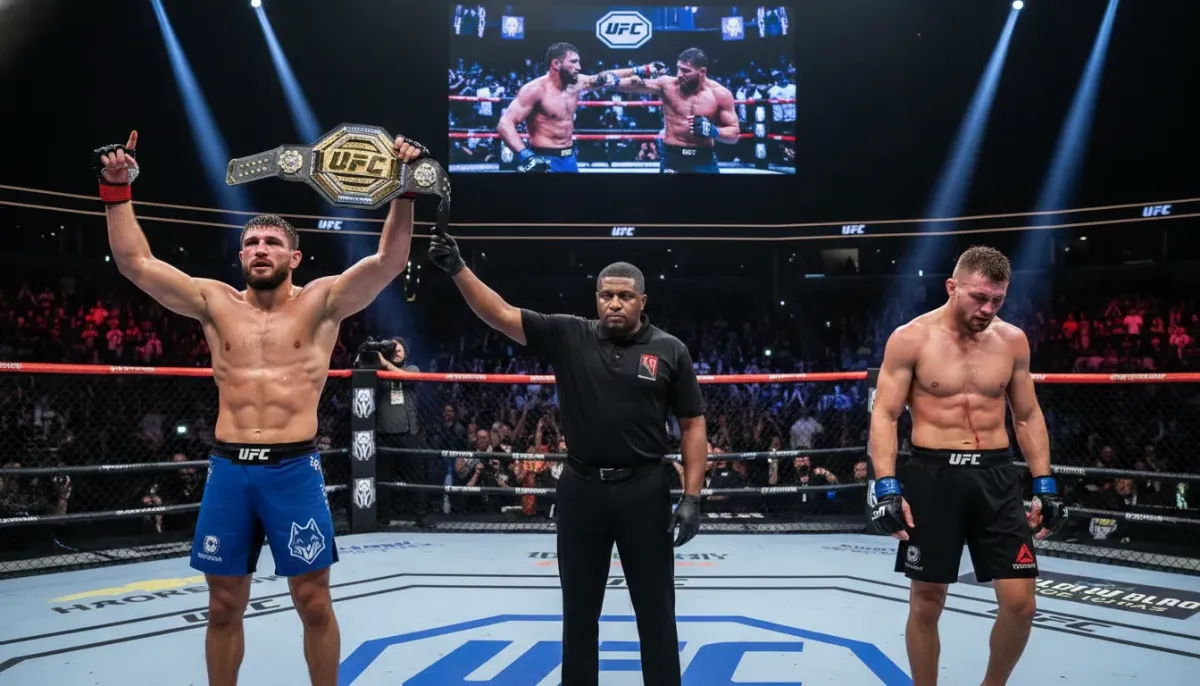
The main event of UFC 328 in Newark, New Jersey on May 9 brings together two of combat sports' most volatile personalities. Khamzat Chimaev, the undefeated middleweight champion, faces off against Sean Strickland, a former titleholder renowned for his blunt approach to building rivalries. The clash between these two fighters represents more than just a championship defense—it's a test of whether competitive intensity can remain within the controlled environment of the octagon despite months of verbal sparring.
A Championship Clash Loaded With Personal Tension
Two Fighters, Two Bold Personalities
Chimaev and Strickland present starkly different profiles, yet share a common trait: neither fighter shies away from controversy. Chimaev earned his middleweight title through dominance and intensity, building a reputation for exceptional athleticism and wrestling prowess. Strickland, conversely, has established himself as a provocateur who uses psychological warfare and outspoken commentary as integral components of his fighting persona. Their collision at UFC 328 pairs a methodical champion intent on defending his throne with a challenger determined to reclaim prominence through any means necessary.
The animosity between these competitors has developed organically through public appearances, interviews, and social media interactions. Both possess the confidence of elite fighters, yet both understand that maintaining professionalism inside the cage separates championship athletes from street fighters seeking revenge.
The Dana White Factor
Dana White and the UFC organization have closely monitored this volatile matchup, recognizing the potential for tension to boil over before the opening bell. The UFC president has maintained vigilance throughout the buildup, understanding that while combat sports thrive on compelling narratives and genuine rivalries, the promotion's interests require that competitors channel their aggression appropriately within regulatory frameworks. White's presence serves as a reminder that these athletes, regardless of their personal feelings, must respect the sanctioned nature of professional fighting.
Chimaev's Bold Statement: Sport vs Street Justice
The Fighter's Perspective on Controlled Combat
In discussing the upcoming bout, Chimaev articulated a philosophy that reveals the mentality of professional combat athletes. He emphasized that the octagon exists as a legitimate sporting arena with established rules, referees, and safety protocols. Outside such regulated environments, different standards apply. Chimaev's remarks demonstrated respect for the sanctioned nature of MMA while acknowledging that uncontrolled conflict operates under entirely different parameters.
His perspective reflects a deeper understanding common among elite fighters: the distinction between channeling aggression within sport and allowing it to manifest without boundaries. Chimaev's religiously-informed worldview emphasizes restraint and moral responsibility, particularly regarding the potential for serious harm when violence occurs absent regulation.
Understanding the "If He Dies, He Dies" Comment
Statements made in the heat of rivalry buildup often suffer from decontextualization. Chimaev's provocative comments should be interpreted through the lens of comparative environments: inside the cage, trained referees monitor fighter safety and can halt contests to prevent excessive damage; on the street, no such protections exist. His point emphasized the fundamental difference between professional fighting and unregulated violence, not a sincere threat toward his opponent.
The comment underscores a reality that fighters navigate: the psychological intensity required to compete at elite levels sometimes manifests through aggressive rhetoric. However, this verbal intensity rarely translates into actual violence beyond the ring. Professional competitors understand that reputation, legal consequences, and athletic credibility depend upon respecting established boundaries.
From Exciting Finishes to Grinding Defense
Chimaev's Rise to Dominance
Chimaev's path to championship status featured an exceptional string of victories characterized by quick finishes and dominant performances. His first four UFC opponents fell in decisive fashion, including a devastating 17-second knockout of Gerald Meerschart that remains one of the promotion's most memorable rapid-fire victories. Subsequent wins over Li Jingliang and Rhys McKee demonstrated consistency in ending fights early through superior conditioning and technical excellence.
This pattern of rapid, exciting victories established Chimaev as an elite prospect and fan favorite. Audiences anticipated that his championship ascent would continue featuring the spectacular finishes that characterized his rise.
The Du Plessis Blueprint and What It Means for Strickland
Chimaev's title-winning performance against Dricus du Plessis at UFC 319 marked a significant departure from his established pattern. The five-round decision victory proved conclusive but drew criticism from observers who found the approach overly cautious and strategically conservative. Rather than pursuing spectacular finishes, Chimaev prioritized methodical control and tactical superiority, accumulating advantages across rounds rather than seeking breakthrough moments.
This blueprint—prioritizing victory margin and tactical dominance over finish rates—may well characterize his approach against Strickland. Championship-level competition sometimes demands this type of calculated strategy, particularly when facing dangerous opponents capable of inflicting damage during aggressive exchanges.
When Burns Earned His Recognition
Prior to the Du Plessis encounter, Chimaev's only bout extending beyond the second round came against Gilbert Burns, a longtime welterweight contender with elite credentials. This three-round affair generated sufficient excitement and technical brilliance that both combatants earned Fight of the Night honors. The Burns encounter demonstrated Chimaev's capacity for thrilling performances when circumstances warrant, suggesting his more conservative Du Plessis performance represented strategic choice rather than stylistic limitation.
Strategy Without Preference: Chimaev's Mindset
Victory First, Method Second
When asked about his preferred approach against Strickland, Chimaev displayed remarkable pragmatism. The champion expressed indifference regarding the method of victory—whether achieved through knockout, submission, or decision. This mental framework prioritizes winning above all other considerations, reflecting a mature championship mentality that transcends ego-driven desires for spectacular finishes.
Such perspective proves advantageous during championship competition, where tactical flexibility and adaptive decision-making often determine outcomes. Fighters constrained by stylistic preferences or finish requirements frequently find themselves disadvantaged against opponents who exploit their patterns or avoid their strengths.
Trusting the Process, Letting Fate Decide
Chimaev's approach incorporates spiritual and philosophical elements that guide his competitive preparation. He emphasizes visualizing victory while remaining open to uncertainty, balancing confidence with humility regarding uncontrollable variables. This mindset aligns with religious perspectives that acknowledge preparation and effort while recognizing that ultimate outcomes transcend individual control.
Such philosophy enables fighters to maintain focus during training without becoming psychologically fragile if circumstances deviate from preferred scenarios. The approach supports mental resilience during competitions featuring unexpected developments or unfavorable conditions.
Flexibility and In-Ring Adjustments
Chimaev's repeated emphasis on adapting "according to the situation" reveals a fundamentally flexible tactical consciousness. Rather than executing predetermined gameplans rigidly, he monitors opponent responses and adjusts strategy in real time. This adaptive capacity distinguishes championship-caliber competitors from fighters dependent upon executing singular approaches.
Against an unpredictable opponent like Strickland, this flexibility provides considerable advantage. Strickland's unorthodox striking and tendency toward unexpected movements require opponents capable of rapid tactical recalibration rather than linear execution.
The Importance of Championship Composure
Separating Verbal Sparring From Athletic Performance
The transition from rivalry building to actual competition demands significant mental discipline from both fighters. Months of provocative statements and verbal exchanges must be compartmentalized and channeled into legitimate competitive intensity. Championship-level composure requires managing emotional responses while maintaining tactical clarity and technical execution.
Strickland's reputation for inflammatory commentary will test Chimaev's ability to focus on fighting rather than responding to psychological warfare. Conversely, Chimaev must avoid allowing his own intensity to compromise strategic decision-making.
What's at Stake for Both Fighters
Chimaev defends the middleweight title in his first championship defense, carrying momentum from his victory over du Plessis while bearing the burden of elevated expectations. A successful defense solidifies his status as the division's premier competitor and establishes him as a legitimate championship force for years to come.
For Strickland, the bout represents an opportunity to reclaim the championship status he previously held. A victory over Chimaev would substantially elevate his ranking and credentials, potentially repositioning him as the division's primary threat. Both fighters therefore approach UFC 328 with significant career implications hanging in the balance.