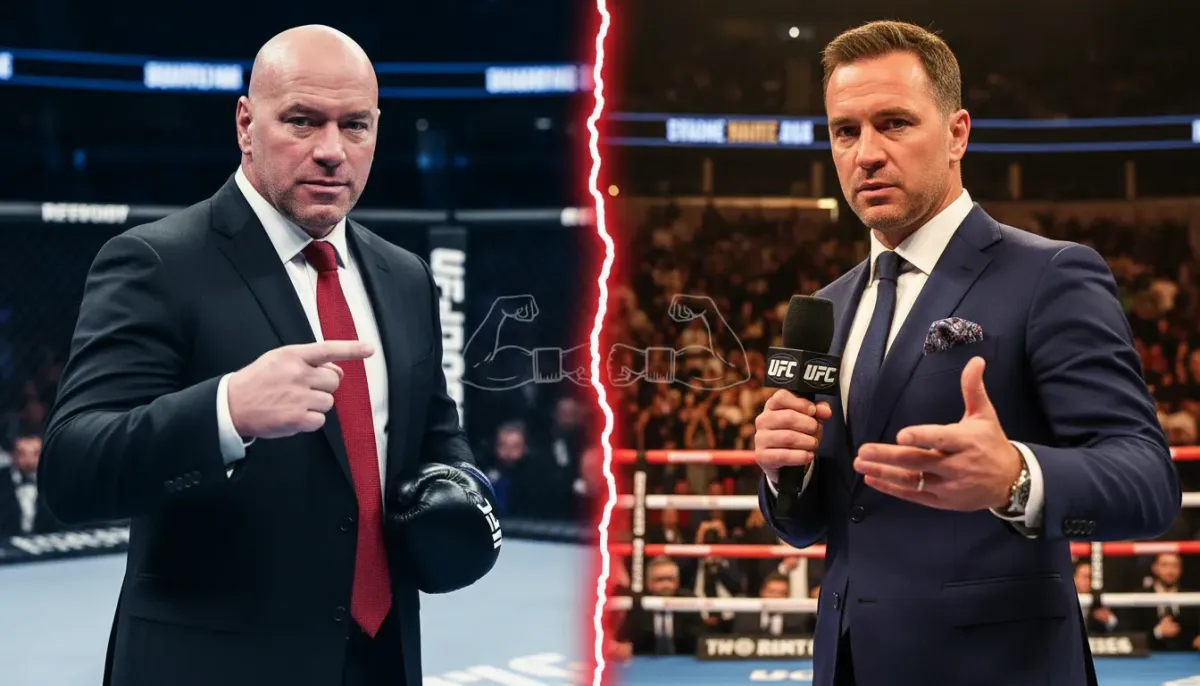
The tension between Dana White and Eddie Hearn has become one of combat sports' most compelling rivalries. Yet according to White himself, this conflict was never part of his original blueprint when entering the boxing industry. What started as a simple business expansion has evolved into a public battle between two of the sport's most influential figures, with significant implications for fighters and the entire promotional landscape.
The Origins of Zuffa Boxing and an Unintended Conflict
When Dana White first ventured into professional boxing through his Zuffa Boxing venture—partnering with WWE president Nick Khan—his intentions were straightforward: build a competitive boxing promotion. Contrary to what many observers believed, White insists he had no predetermined plan to target Eddie Hearn, Matchroom Boxing, or any of their fighters. The UFC executive's focus was simply on establishing Zuffa as a legitimate player in the boxing world.
However, the competitive dynamics shifted unexpectedly. Rather than coexisting peacefully in the boxing space, tensions emerged quickly. White attributes this escalation directly to Hearn himself, viewing the Matchroom Boxing chairman's public statements as a challenge to his credibility in the sport. White's perspective is revealing: he saw Hearn's comments not as defensive reactions but as provocative declarations that essentially dared him to prove his boxing credentials. This perceived challenge transformed a neutral business expansion into a competitive battle.
The Conor Benn Signing That Changed Everything
A Significant Power Move in Professional Boxing
The turning point arrived when Zuffa Boxing secured Conor Benn as a signatory to its roster. This wasn't a minor acquisition—Benn had spent his entire professional career under the Matchroom Boxing umbrella, working exclusively with Eddie Hearn. By successfully convincing the British boxer to switch promotions, White demonstrated that Zuffa could attract established talent, not just develop new fighters.
Beyond the symbolic victory, the Benn signing carried substantial financial weight. The reported purse for Benn's Zuffa debut was significant, highlighting White's willingness to invest heavily in top-tier talent. This move sent a clear message to the boxing world: Zuffa Boxing wasn't merely testing the waters but was ready to compete directly for established athletes.
Eddie Hearn's Emotional Response
Hearn's reaction was notably public and emotional. The Matchroom chairman expressed feeling personally betrayed by Benn's departure, viewing it as a fundamental breach of loyalty. Rather than treating it as standard business, Hearn framed the situation through the lens of personal relationships and fighter welfare. He publicly stated that Zuffa and White don't genuinely care about fighter interests, contrasting this with what he characterized as Matchroom's more personal, protective approach to boxer development.
Dana White's Perspective on the Escalation
Setting the Record Straight
White has been explicit in clarifying his position: this rivalry was imposed upon him, not sought by him. According to his account, Hearn fired the initial shots through public comments, effectively challenging White to demonstrate his boxing legitimacy. Once that gauntlet was thrown, White's competitive nature took over. He acknowledged his own wiring: when presented with opposition, he responds directly and decisively.
Importantly, White maintains that his actions carry no personal animosity toward Hearn. He has stated clearly that he doesn't dislike the Matchroom chairman, yet he refuses to withdraw his criticism of how Hearn handled the public fallout. From White's perspective, Hearn's emotional outbursts were unprofessional and undermined his credibility as a seasoned promoter managing business challenges.
Breaking Down the Business Logic
White's most pointed argument centers on the contractual reality both men understand well. Hearn possessed a matching clause that would have allowed him to retain Benn by equaling Zuffa's financial offer. Rather than exercise this option, Hearn chose not to match the terms. From White's perspective, Hearn cannot blame external circumstances for an outcome he had the power to prevent.
White emphasized that Hearn has substantial financial resources, making the decision not to match the offer a choice, not a necessity. If Hearn truly valued Benn's presence and career development, White argues, the matching clause gave him the mechanism to keep the fighter. The responsibility for Benn's departure, therefore, rests with Hearn's decision-making, not White's recruitment strategy.
The Philosophy Behind Zuffa Boxing's Strategy
Talent Acquisition as Core Business
White has articulated his fundamental operating philosophy with clarity: a fight promoter's primary responsibility is identifying and securing the best available talent. Whether a fighter possesses exceptional marketability or minimal personality appeal becomes irrelevant if they're recognized as genuinely elite competitors. White's job, as he defines it, involves acquiring top-tier fighters, matching them against other elite athletes, and structuring financial arrangements that benefit both fighters and the promotion.
This approach removes personal relationships or loyalty considerations from the equation. From White's viewpoint, sentimentality doesn't belong in the business of professional boxing promotion. Hearn's emotional investment in his fighters, while potentially admirable, doesn't change the fundamental economics of fighter recruitment.
More Money in the Sport Overall
A critical component of White's argument involves the broader financial impact Zuffa Boxing has generated. Increased competition has expanded purse sizes throughout the boxing industry, not just at the elite level. White contends that fighters across all competitive tiers now earn more money than they would in a landscape dominated by single promoters. This competitive pressure benefits fighters by creating multiple promotional options and driving compensation upward across the board.
Oscar De La Hoya Enters the Fray
Criticism from an Unexpected Source
Beyond the White-Hearn conflict, Oscar De La Hoya has become another vocal critic of Zuffa Boxing's entrance into the sport. The former boxing champion has publicly claimed that White's promotion damages professional boxing's ecosystem and represents a negative development for the sport's future. De La Hoya's Golden Boy Promotions has positioned itself as a voice against Zuffa's expansion strategy.
White's Counter-Argument
White responded to De La Hoya's criticism with pointed observations about Golden Boy's current situation. De La Hoya is actively suing several of his own fighters in court, attempting to prevent them from leaving his promotion. To White, this reveals a fundamental contradiction: De La Hoya claims to oppose Zuffa because it harms fighters, yet he's simultaneously restricting his own athletes' earning opportunities through legal action. White questions the credibility of someone claiming to advocate for fighter welfare while simultaneously blocking fighters from pursuing higher-paying opportunities elsewhere. With Golden Boy's influence reportedly declining and fighters departing the promotion, White noted the irony of De La Hoya criticizing competitors while his own organization struggles with retention and reputation challenges.