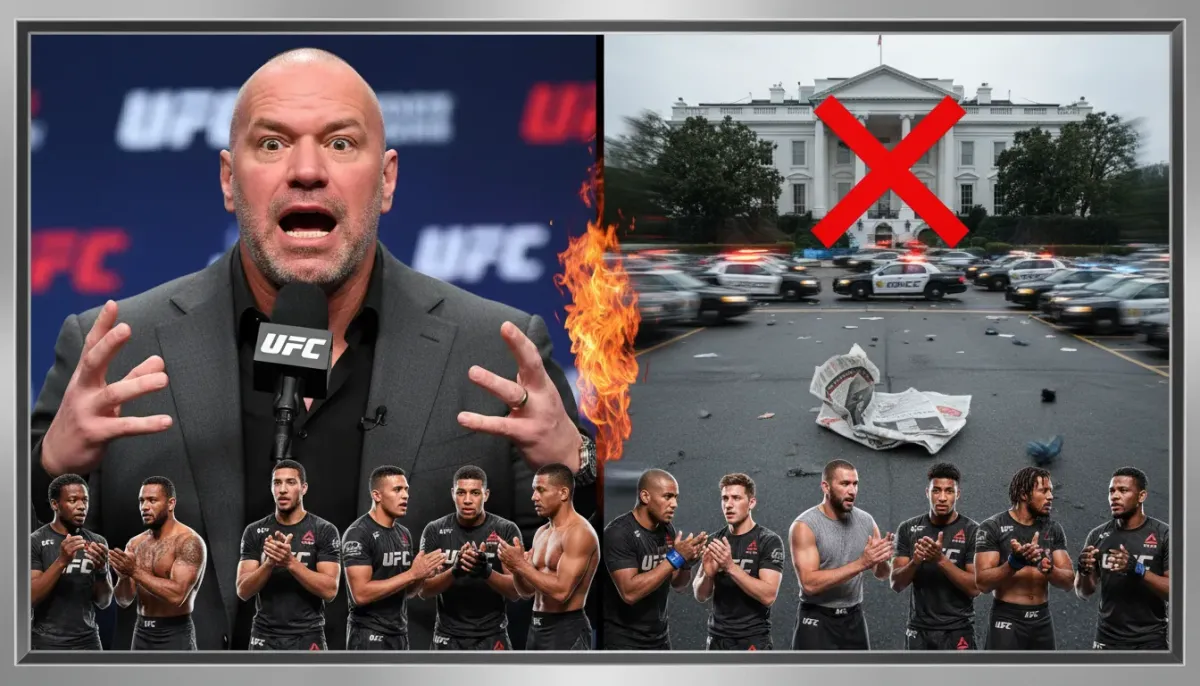
The aftermath of a security incident at Washington D.C.'s White House Correspondents' Dinner has ignited significant controversy within the mixed martial arts world, particularly following comments made by UFC President Dana White. What began as a response to media inquiries quickly evolved into a broader discussion about appropriate behavior from prominent sports figures when tragedy strikes.
The Controversial Statement That Started It All
During the immediate aftermath of the shooting at the White House Correspondents' Dinner, Dana White was approached by reporters seeking his reaction to the chaotic scene. Rather than offering measured concern for those affected, White characterized the experience as "fucking awesome" and expressed enthusiasm about witnessing what could have been a catastrophic event. His apparent excitement about the incident, framed as a "pretty crazy, unique experience," drew swift criticism from various corners of the combat sports community.
White's response stood in stark contrast to what one might expect from a leader in a mainstream sport. The incident itself, fortunately, resulted in no fatalities and the quick apprehension of a suspect, but the nature of White's reaction raised important questions about judgment and sensitivity from those in positions of prominence. His words suggested a detachment from the gravity of the situation that would fuel commentary for days to come.
Sean Strickland's Blunt Assessment
Fighter Sean Strickland did not hold back when addressing White's controversial comments. During a media scrum, Strickland offered a psychological assessment of the UFC President, describing him as a "super narcissistic sociopath." Rather than condemning White outright, Strickland attempted to contextualize the response through the lens of personality theory, suggesting that someone operating at White's level might naturally possess certain psychological traits that allow them to process potentially traumatic situations differently.
Strickland's critique went further, speculating that White might have actually entertained darker thoughts about the incident. The fighter suggested that someone with White's particular psychological makeup would view violence as exciting rather than terrifying—a characteristic Strickland framed with ambiguous respect. These comments demonstrated how White's reaction had moved beyond simple poor judgment into territory where observers felt compelled to question his underlying mental and emotional composition.
When Entertainment Culture Meets Serious Events
The incident highlighted a broader tension within combat sports: the culture of hype and spectacle that defines the business often clashes with basic human decency when actual tragedy occurs. Dana White has built a reputation for embodying a particular brand of aggressive, boundary-pushing leadership style that emphasizes entertainment value and adrenaline.
However, White's response to the shooting represented a moment where that same mentality crossed into inappropriate territory. Other public figures and organizations responded with measured concern and appropriate gravity. The contrast between these reactions and White's apparent excitement underscored how differently individuals process and respond to moments of genuine danger. The MMA community found itself grappling with uncomfortable questions about whether the sport's leadership culture had normalized responses that would be unthinkable in other industries.
A Survivor's Perspective Challenges the Narrative
Fighter Matt Brown, who has personally experienced the trauma of a mass shooting event, offered a pointed counterargument to White's characterization. Brown's direct rebuttal emphasized that there is nothing exciting or awesome about such incidents for those who have lived through them. His personal experience lent particular weight to his criticism, establishing a crucial contrast between White's voyeuristic enthusiasm and the actual lived experience of someone facing genuine violence.
Brown's intervention in the debate underscored an important reality: those who have endured mass shooting events understand the lasting psychological and emotional toll in ways that observers cannot. When White described the incident as entertaining, he revealed a fundamental disconnect from the experiences of survivors, making Brown's perspective not merely one opinion among many but rather a sobering reminder of what genuine trauma actually entails.
Political Calculations and Fighter Selection
During his media appearance, Strickland also addressed his own conspicuous absence from the White House invitation list for this historic June 14th event. The fighter suggested that his public criticism of political figures and controversial policy discussions may have contributed to his exclusion from the guest list. Strickland has previously made pointed comments about Trump administration policies, particularly regarding the Epstein files, and hypothesized that UFC leadership knew he would likely speak his mind at such a formal occasion.
This aspect of the controversy revealed how sports organizations navigate the intersection of politics and entertainment, and which fighters receive prominent platform opportunities. Strickland's candid acknowledgment that outspoken fighters may face professional consequences for their political views added another layer to an already complex situation.
Implications for Sports Leadership and Public Perception
The controversy surrounding Dana White's comments raised fundamental questions about responsibility and tone-setting from prominent executives in combat sports. Leaders shape organizational culture and send signals about what behavior and attitudes are acceptable within their domain. White's enthusiastic response to a potentially tragic event communicated something troubling about priorities and values.
Beyond the immediate controversy, the incident prompted broader reflection within the MMA community about how sports leadership should conduct themselves during moments of crisis. The contrast between White's apparent excitement and the measured, respectful responses from other figures in various industries highlighted how significantly different approaches to similar situations can be. For a sport that has consistently worked to establish itself as a mainstream entertainment product, such moments of poor judgment by leadership can undermine years of effort to build credibility and respectability with mainstream audiences.