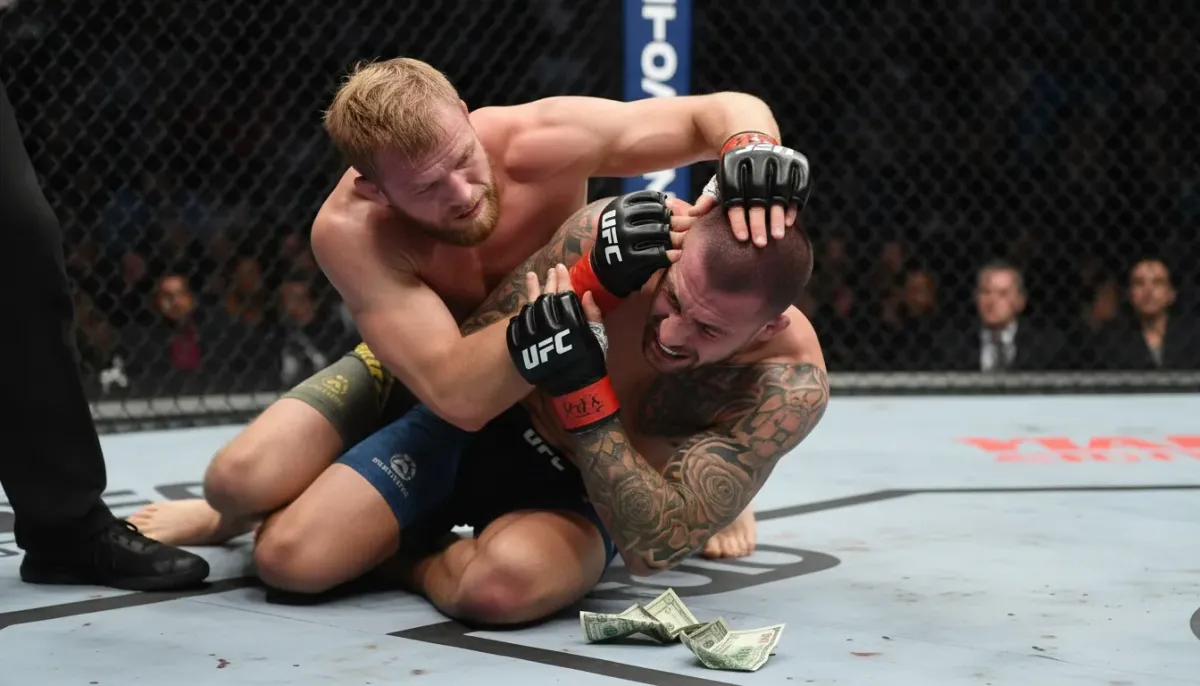
Eye pokes have long represented one of the most contentious issues in mixed martial arts, sparking heated debates among fighters, commentators, and officials year after year. The problem persists despite numerous discussions about safety protocols and rule enforcement. Now, prominent fighter Jorge Masvidal is proposing a solution that targets fighters where it matters most: their paychecks.
The Growing Problem of Eye Pokes in Combat Sports
Eye pokes continue to plague the sport of MMA, affecting competitors across all weight classes and experience levels. These infractions occur with alarming regularity, often altering the course of fights and leaving athletes with serious injuries. The issue has frustrated both veterans and emerging talent, who argue that more stringent measures must be implemented to protect fighter safety.
What makes eye pokes particularly problematic is their potential to cause immediate and lasting damage. Unlike many other fouls, an eye injury can significantly impair a fighter's ability to compete effectively, potentially influencing the match outcome. Despite calls for change, the current penalty system—typically limited to warnings and occasional point deductions—has failed to eliminate the problem. Many observers believe a fundamental shift in how the sport addresses this violation is long overdue.
Jorge Masvidal's Controversial Proposal
The inaugural UFC BMF champion has stepped forward with a direct and controversial solution: implement a 20 percent purse deduction for fighters who commit eye pokes. Masvidal's proposal includes multiple layers of enforcement, beginning with an immediate point deduction and yellow card system similar to those used in other combat sports.
Masvidal draws from his own experience, noting that during his career spanning over 50 professional fights, he has never eye poked an opponent. This, he argues, proves that such infractions are preventable with proper technique and discipline. His suggestion represents a significant escalation from traditional penalties, combining immediate match consequences with financial repercussions that extend beyond the octagon.
The Logic Behind Hitting Fighters' Wallets
According to Masvidal, financial consequences create behavioral change that warnings and point deductions cannot achieve. He emphasizes that fighters respond quickly when their earnings are threatened, noting that the prospect of losing income serves as a powerful deterrent.
This approach operates on the principle of direct incentivization: if breaking rules costs money, athletes will modify their behavior to protect their livelihoods. Masvidal uses himself as an example, suggesting that when consequences affect compensation, compliance becomes natural. The simplicity of this logic has appeal—most professionals understand the universal language of financial penalties better than abstract safety violations.
A Sliding Scale Approach to Penalties
Rather than maintaining a strict 20 percent rate for all infractions, Masvidal suggests implementing a progressive penalty system. First offenses could incur a 5 percent purse reduction, with subsequent violations resulting in escalating fines. This graduated approach acknowledges that not all eye pokes are equal and allows referees to differentiate between intentional fouls and accidental contact.
The system would permit officials to assess intent—a critical factor in determining appropriate punishment. Reckless or habitual offenders would face increasingly severe financial consequences, while fighters who commit rare, unintentional infractions would receive lighter penalties. This flexibility addresses the complexity of referee judgment while maintaining consistent enforcement standards.
Where the Money Should Go
A crucial aspect of Masvidal's proposal concerns the destination of penalty funds. He advocates for compensation to flow directly to the injured fighter, rather than being absorbed by athletic commissions or other governing bodies. This approach serves dual purposes: it provides restitution to victims of fouls and removes financial incentives for commissions to overlook violations.
Masvidal's criticism of commission involvement reflects broader frustration within the fighter community about regulatory bodies profiting from penalties rather than supporting athlete welfare. By redirecting penalty revenue to affected competitors, the system would create a more equitable distribution of justice.
Dustin Poirier's Support and Additional Perspectives
Fellow fighter Dustin Poirier, who has discussed these issues publicly, agrees that eye pokes warrant immediate and serious responses proportional to their severity. He emphasizes that repeated warnings have proven ineffective at preventing future infractions and that serious injuries require instant intervention rather than gradual escalation.
Poirier's perspective adds weight to Masvidal's argument by recognizing that eye pokes exist on a spectrum—some cause minimal damage while others result in severe trauma. A penalty system must reflect these distinctions rather than treating all infractions uniformly.
The Broader Context of MMA Fouls
While eye pokes deserve special attention, they represent just one category of dangerous infractions in MMA. However, their prevalence and potential consequences place them in a unique category of concern. Eye injuries can alter fight outcomes more dramatically than many other fouls, making their prevention essential to maintaining competitive integrity.
Other dangerous techniques exist, but eye pokes often receive criticism for appearing both preventable and sometimes intentionally employed by certain fighters known for physical aggression in clinch positions and during striking exchanges.
The Ethical Dilemma: Penalizing Underpaid Athletes
Despite the logic of financial penalties, critics raise legitimate concerns about their implementation. Many MMA fighters already struggle with inadequate compensation, and imposing additional purse deductions could create undue hardship, particularly for lower-tier competitors with limited earning potential.
This ethical tension reflects broader issues in fighter compensation within the sport. While financial penalties may effectively deter fouls, they must be balanced against the reality of fighter economics. Some suggest alternative approaches, such as escalated point deductions or temporary competition suspensions, might achieve deterrence without financial impact.
From Intention to Implementation
Converting Masvidal's proposal into actionable policy would require coordination among athletic commissions, promotional organizations, and regulatory bodies. Implementation challenges include establishing consistent standards across jurisdictions and training officials to assess intent reliably.
The UFC and other major promotions would need to adopt unified rules, and international consistency would strengthen enforcement. However, the complexity of regulatory bodies and the variation in state athletic commission structures create obstacles to uniform implementation globally.