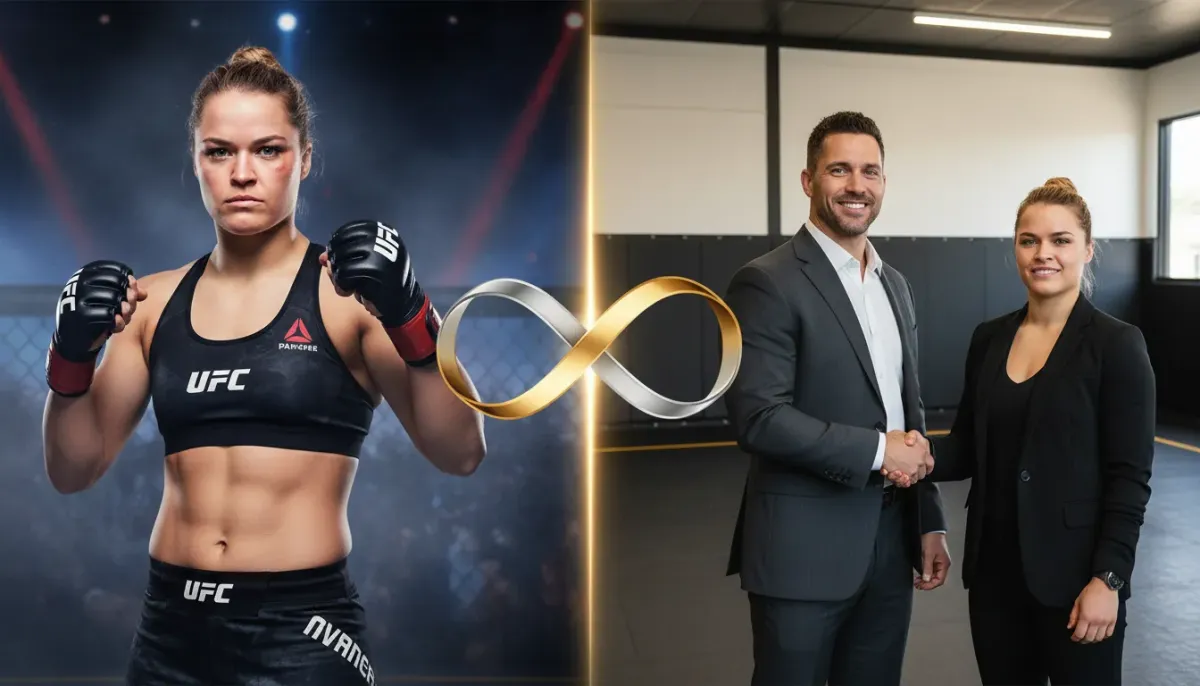
The Beginning of an Unexpected Feud
In the world of mixed martial arts, unlikely partnerships often emerge from the most turbulent circumstances. Ricky Lundell, a highly respected wrestling and grappling coach who has worked with elite fighters throughout his career, found himself at the center of one such story when he was enlisted by Miesha Tate to help prepare for her rivalry with Ronda Rousey on The Ultimate Fighter reality show.
Rousey's initial reaction to Lundell was visceral and unforgiving. Despite recognizing his professional competence as a coach, she perceived his kindness as something far more sinister: a calculated, patronizing act designed to frustrate her. What Rousey interpreted as passive-aggressive manipulation was actually genuine warmth from a naturally compassionate person. The intensity of her dislike was so profound that she described their relationship using vivid, unflattering comparisons. She simply could not believe that someone associated with her rival would display such authentic friendliness, so she rejected it outright.
This fundamental misreading of Lundell's character would define their early dynamic. Rousey held onto her resentment even after decisively defeating Tate for a second time, convinced that Lundell had been complicit in an attempt to damage her through his coaching position. The animosity remained completely one-sided, stemming entirely from Rousey's inability to trust what appeared to be genuine human kindness.
A Shared Circle, Lingering Resentment
The fates of Rousey and Lundell became increasingly intertwined through an unexpected connection: Travis Browne, who would eventually become Rousey's husband. Browne trained under Lundell's guidance and frequently traveled to work alongside his coach, creating unavoidable proximity between Rousey and the man she had sworn off.
Even as their circles overlapped repeatedly, Rousey maintained her hostile stance. Browne attempted to convince her that Lundell deserved a fair chance, insisting he was genuinely a good person, but Rousey refused to reconsider her judgment. The grudge persisted until circumstances forced a deeper understanding. During a particularly challenging period when Rousey struggled with mental health difficulties following devastating defeats in the octagon, she found herself staying at Lundell's residence while Browne trained.
In her lowest moments, confined largely to a single room and grappling with depression, Lundell demonstrated the very kindness Rousey had previously dismissed as fake. He consistently ensured she had access to simple comforts—cereal, milk, and a safe space to process her emotions without judgment. This unexpected compassion during her vulnerability shattered Rousey's carefully constructed narrative about who Lundell actually was. The mask she had insisted he wore fell away, revealing someone genuinely committed to helping others through difficult moments.
Teaching as Healing: The Judo Connection
As Rousey's perception of Lundell shifted from resentment to respect, a new opportunity emerged for them to work together constructively. Lundell expressed a sincere interest in achieving his black belt in judo, and he could think of no better instructor than an Olympic bronze medalist. Rather than decline, Rousey agreed to mentor him, marking a remarkable reversal in their dynamic.
This transition from adversary to student-teacher relationship proved transformative for both parties. For Lundell, it represented an opportunity to learn from one of combat sports' most accomplished athletes. For Rousey, teaching judo allowed her to share her expertise while simultaneously rebuilding trust with someone she had spent years despising. The training sessions became more than technical instruction; they were moments where both individuals could move past their fractured history and build something genuine.
The subtle chemistry that developed during these sessions planted seeds neither could have anticipated. Through the patient exchange of knowledge and mutual respect for martial arts mastery, Lundell proved his character beyond any doubt. He transformed from a figure of contempt into someone Rousey genuinely valued in her life.
The Comeback That Almost Didn't Happen
Years after leaving competitive MMA, Rousey found herself captivated by an idea: a potential fight against Gina Carano, another legendary figure in women's mixed martial arts. The concept of this matchup between two icons excited her imagination, and she knew immediately it represented something extraordinary.
When Rousey reached out to Lundell with a cryptic request to speak privately, he recognized instantly what was unfolding. Before she even explicitly mentioned fighting again, Lundell knew his former student was plotting her return to competition. The phone conversation confirmed his intuition when Rousey enthusiastically discussed pursuing Carano. This moment signified how completely their relationship had transformed—from mutual antagonism to mutual understanding.
Rousey successfully approached Carano, and the two legends began developing plans for what would become a historic matchup. The partnership attracted significant attention, eventually securing backing from Most Valuable Promotions with Netflix as the broadcast partner. What began as a personal training relationship between two individuals who had once despised each other became the foundation for a comeback that captured global attention.
Full Circle: Enemy as Essential Mentor
As Rousey prepared for her return to the octagon after a decade away, Lundell transitioned from judo student back to MMA coach. His expertise in wrestling and grappling proved invaluable for a fighter approaching her comeback with fresh eyes and strategic considerations. The role reversal—where both had been teacher and student to the other—created a partnership built on mutual respect and proven compatibility.
Rousey publicly acknowledged the profound impact Lundell had on her journey, expressing genuine gratitude for how he had transformed her life. She credited him entirely with making her return to fighting possible, recognizing that without his presence during her lowest moments and subsequent support, this comeback would never have materialized. Her evolution from viewing him as an enemy to recognizing him as her most trusted ally represented a remarkable testament to personal growth and the capacity for human connection in the often-brutal world of professional combat sports.