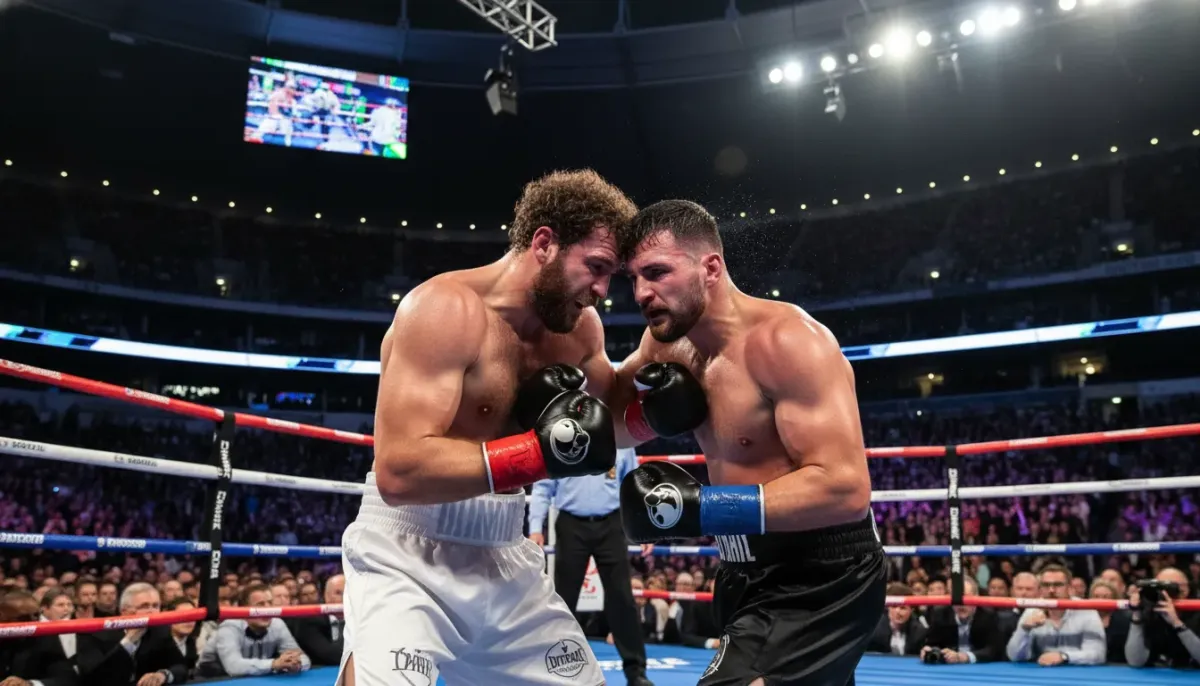
A Technical Masterclass at Tottenham Hotspur Stadium
Tyson Fury delivered a commanding performance against Arslanbeck Makhmudov in a heavyweight clash that aired live on Netflix from London's Tottenham Hotspur Stadium. The bout showcased the champion's superior ring craft against a straightforward, aggressive challenger. From opening bell to final round, Fury controlled the action with calculated precision, demonstrating why technical proficiency separates elite boxers from competitive but limited opponents.
Makhmudov's Aggressive Strategy Fails to Gain Traction
Makhmudov entered the ring with a clear tactical blueprint: apply constant forward pressure and overwhelm Fury through relentless aggression. The strategy seemed logical on paper, yet proved ineffective once the opening bell sounded. He immediately drove Fury into corners, attempting to establish dominance through heavy hooks and bull-like charges. However, this approach quickly revealed fundamental flaws that Fury exploited masterfully.
Rather than engage in a firefight, Fury employed distance management and precise jab work to neutralize the incoming aggression. He allowed Makhmudov to expend enormous energy while creating opportunities to land crisp combinations in open space. His footwork kept him out of danger, and his superior reach advantage became increasingly evident with each exchange. By controlling the pace early, Fury forced Makhmudov into exactly the type of fight he couldn't win.
The Momentum Shift: Energy Depletion and Ring Control
By the middle rounds, the cumulative effects of Makhmudov's relentless forward march became undeniable. His charges gradually lost their initial velocity and purpose. Heavy hooks that had threatened early on became increasingly wayward. What began as purposeful aggression transformed into mechanical movement lacking any genuine offensive threat. Makhmudov was running on empty, while Fury had barely increased his output.
The turning point revealed Fury's strategic patience as a weapon. As Makhmudov slowed, Fury shifted into higher gears with increased precision. He established himself in the center of the ring, landing sharp right hands complemented by his signature long jab. Continuous body shots landed in the clinch further drained Makhmudov's remaining reserves. The champion ensured his opponent received no meaningful rest between exchanges, slowly grinding down any remaining resistance.
Technical Superiority Becomes Undeniable
The stylistic contrast intensified as rounds progressed. Makhmudov relied on crude rushes and looping shots executed with diminishing efficiency. Fury, conversely, showcased the technical refinement expected at heavyweight championship level. Slipping punches with minimal head movement, pivoting to create advantageous angles, and using the clinch strategically for body work demonstrated the gap between elite and competitive fighters.
A particularly telling moment occurred late in the bout when Fury landed a perfectly executed check hook that visibly hurt Makhmudov. His legs buckled noticeably, and the crowd erupted in recognition of the moment's significance. Despite showing his finishing capability, Fury elected measured offense over reckless aggression. This decision revealed his maturity as a seasoned professional: maintain control rather than risk everything pursuing a knockout against a durable opponent.
The Final Rounds: Coasting to Inevitable Victory
In the championship rounds, Fury appeared satisfied with his commanding lead. Extended clinch work, body shots, and measured jabs defined the rhythm of exchanges. Makhmudov's corner encouraged increased aggression, yet their fighter lacked the physical resources to mount any credible comeback. The performance gap had widened beyond any possibility of recovery. Makhmudov demonstrated admirable durability and unwavering willingness to advance, but without strategic alternatives or the energy to execute them, he faced an impossible evening. The final bell sounded with his path to victory closed long before the scorecards were read.
Ring Intelligence and Physical Considerations
Some observers questioned whether Fury fought below his maximum capability, citing his conservative approach and reduced explosive power compared to earlier career phases. However, this analysis misses crucial strategic context. Fighting at controlled pace against a one-dimensional opponent minimized unnecessary risk while maximizing fighting efficiency—a hallmark of ring intelligence rather than physical decline.
Fury entered considerably lighter than previous campaigns, maintaining only marginally more weight than his challenger. This lighter frame contributed directly to his enhanced footwork and superior mobility. The strategic sacrifice of mass for agility appeared purposeful, suggesting a deliberate recalibration of physical tools. Rather than signaling diminished capability, this adjustment demonstrated adaptability and ongoing evolution within the sport's demands.
The bout accomplished its stated objective effectively: Fury regained match sharpness against a respectable challenger while avoiding unnecessary risk. The Netflix platform and London venue provided optimal visibility for a measured step back into the heavyweight landscape, setting the stage for increasingly competitive matchups ahead.