The End of an Era
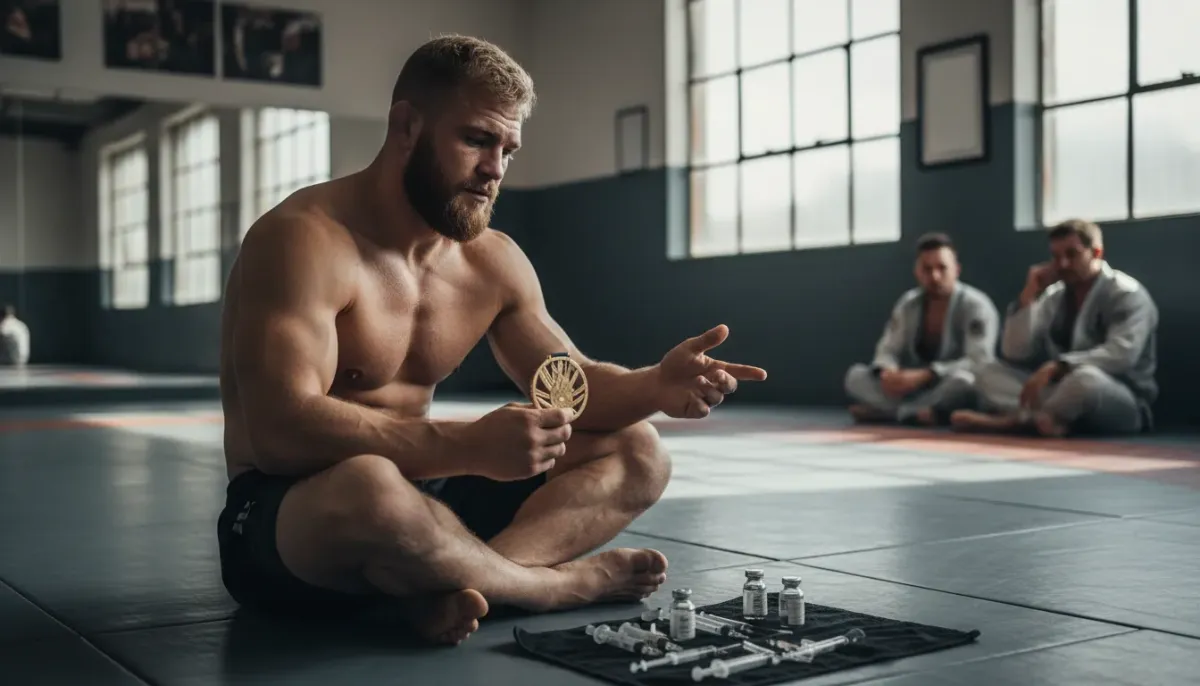
Gordon Ryan, one of the most accomplished figures in Brazilian jiu-jitsu history, has announced his retirement following persistent health complications that have sidelined him from competition since 2024. The decision marks the conclusion of a career filled with unprecedented achievements and record-breaking performances across multiple grappling organizations. Ryan's departure from the sport represents more than just the loss of a decorated athlete—it raises critical questions about legacy, integrity, and the future direction of professional grappling.
Throughout his career, Ryan accumulated numerous titles and victories against some of the world's elite grapplers. His on-paper credentials positioned him among the greatest practitioners the sport has ever produced. However, his retirement also brings renewed attention to the controversial aspects of his journey, particularly his open acknowledgment of anabolic steroid use during his competitive years.
A Complicated Legacy
Achievements and Controversy
Ryan's accomplishments in the grappling world are objectively impressive. His record speaks to his technical prowess, competitive drive, and ability to perform under pressure against formidable opponents. Yet these achievements exist alongside a complicated narrative that cannot be ignored. Ryan famously defended his performance-enhancing drug use by pointing out that professional grappling organizations lack mandatory drug testing protocols. In his view, since no rules were technically broken, his accomplishments remained legitimate.
This justification created significant friction within the grappling community. Athletes like UFC jiu-jitsu champion Mikey Musumeci and twin brothers Kade and Tye Ruotolo became vocal critics of widespread performance-enhancing drug abuse in the sport. Their outspoken positions highlighted a fundamental divide: those who competed clean versus those who utilized pharmaceutical advantages.
The Question of Legacy
Determining how Ryan will ultimately be remembered requires navigating this complicated terrain. Tye Ruotolo, speaking to MMA Fighting, acknowledged the nuance involved: while Ryan accomplished genuinely impressive feats, the context of widespread steroid use among elite competitors complicates any straightforward assessment. Ruotolo noted that dismissing Ryan's achievements entirely because of steroid use ignores a broader reality—most high-level grappling athletes utilize performance-enhancing drugs.
The Burden of Clean Competition
Competing at a Disadvantage
For athletes who chose to remain natural, facing enhanced competitors presented genuine disadvantages. Ruotolo emphasized that clean athletes often fought opponents while simultaneously giving up physical advantages gained through pharmaceutical supplementation. This wasn't merely about fairness in competition—it affected career trajectory, longevity, and psychological toll. Facing enhanced opponents while remaining clean required exceptional discipline and often resulted in losses that might have been victories under equal conditions.
Ruotolo's personal experience proved illuminating. At just 23 years old, he received multiple offers from individuals attempting to provide him with performance-enhancing substances. Despite temptation and the potential advantages these drugs could provide, he consistently declined. His commitment to natural competition, shared by his brother Kade, resulted in numerous championship victories achieved without pharmaceutical assistance.
Health and Longevity Concerns
One of Ruotolo's most compelling observations concerns the long-term health implications of steroid use. Performance-enhancing drugs provide short-term competitive advantages but carry significant risks to overall health and athletic longevity. Ruotolo speculated whether Ryan might have extended his career considerably had he maintained a cleaner lifestyle. The health issues that ultimately forced Ryan's retirement potentially connect to years of pharmaceutical use—a cautionary tale for younger athletes considering similar paths.
Influence on the Next Generation
Perhaps the most troubling aspect of this situation involves how it shapes emerging talent in Brazilian jiu-jitsu. When championship-level athletes achieve success through enhanced performance, younger competitors internalize a message: elite success requires performance-enhancing drugs. This normalization of drug use creates pressure on the next generation to follow identical paths.
Ruotolo expressed particular concern about this influence on developing athletes. The sport's young practitioners witness established champions utilizing steroids with minimal consequences while still being celebrated for their accomplishments. This sets a problematic standard, suggesting that pharmaceutical enhancement represents an acceptable—even necessary—route to elite performance. Rather than viewing steroid use as cheating or problematic, younger athletes may see it as simply part of the sport's culture.
Potential Paths Forward
Separating Competition Levels
Ruotolo proposed an intriguing theoretical solution: establishing separate competitive organizations—one for clean athletes and another for those competing without restrictions. This would allow enhanced athletes like Ryan to compete at the highest levels in their respective division while offering natural athletes a fair competitive environment. Such separation would eliminate ambiguity about who competed under what conditions and remove the inherent unfairness currently embedded in the sport.
While theoretically appealing, implementing this structure faces substantial obstacles. Funding professional grappling organizations requires significant resources, and dividing the athlete pool into separate circuits would complicate promotion, sponsorships, and career opportunities. Nevertheless, the concept highlights a legitimate problem that the sport currently has no mechanism to address.
The Testing Question
Professional grappling remains almost entirely without anti-doping infrastructure. This absence represents an intentional choice rather than an oversight. Implementing rigorous drug testing requires substantial financial investment, specialized equipment, and bureaucratic infrastructure. Most grappling organizations lack the resources or willingness to implement such systems, effectively creating a sport where performance enhancement operates without official regulation or consequence.
What Comes Next
As Gordon Ryan steps away from competition, questions about his legacy will likely persist indefinitely. Ruotolo expressed hope that Ryan might recover and return to the sport, potentially enabling a future matchup between them. Regardless of whether that happens, the broader conversation about standards, fairness, and athlete health in professional grappling remains unresolved. The sport stands at a crossroads—continue operating without drug testing oversight, or implement meaningful changes to protect athlete welfare and ensure competitive integrity for future generations.