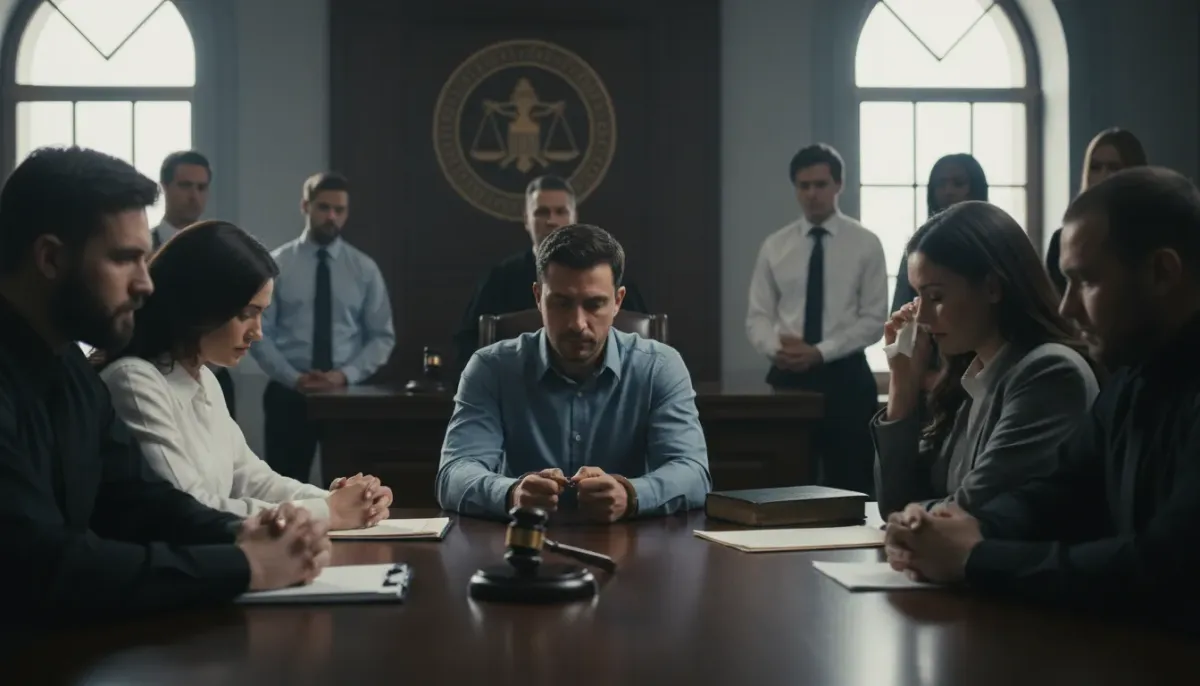
The MMA community witnessed a significant moment in the pursuit of justice when a jury in Alabama delivered a guilty verdict against Ibraheem Yazeed for the murder of Aniah Blanchard, the stepdaughter of former UFC fighter Walt Harris. This conviction brings closure to a tragic case that captured national attention and sparked important legislative reforms in Alabama's criminal justice system.
The Crime That Shocked the MMA Community
In October 2019, Aniah Blanchard disappeared under circumstances that would ultimately expose serious vulnerabilities in the criminal justice system. The 19-year-old was last seen at a convenience store in Auburn, Alabama, where surveillance footage revealed the tragic final moments of her freedom. What began as a missing persons case quickly evolved into something far more sinister when investigators recovered her vehicle, a 2017 Honda CR-V, just two days after her disappearance.
The discovery of the vehicle sent shockwaves through law enforcement. Medical personnel found life-threatening quantities of blood inside the car, indicating a violent struggle had taken place. The MMA world, connected through Harris's prominence in the sport, rallied around the family during this nightmarish ordeal. Harris himself became the public face of the tragedy, using his platform to keep attention on the case and support the ongoing investigation.
The case gained significant media attention not only because of Harris's athletic profile but also because it represented the kind of senseless violence that affects real families with devastating consequences. The disappearance of a young woman under such brutal circumstances struck a chord across the nation.
Ibraheem Yazeed Found Guilty—But Not for Capital Murder
After a comprehensive trial in Alabama, the jury convicted Yazeed on charges of murder and felony murder. However, the jury stopped short of convicting him on capital murder charges, a decision that meant he would not face the death penalty. This distinction proved crucial for the defendant's ultimate sentencing prospects.
At 36 years old, Yazeed now faces a sentencing hearing scheduled for May 7, where he could receive life imprisonment without the possibility of parole. The conviction on murder charges carries severe penalties, though the absence of capital charges spared him from facing execution. Legal experts noted that while the jury found sufficient evidence to convict him of murder, they may have had reservations about imposing capital punishment, leading to the more serious—yet non-capital—murder convictions.
The verdict represented months of investigation and legal proceedings that built a compelling case against Yazeed based on physical evidence, surveillance footage, and eyewitness testimony.
How the Investigation Unfolded
The Initial Disappearance and Evidence
Investigators began piecing together the events of Blanchard's final hours through careful examination of surveillance footage from the Auburn convenience store. The footage revealed a critical detail: Ibraheem Yazeed appeared in the same location at the same time as Blanchard. An eyewitness who had been present provided crucial testimony, identifying Yazeed as the individual who forcibly placed Blanchard into her vehicle against her will.
This eyewitness account, combined with video evidence, established a direct connection between Yazeed and the kidnapping. When authorities recovered her Honda CR-V two days later, the substantial amount of blood discovered inside suggested a violent crime had occurred within the vehicle itself. The physical evidence corroborated the eyewitness account, creating a strong foundation for the case against him.
From Missing Persons to Homicide Investigation
The investigation took a tragic turn in November when authorities discovered Blanchard's body in a wooded area in Macon County, Alabama. An autopsy confirmed investigators' worst fears: she had been killed by gunshot wounds. Prosecutors presented evidence suggesting that Yazeed shot Blanchard in the passenger seat of her own vehicle before transporting her to the remote wooded location, where she was shot again in the head.
This brutal sequence of events, as outlined by prosecutors during trial, painted a picture of calculated violence. The evidence collected throughout the investigation—from the surveillance footage to the physical evidence in the vehicle to the autopsy findings—all converged to establish Yazeed's guilt beyond reasonable doubt in the minds of the jury.
A Legal Legacy—Aniah's Law and Criminal Justice Reform
Perhaps the most significant consequence of this tragedy extended beyond Yazeed's conviction. At the time of Blanchard's murder, Yazeed was out on bail for another crime, a fact that shocked lawmakers and advocates alike. This detail prompted Alabama legislators to take action, resulting in the passage of