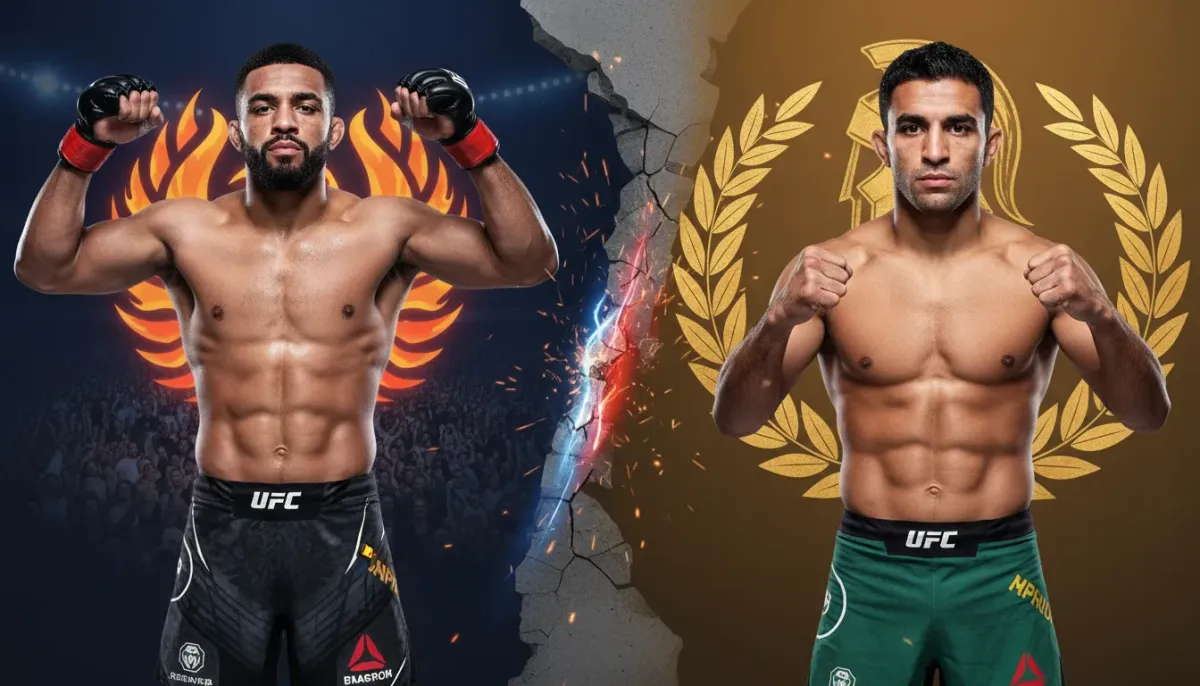
The BMF championship contest between Max Holloway and Charles Oliveira transcends a typical elite matchup. Both fighters occupy critical junctures in their careers, where each performance carries profound implications for their historical legacies. This encounter represents far more than acquiring another title—it defines how their lifelong dedication to mixed martial arts will ultimately be remembered among the sport's greatest practitioners.
Two Icons Converge at a Crossroads Moment
More than a decade has elapsed since Holloway and Oliveira first competed against one another in a featherweight bout. That early meeting hardly defined either fighter's trajectory. Since that encounter, both have undergone complete transformations, accumulating credentials worthy of Hall of Fame induction and demonstrating exceptional longevity competing at sport's highest echelon.
At this stage of their careers, both fighters find themselves in what could represent the final chapters of illustrious journeys. The path forward demands that each man showcase the evolution accomplished during their respective competitive arcs. For Holloway, now 34 years old, and Oliveira, at 36, the question persists: can they still deliver performances that cement their positions among MMA's immortals?
Their shared commitment to excellence over 15-plus years of elite competition has earned them consideration among the sport's most durable and accomplished practitioners. This matchup allows both to demonstrate whether they belong in the conversation about the greatest fighters to ever step into the octagon.
Max Holloway: The Blessed One's Remarkable Staying Power
Defying Expectations and Time Itself
Holloway merits inclusion in virtually any legitimate discussion regarding UFC's greatest fighters. His sustained excellence across nearly a decade at the absolute elite level remains exceptionally uncommon in professional fighting. Most observers anticipated his decline long ago, yet he continues producing performances that suggest he remains near peak competitive form.
What distinguishes Holloway's career arc involves not merely winning championships but maintaining consistent excellence despite accumulating significant fighting mileage. The roster of defeated opponents reads like an encyclopedia of contemporary combat sports' finest competitors. His ability to generate elite performances repeatedly, across different weight classes and against varied stylistic opponents, demonstrates technical mastery and physical resilience that defies conventional aging patterns.
An Evolving Arsenal Combining Pressure and Power
Historically, Holloway's dominance stemmed from two interconnected elements: extraordinary striking volume paired with virtually inexplicable durability. This combination creates an almost insoluble problem for opponents. Victory against Holloway requires landing substantially larger strikes while simultaneously forcing a finish—accomplishments that remain among MMA's most formidable challenges.
The critical evolution in Holloway's game involves adding genuine knockout power to his traditional high-volume approach. Rather than merely accumulating damage across five rounds, he now possesses the capacity to conclude fights decisively through destructive striking. This development, particularly pronounced since his move to lightweight competition, transforms him into a more complete offensive threat while maintaining his foundational strengths.
Strategic Advantages at Lightweight
Competing at lightweight has demonstrably extended Holloway's competitive prime. Reduced weight-cutting demands mean his body retains greater resources for actual competition, directly addressing durability concerns inherent to aging prizefighters. Additionally, increased body mass paradoxically preserves his speed—typically sacrificed when fighters age—while simultaneously amplifying striking power. This combination of reduced cutting stress, retained hand speed, and enhanced power represents a unique situation where moving to a heavier weight class has extended rather than diminished his capabilities.
Charles Oliveira: The Unlikely Rise to All-Time Status
Transforming from Prospect to Legendary Lightweight
Oliveira's career progression ranks among sport's most compelling narratives. For years, casual and professional observers dismissed him as an entertaining yet ultimately limited competitor unlikely to challenge for major titles. That narrative underwent complete revision beginning in 2018, when technical improvements and tactical adjustments coalesced into championship-level performances.
His subsequent elite campaign and continued success at the highest level have secured his position among the greatest lightweights ever—an astonishing achievement considering his uncertain early career trajectory. The transformation from perennial prospect into potential all-time great demonstrates the value of continued skill development and strategic innovation throughout one's career.
Grappling Supremacy as Offensive Foundation
The cornerstone of Oliveira's breakthrough involved recognizing that opponents fear engaging him on the ground. His guard represents among sport's most dangerous positions, deterring opponents from pursuing ground exchanges for years. This fear created unprecedented offensive opportunities on the feet.
By establishing a lethal guard threat, Oliveira gained freedom to apply relentless offensive pressure while standing. When opponents damage him, he transitions to his guard—where positional superiority allows continued threat generation. Conversely, when he damages opponents, opportunities emerge to secure back position and finish via submission. This creates asymmetrical mathematical advantage: multiple scoring opportunities for Oliveira, single opportunities for opponents.
The Often-Underestimated Wrestling Component
Beyond his renowned guard work, Oliveira developed a stealthy wrestling game that often gets overshadowed by striking prowess and submission expertise. This wrestling capacity provides additional control options, particularly valuable against fighters traditionally avoiding grappling exchanges. Against Holloway specifically, this wrestling element could prove decisive in establishing dominant positions throughout the encounter.
Stylistic Contrasts: Divergent Paths to Victory
Finisher Mentality Versus Volume Accumulation
Fundamentally, these fighters operate from opposing strategic frameworks. Oliveira pursues immediate conclusions through aggressive pressure and opportunistic finishing techniques. Holloway has traditionally accumulated victories through superior output across entire contest duration. These contrasting approaches generate substantial stylistic intrigue.
Holloway's enhanced striking power provides new defensive capabilities against Oliveira's aggressive advances. Rather than purely absorbing pressure, he can now discourage forward momentum through combination work and footwork. This added offensive threat potentially shifts fight rhythm significantly in Holloway's favor, creating genuine complications for Oliveira's traditionally effective aggressive approach.
Back Control as Victory Path
Oliveira's most direct route to victory involves establishing back control. Holloway's takedown defense has been historically reliable, yet he faces relatively few wrestlers possessing Oliveira's specific back-control expertise and submission mastery. Should Oliveira successfully secure back position, he essentially gains a location where Holloway possesses minimal counterattacking options. From back control, submission becomes nearly inevitable against even elite defensive wrestlers.
Critical Technical Factors Determining Outcome
Holloway must maintain distance from the fence during exchanges. Oliveira's wrestling combined with close-quarters grappling creates fence-specific dangers that eliminate technical options and defensive angles. The fence essentially neutralizes Holloway's superior footwork and spacing advantages.
Additionally, durability remains a lingering question for both fighters. Both have demonstrated reduced durability compared to their absolute peaks, with over 15 years of elite competition accumulating significant physical demands. Either fighter could experience sudden performance decline—a reality that influences tactical considerations throughout the contest. Holloway's lighter weight provides durability mitigation; Oliveira possesses no such compensating factor beyond experience.