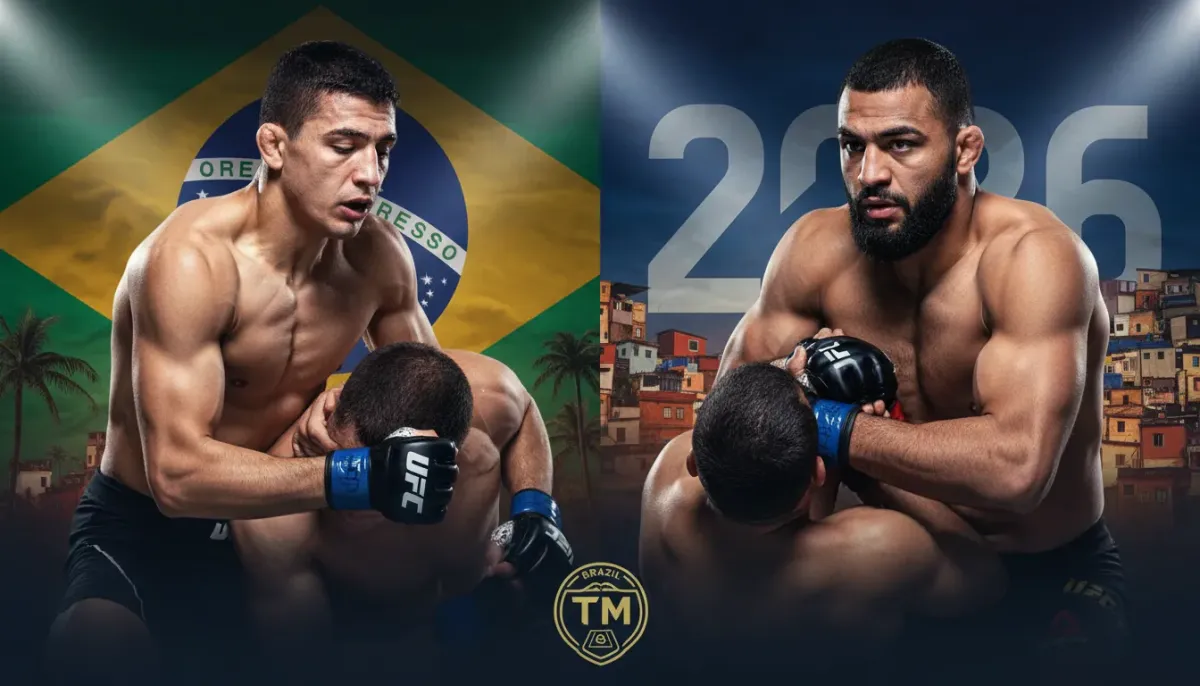
What Went Down at Hype Brazil: The Main Event
The Hype Brazil event brought an intriguing matchup to Rio de Janeiro's Farmasi Arena, where UFC lightweight Arman Tsarukyan squared off against experienced veteran Muhammad Mokaev in a specialized grappling competition. This 10-minute submission-only format represented a departure from traditional mixed martial arts, offering fans a pure technical showcase of grappling excellence without striking elements. The submission-only ruleset placed both competitors in unfamiliar territory, testing their fundamental grappling skills and positional awareness in a format that demands precision and patience rather than speed and aggression.
The Main Event Breakdown
Tsarukyan's Specialized Grappling Challenge
Arman Tsarukyan's participation in this submission-only event highlighted an emerging trend among elite UFC fighters exploring specialized grappling competitions. The submission-only format presents a unique challenge that differs significantly from traditional MMA bouts, where strikers can defend against takedowns and heavy top control becomes less imposing. For Tsarukyan, a competitor known for his well-rounded skill set, this match provided an opportunity to test pure grappling credentials against a seasoned opponent. The 10-minute duration emphasizes technical mastery and positional dominance rather than explosive finishing attempts, rewarding fighters who can methodically establish control and create legitimate submission opportunities.
Mokaev's Veteran Experience in Pure Grappling
Muhammad Mokaev brings considerable experience from his UFC career to this specialized grappling arena. His background as a UFC veteran provides valuable insights into competitive pressure and high-level technical execution. Mokaev's approach to this submission-only match reflects years of competing at the highest levels of mixed martial arts, where grappling fundamentals serve as a foundation for overall fighting success. Veterans transitioning to submission-only competitions often demonstrate refined technique and controlled aggression, avoiding unnecessary risk-taking while capitalizing on positioning advantages that develop throughout a match.
Understanding the Submission-Only Format
The submission-only ruleset governing this Hype Brazil main event operates under specific parameters designed to eliminate striking and emphasize pure grappling excellence. A 10-minute timeframe with submission-only victories creates a distinctly different competitive environment than traditional MMA. Fighters cannot rely on striking to escape bottom positions or create distance. Instead, they must master positional transitions, submission defense, and the patience required to advance their positioning without forcing incomplete submission attempts. This format rewards technical precision, breath control awareness, and the ability to maintain composure while pursuing long-term strategic advantages rather than immediate finishes.
Co-Main Event Spotlight
Silva vs. Mitchell: Featherweight Clash
The co-main event featured a highly anticipated featherweight matchup between Jean Silva and Bryce Mitchell. Silva previously defeated Mitchell via ninja choke submission during the second round of their UFC 314 encounter earlier this year. That decisive victory, achieved through a specialized submission technique, established Silva as the dominant force in their rivalry. The rematch dynamic inherently favors the previous winner, as Mitchell faces the challenge of adjusting to Silva's proven submission approach while Silva seeks to replicate her earlier success.
Competitive Significance for Both Fighters
This featherweight matchup carries considerable importance for each competitor's divisional trajectory and standing. Victories at events like Hype Brazil provide valuable exposure and momentum heading into potential UFC opportunities. For Silva, another successful performance reinforces her credentials within the featherweight landscape. For Mitchell, overcoming a previous loss against the same opponent represents a significant psychological and technical challenge. The broader implications for division rankings and fighter marketability make this more than a simple rematch—it represents an opportunity for either fighter to make a defining statement about their competitive level and future prospects.
Event Details and Venue
The Hype Brazil event took place at the Farmasi Arena located in Rio de Janeiro, Brazil, a venue known for hosting high-level combat sports competitions. Rio de Janeiro's established reputation as a premier combat sports destination brings considerable fan enthusiasm and media attention to events held within the city. The Wednesday night timing ensured maximum accessibility for Brazilian audiences while capturing international viewership across different time zones. Brazil's rich combat sports heritage, deeply rooted in martial arts traditions and competitive excellence, creates an ideal environment for specialized grappling showcases that appeal to both technical enthusiasts and general fight fans.
Rising Stories in Combat Sports
Notable Developments Shaping the Industry
Beyond the featured matchups, the broader MMA landscape continues to evolve with compelling narratives around title aspirations and unexpected career developments. Fighters across various divisions are engaging in discussions about competitive standards, technical specialization, and multi-disciplinary skill development. Some prominent competitors have publicly compared grappling abilities to respected former champions, while others address their own competitive trajectories following significant performances. These conversations reflect the sport's increasing sophistication, where athletes openly acknowledge the importance of specialized training and technical refinement in specific disciplines.
Fighter Commentary on Evolution and Excellence
Modern combat sports athletes frequently discuss the importance of grappling excellence within their overall fighting philosophy. Leading fighters recognize that submission-only competitions and specialized grappling formats provide valuable training opportunities and technical validation. Competitive drive extends beyond traditional fight outcomes to include performance in varied ruleset competitions, allowing athletes to demonstrate mastery across different combat contexts. This evolution in how fighters evaluate and develop their skills reflects changing standards within professional combat sports, where versatility and technical depth increasingly define elite-level competitors.