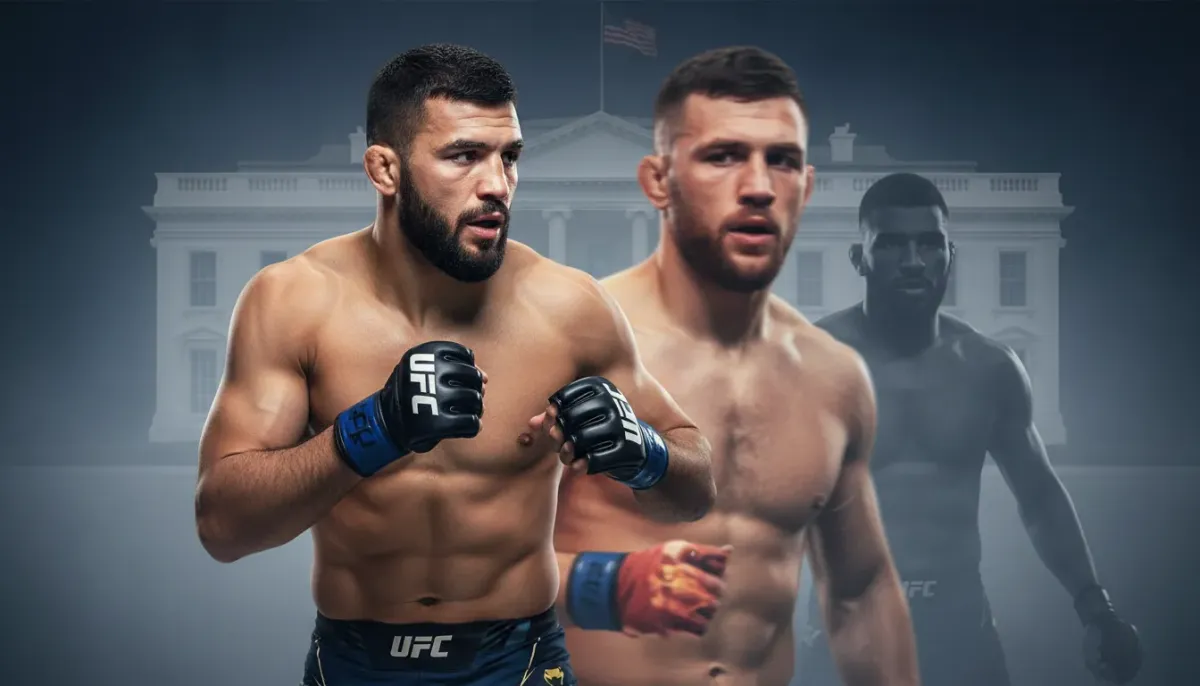
The Unexpected Turn of Events at UFC White House
The UFC White House event in Washington, D.C., stands as one of the most anticipated cards of the year, featuring a lightweight title unification bout that has captured the attention of MMA fans worldwide. Ilia Topuria, the reigning lightweight champion, will defend his title against Justin Gaethje in what promises to be a compelling matchup at the nation's capital. However, the path to this specific contest has been anything but straightforward, shaped by personal circumstances and last-minute promotional decisions that tested Topuria's adaptability as a fighter.
The current matchup emerged from a series of strategic decisions made by the UFC. When Topuria took time away from competition to address personal matters, the promotion moved forward with an interim lightweight title fight between Justin Gaethje and Paddy Pimblett in January. The winner of that bout was always destined to face Topuria in a title unification contest, establishing a clear pathway for the division's future. While this structure made logical sense, it created an element of unpredictability regarding who would ultimately challenge Topuria at the White House event.
Topuria's Genuine Surprise at Gaethje's Victory Over Pimblett
When discussing his upcoming opponent, Topuria revealed that the interim title fight's outcome caught him somewhat off guard. The lightweight champion openly admitted he genuinely expected Paddy Pimblett to emerge victorious against Justin Gaethje, which would have set up a different competitive dynamic than what ultimately materialized. This candid admission speaks volumes about how elite fighters assess their peers and the tactical considerations that inform their expectations.
Topuria's surprise at Gaethje's performance underscores a fundamental truth in mixed martial arts: outcomes remain inherently unpredictable despite extensive analysis and fighter preparation. The fact that a champion of Topuria's caliber, who possesses intimate knowledge of the lightweight division's landscape, failed to anticipate Gaethje's successful campaign against Pimblett demonstrates the sport's capacity to deliver unexpected results. Rather than dismissing his initial expectations, Topuria approached the situation with professional respect for both competitors, acknowledging that fighters at this elite level possess the skills to produce surprising victories.
This shift in opponent presents different strategic challenges and stylistic matchups. While both Gaethje and Pimblett represent legitimate threats to Topuria's championship reign, they bring distinct skill sets and fighting approaches to the octagon. Topuria's willingness to embrace this change demonstrates the mental flexibility required of top-tier fighters operating at the highest promotional level.
The Islam Makhachev Opportunity That Nearly Became Reality
Perhaps the most intriguing subplot in Topuria's UFC White House narrative involves an entirely different opponent that almost materialized mere hours before the official card announcement. According to Topuria's detailed account, he received confirmation that he would challenge Islam Makhachev for a welterweight title at the White House event. This revelation has sparked considerable discussion within the MMA community, as Makhachev and UFC leadership Dana White have offered differing perspectives on whether this matchup was genuinely in serious negotiation stages.
Topuria recounted the dramatic sequence of events with remarkable clarity. After receiving initial confirmation of the Makhachev fight and preparing for bed, he suddenly experienced an extraordinary barrage of communication from UFC officials. Hundreds of calls flooded in during the middle of the night, delivering the same urgent message: Makhachev had sustained an injury, and Gaethje would replace him as Topuria's opponent. The sudden pivot, occurring hours before the promotion's official card announcement, created a chaotic situation that left Topuria adapting to new circumstances on an compressed timeline.
The conflicting narratives surrounding this situation reveal the complex negotiations and rapid decision-making that characterize high-level UFC operations. While some parties disputed the legitimacy of Makhachev being a confirmed option, Topuria's account suggests a far more advanced state of negotiations than alternative versions of events. Regardless of the precise details, this sequence demonstrates how unpredictable promotion-level logistics can impact fighter preparation and career trajectory.
Maintaining Perspective Amid Promotional Uncertainties
What distinguishes Topuria's response to these dramatic last-minute changes is his remarkably pragmatic approach to circumstances beyond his direct control. Rather than expressing frustration or disappointment about losing the Makhachev opportunity, Topuria adopted a philosophical stance that acknowledged the inevitable chaos of professional athletics. He emphasized that emotional investment in uncontrollable factors represents wasted mental energy that elite performers cannot afford.
This mindset reflects the mentality of championship-caliber fighters who understand that promotions, injuries, and scheduling complications remain inevitable aspects of the sport. Instead of dwelling on what might have been, Topuria maintained forward momentum and professional focus, treating the Gaethje assignment as simply the next challenge requiring his attention and preparation. This psychological resilience distinguishes top competitors from those unable to navigate the unpredictable nature of professional fighting.
Looking Ahead: Third Title Ambitions Before Year's End
While June's UFC White House event against Gaethje represents Topuria's immediate focus, his competitive aspirations extend considerably beyond this single contest. The lightweight champion has publicly expressed his hope of securing a third title opportunity before the year concludes, regardless of how the Gaethje encounter concludes. This forward-thinking perspective demonstrates ambition aligned with elite competitor expectations, where championship-level fighters regularly campaign across multiple weight classes or pursue multiple title defenses within calendar years.
Topuria's mention of potential future matchups with Makhachev remains notably prominent in his competitive calculus. He indicated belief that a confrontation with the formidable Dagestani fighter represents likely future business rather than abandoned opportunity. This optimistic outlook, combined with his pragmatic acceptance of current circumstances, reflects a fighter simultaneously grounded in present-moment competition while maintaining strategic vision for evolving career trajectories.
The convergence of UFC White House as a major promotional event and Topuria's championship aspirations creates compelling circumstances for the lightweight division's future landscape. How the champion performs against Gaethje will fundamentally influence the promotional direction and which opportunities materialize in subsequent months.