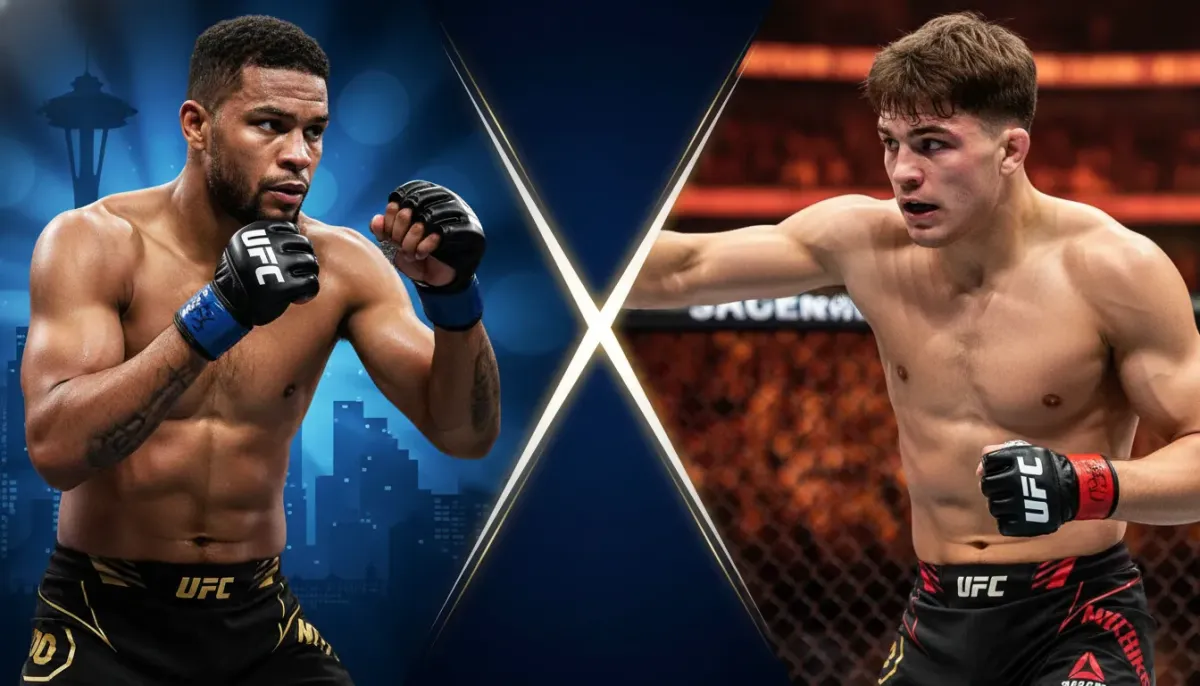
UFC Seattle presents a defining moment for Israel Adesanya as the former two-time middleweight champion prepares to square off against rising prospect Joe Pyfer in the event's main event. This Saturday matchup extends far beyond a typical fight night—it represents a crucial inflection point in Adesanya's career trajectory and his relevance within the contemporary middleweight landscape. The implications of this contest will resonate throughout the entire 185-pound division.
The Stakes Are Higher Than Ever for Adesanya in Seattle
Adesanya arrives in The Emerald City facing questions that every veteran fighter must eventually address. After years of dominance and championship success, the former champion finds himself in a position where continued credibility depends on proving he remains competitive against the division's emerging talent. This isn't merely another bout on the calendar—it's a referendum on whether his skill set and experience can withstand the physical and technical challenges presented by a hungrier, younger challenger.
The middleweight division has evolved considerably, and Adesanya must demonstrate whether his previous excellence translates to the current competitive environment. His striking precision, distance management, and creative movement once defined his dominance, but sustaining those advantages against modern competitors requires continuous adaptation. How he responds to Pyfer's pressure and athleticism will determine whether he remains a legitimate title contender or transitions into a different phase of his career.
Pyfer's ascension through the middleweight ranks has been noteworthy. The prospect brings youth, physical tools, and remarkable athleticism to this matchup. His trajectory suggests a fighter on an upward arc, eager to announce himself against established names. For Pyfer, defeating Adesanya would represent a massive career leap—the kind of statement victory that elevates prospects into championship conversations. The contrast between a veteran seeking to reclaim relevance and a prospect seeking to establish legitimacy creates compelling narrative tension.
Breaking Down the Striking and Style Matchup
The technical foundation of this contest centers on striking dynamics. Adesanya built his reputation on superior boxing, karate-influenced techniques, and exceptional footwork. These elements allowed him to control fights at distances opponents couldn't match. Against Pyfer, however, he faces someone with different physical parameters—greater size potential, more aggressive closing patterns, and a willingness to press forward relentlessly.
Adesanya's traditional advantages in technical precision may be challenged by Pyfer's modern approach to the middleweight division. Younger fighters in combat sports increasingly prioritize pressure and aggression, moving away from the patient, point-fighting methodology that once dominated. Whether Adesanya can adjust his approach or maintain effectiveness through technical superiority remains the central question.
Pyfer's game plan likely emphasizes closing distance and neutralizing Adesanya's striking range. Fighters with superior physical attributes often succeed by refusing to play their opponent's game. If Pyfer can withstand initial striking exchanges and establish clinch control or takedown threats, he dramatically increases his winning probability. Conversely, if Adesanya maintains distance and showcases his superior striking precision, his experience should prove decisive. This stylistic chess match will determine the fight's ultimate outcome more than any other factor.
The Broader Context of UFC Seattle
The main event represents only one compelling storyline on an event featuring multiple noteworthy matchups. The women's co-main event pits Maycee Barber against Alexa Grasso in a rematch scenario, where Barber pursues redemption against a previous conqueror. Revenge narratives resonate deeply with audiences and add emotional weight beyond standard competitive dynamics. The outcome carries implications for the women's flyweight and strawweight division hierarchies.
Michael Chiesa's matchup against Niko Price carries particular significance as it marks Chiesa's retirement fight. Veteran fighters departing the sport provide natural closure narratives that enhance fan engagement. Chiesa's substantial contributions to MMA development throughout his career justify celebrating his final walk to the octagon.
Beyond these headliners, UFC Seattle's preliminary action features emerging talents seeking breakthrough opportunities. These prospect matchups provide crucial glimpses into the sport's future while offering established fans chances to discover division-altering competitors before they reach mainstream prominence. The entire card functions as a comprehensive showcase of the sport's competitive present and future.
Betting Analysis and Expert Perspectives
Professional analysts examining UFC Seattle have offered varied assessments regarding fighter form and matchup dynamics. Confidence in Adesanya's ability to overcome Pyfer remains divided among expert observers. Some emphasize his technical superiority and experience, viewing these as insurmountable advantages. Others acknowledge legitimate question marks about his current physical condition and competitive hunger relative to a hungrier challenger.
The betting landscape reflects these competing perspectives. Oddsmakers have established lines that account for Adesanya's championship pedigree while acknowledging Pyfer's genuine physical advantages and upward trajectory. Multiple wagering angles exist across the UFC Seattle card, with favorable value propositions available for bettors willing to conduct thorough matchup analysis. Beyond the headliner, several undercard bouts present compelling betting opportunities based on fighter form, stylistic dynamics, and situational factors specific to individual competitions.
What's Next for the Middleweight Division
The Adesanya-Pyfer result will fundamentally shape middleweight division direction going forward. A decisive Adesanya victory would reinforce his championship credentials and establish a pathway back to title contention. Conversely, a Pyfer upset would accelerate the prospect's ascension and signal a generational shift within the weight class's competitive hierarchy.
The broader middleweight landscape features an ongoing transition between champion-era fighters and emerging challengers. Pyfer represents a wave of athletically gifted competitors reshaping the 185-pound division's competitive balance. How established veterans respond to these emerging threats will define the division's character throughout the coming competitive era. UFC Seattle's main event serves as a microcosm of this larger divisional evolution.