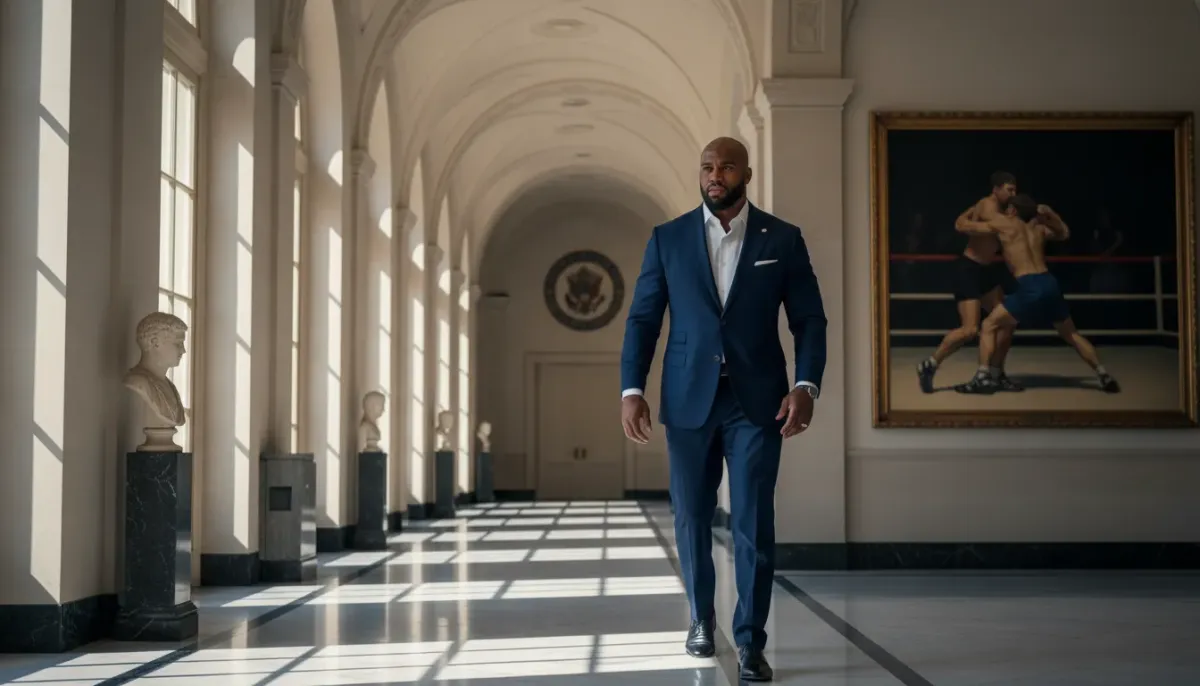
Josh Hokit faces a unique challenge as he prepares for his historic bout against Derrick Lewis at the White House on June 14. Following his impressive victory over Curtis Blaydes at UFC 327, Hokit earned not only early Fight of the Year recognition but also an unexpected presidential invitation. Now, with his coaching staff undergoing a last-minute adjustment, the rising heavyweight must adapt once again to keep his undefeated record intact.
The Unexpected White House Booking Reshapes Hokit's Corner
From UFC 327 Victory to Presidential Event
Hokit's breakthrough performance against veteran contender Curtis Blaydes captured the attention of more than just fight analysts. Donald Trump attended UFC 327 and expressed interest in hosting a Derrick Lewis fight at the White House. When Dana White witnessed Hokit's dominant display, the UFC CEO seized the moment, crafting an extraordinary matchup between the rising prospect and the powerful striker.
This rapid turnaround proved unprecedented. Rather than allowing Hokit time to rest and recover from his grueling encounter with Blaydes, White booked him for one of the most prestigious venues in the world. The immediate nature of this booking left minimal preparation time for Hokit's coaching staff to adjust their approach. Additionally, Hokit's viral social media moments during fight week elevated his profile beyond typical fighter recognition, making this White House appearance even more significant for his career trajectory.
Why This Fight Matters for Hokit's Career Trajectory
Hokit enters the Lewis matchup as an undefeated fighter competing in just his third UFC appearance and ninth professional bout overall. The former NFL prospect has already demonstrated the ability to compete at the highest levels, particularly through his back-and-forth battle with an experienced heavyweight like Curtis Blaydes. That performance generated substantial interest from fight media and fans alike.
The Lewis fight represents a substantial step up in competition and visibility. Success at the White House would cement Hokit's status as a legitimate heavyweight contender, while also providing the mainstream media exposure that comes with such a prestigious venue. Each victory moves him closer to title contention discussions within the division.
Greg Jackson's Absence: What We Know
Confirming the Coaching Change
Greg Jackson, the renowned strategist who has been integral to Hokit's success, will not be present at the White House event. Jackson cited personal reasons for his unavailability, a statement confirmed publicly by Mike Winkeljohn, his longtime partner at Jackson Wink MMA Academy. Despite this coaching transition, Winkeljohn maintained a composed perspective on the situation.
Winkeljohn emphasized that while Jackson's absence represents a change logistically, the focus remains entirely on the competition itself. In an interview, he stated that having two fighters competing at the White House overshadowed any administrative concerns. This professional approach from the coaching staff signals that the absence, though notable, should not impact Hokit's preparation quality or in-cage execution.
The Strategic Impact of Jackson's Absence
One might expect Jackson's absence to create a significant strategic void, but Team Hokit has already implemented countermeasures. Despite not being cageside, Jackson's influence continues through intensive game-planning sessions. Winkeljohn explained that the team has begun detailed analysis of Derrick Lewis's fighting patterns and tendencies, with Jackson contributing his analytical expertise remotely.
Jackson's reputation stems from his exceptional ability to break down opponent strategies in systematic fashion. Small technical adjustments identified during preparation often prove decisive in actual competition. Winkeljohn credited Jackson's genius for identifying these crucial details, ensuring that Hokit will benefit from the same strategic framework that enabled his dominant Blaydes performance, regardless of Jackson's physical presence at the White House.
Jackson Wink MMA Academy Steps Into the Spotlight
Winkeljohn Takes the Lead Coaching Role
Mike Winkeljohn assumes primary coaching responsibilities for the White House event, a natural progression given his decade-plus experience at Jackson Wink MMA Academy. His familiarity with Hokit and deep understanding of Jackson's tactical methodology positions him perfectly for this role. The academy's collaborative coaching approach means that the transition from Jackson to Winkeljohn involves minimal disruption to preparation protocols.
Winkeljohn's presence cageside ensures continuity in real-time decision-making during the fight itself. His experience managing fighter strategy during intense competition provides the stability that Hokit needs when facing a striker as dangerous as Derrick Lewis. The academy's established reputation for developing well-rounded fighters provides additional confidence in their ability to execute an effective game plan.
Preparation Strategy Against Derrick Lewis
Team Hokit's preparation against Lewis focuses on neutralizing one of the most devastating striking forces in the heavyweight division. The game plan centers on preventing Hokit from standing directly in front of Lewis's powerful hands, a critical consideration given Lewis's knockout power. Movement, positioning, and tactical footwork become paramount in this matchup.
Winkeljohn outlined the strategic philosophy: fine-tuning specific techniques that expose potential weaknesses in Lewis's approach while maintaining sufficient distance from his most dangerous weapons. Rather than engaging in a power-striking exchange, Team Hokit appears committed to a methodical, technical approach that leverages Hokit's athleticism and conditioning advantages.
The Trump Factor and Its Influence on the Matchmaking
How Presidential Preference Shaped the Bout
The involvement of a sitting U.S. President in UFC matchmaking represents an extraordinary circumstance. Trump's expressed preference for seeing Derrick Lewis compete at the White House directly influenced Dana White's booking decision. Winkeljohn acknowledged Trump's understanding of Lewis's entertainment value and striking capability, noting that the President clearly recognized the excitement factor that Lewis brings to competition.
However, Hokit's emergence as the star of UFC 327 created a compelling counterbalance to Trump's preference. The UFC brass recognized that Hokit had captured fan attention and generated significant momentum. This convergence of interests—Trump's desire for Lewis and Hokit's star power—created the perfect matchup scenario that satisfied political preferences while maintaining competitive logic.
Hokit's Controversial Persona Adds Intrigue
Hokit's unfiltered personality and in-cage antics have polarized the fight community. Some fans eagerly await his next performance to see if he can replicate his UFC 327 excellence, while others openly express hope that Lewis's power will test his seemingly unbounded confidence. This divisive appeal paradoxically enhances the fight's marketability, particularly for a White House event seeking mainstream attention.
The psychological dynamic creates compelling narratives on both sides: believers seeking confirmation of Hokit's elite status, and skeptics hoping to see him humbled by elite-level opposition. This natural conflict generates organic interest that professional promotion cannot manufacture, making the Lewis matchup compelling regardless of the venue.
Navigating Adversity: From Unexpected Bookings to Last-Minute Changes
Adaptation as a Recurring Theme
Hokit's journey toward the White House has been characterized by unexpected circumstances and rapid adjustments. When UFC 327 began, he possessed no knowledge that a career-defining opportunity awaited him. Similarly, Jackson's absence represents another unanticipated obstacle that Hokit must overcome through mental resilience and adaptive thinking. The fighter's willingness to embrace these challenges rather than viewing them as excuses demonstrates maturity beyond his years in the sport.
Each unexpected adjustment serves as a psychological test. Fighters who struggle with change often underperform when logistics shift. Conversely, those who thrive in chaos often deliver their best performances when facing adversity. Hokit's undefeated record suggests he falls into the latter category.
An Undefeated Record Under Pressure
Maintaining an undefeated status while competing in increasingly difficult circumstances speaks to Hokit's mental fortitude and technical capabilities. His dominant performance against Curtis Blaydes demonstrated that he possesses the skills to compete effectively against experienced, high-level opponents. The psychological advantage of remaining undefeated may prove particularly valuable against Lewis, a fighter whose power could intimidate less confident competitors.
The White House stage, the rapid turnaround, and Jackson's unexpected absence all represent potential distractions. Yet Hokit's track record suggests he possesses the mental tools necessary to filter out noise and focus on execution. This combination of physical talent, tactical training, and psychological resilience will likely determine the outcome of his showdown with Lewis.