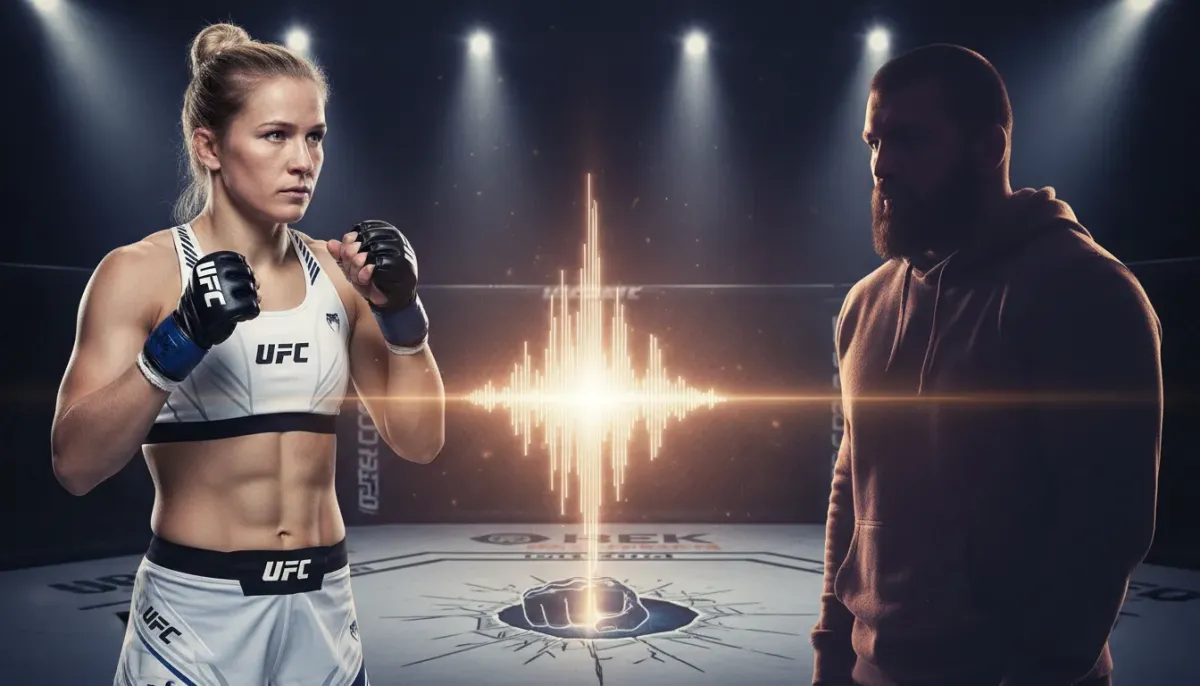
The Controversy Erupts on Social Media
Recently, comments from a Khabib Nurmagomedov interview resurfaced online, reigniting debate around his long-held views on women's participation in mixed martial arts. The former UFC lightweight champion has consistently maintained controversial positions on this subject, and his latest statements proved no exception. Nurmagomedov claimed that women are "created weak" while men are made "strong"—assertions that promptly generated significant backlash across social media platforms. This wasn't the first instance of Nurmagomedov expressing such views, but the timing and reach of these comments ensured they would capture widespread attention and criticism from the MMA community.
Shevchenko's Powerful Response Takes Center Stage
UFC flyweight champion Valentina Shevchenko wasted no time responding to Nurmagomedov's remarks, delivering a thoughtful yet stern counterargument through her social media channels. Rather than dismissing his claims outright, Shevchenko constructed a multi-faceted response that challenged his assumptions with concrete examples. She referenced her own sister, who serves as an airline captain, as tangible evidence that women possess the capability to excel in demanding, high-pressure professions. More compellingly, Shevchenko invoked the historical legacy of the Night Witches—an all-female bomber regiment during World War II who conducted night missions with their engines off and landed in complete darkness without landing lights. These women earned fearsome reputations for their skill and deadly precision, demonstrating that capability and courage transcend gender boundaries.
Beyond Physical Differences: Nurture Over Nature
Central to Shevchenko's argument is the distinction between biological differences and overall human capability. She emphasized that strength and achievement depend far more on upbringing, dedication, and training than on gender alone. According to Shevchenko's perspective, the same discipline and work ethic that forge strong male fighters can equally develop exceptional female competitors. She pointed out that one could raise a man to be entirely incapable and helpless, just as one could develop extraordinary strength and resilience in women through proper training and mentorship. This argument reframes the entire debate—moving it away from essentialist claims about biological destiny and toward the realm of personal development, choice, and commitment to the martial arts.
The Martial Arts Perspective
Shevchenko grounded her response in the fundamental philosophy of martial arts as a universal warrior tradition that transcends gender divisions. She articulated that combat sports represent something deeper than just physical competition—they embody a path toward becoming more graceful, stronger, and wiser. The purpose of training extends beyond winning fights; it encompasses personal transformation and the fundamental right to self-defense. In Shevchenko's view, martial arts inherently reject the notion that capability should be stratified by gender. Rather, the art itself remains neutral and universal, offering all practitioners—regardless of gender—the opportunity to develop their skills, discipline, and mental fortitude. This perspective positions women's participation in MMA not as an anomaly but as a natural expression of martial arts principles.
Two Legacies, Two Different Paths
Both Shevchenko and Nurmagomedov stand among the most accomplished fighters in UFC history, though their careers have followed markedly different trajectories. Shevchenko currently holds her second reign as flyweight champion and has accumulated an impressive nine successful title defenses—including seven consecutive defenses during her first championship tenure. Her dominance in the flyweight division represents one of the sport's most impressive records. Nurmagomedov, by contrast, retired from competition in 2020 with a perfect 29-0 record, including four successful UFC lightweight championship defenses. His undefeated legacy stands as an undisputed achievement in combat sports history. Yet their divergent views on women in MMA highlight how elite status does not necessarily translate to informed perspectives on broader issues affecting the sport's evolution and inclusivity.
The Broader Conversation in Modern MMA
Women's MMA has experienced remarkable growth and mainstream recognition in recent years, with champions like Shevchenko proving that excellence in combat sports knows no gender. Despite this visible evidence of female fighters' capabilities, debates like the one initiated by Nurmagomedov persist within certain segments of the MMA community. These discussions raise important questions about the sport's credibility and commitment to inclusivity. When prominent figures in MMA make sweeping claims about women's unsuitability for combat, they risk undermining the legitimacy of women's competition and potentially influencing younger generations' perceptions of opportunity in the sport. Shevchenko's response demonstrates that elite female fighters are willing to challenge such narratives directly, using their platforms to advocate for recognition of women's rightful place in martial arts and combat sports.