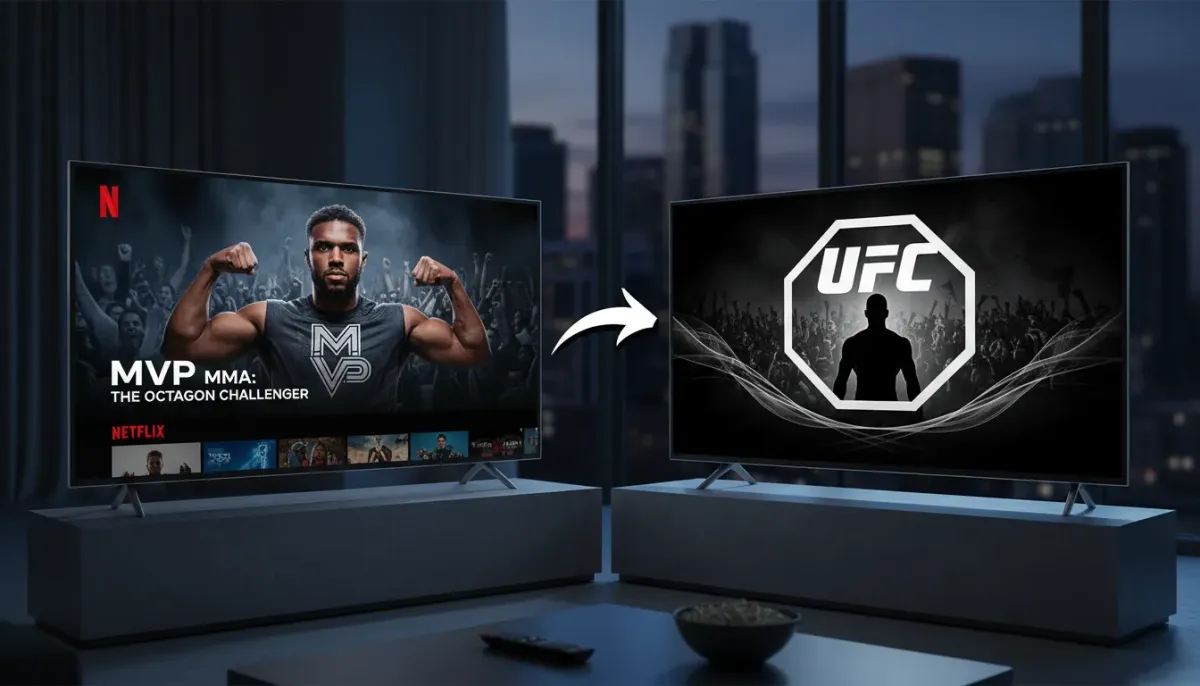
The landscape of mixed martial arts promotion is poised for significant change with the arrival of MVP MMA, a new promotional venture backed by entrepreneur Jake Paul and business partner Nakisa Bidarian. Launching next month with an exclusive broadcast on Netflix, the inaugural MVP MMA event represents more than just another fight card—it signals a potential disruption to the UFC's long-standing monopoly on elite MMA talent and viewership. With a star-studded lineup featuring some of combat sports' biggest names, this venture challenges the status quo of how fighters are compensated and promoted.
The New MMA Challenger on the Block
MVP MMA's entry into professional MMA promotion arrives with considerable fanfare and an impressive roster. The headline matchup between Ronda Rousey and Gina Carano represents a historic collision of combat sports icons, while the co-main event features Francis Ngannou, the former UFC heavyweight champion. The card is further bolstered by a feature bout between Nate Diaz and Mike Perry, two of the most recognizable figures in combat sports outside the traditional UFC structure.
The decision to broadcast this event exclusively on Netflix carries profound implications for viewership potential. With access to hundreds of millions of subscribers globally, MVP MMA's inaugural show is positioned to become the most-watched MMA event in history. This distribution strategy immediately sets the promotion apart from traditional MMA broadcasting models, combining premium production quality with unprecedented accessibility. For combat sports fans, this represents an exciting moment where major fights become available to a far broader audience than ever before.
Breaking the UFC's Stranglehold on Fighter Economics
The Pay Disparity Problem
One of the central criticisms of the UFC's business model has long been fighter compensation. Even championship-level UFC fighters often earn significantly less than their counterparts in other combat sports. A UFC champion might command purses in the range of $1.5 to $2 million for a title fight, while elite boxers regularly secure deals worth $10, 15, or even $20 million for comparable events. This fundamental disparity has driven top-tier combat athletes to explore boxing opportunities, where financial rewards are substantially higher.
MVP MMA positions itself as a direct solution to this economic imbalance. By offering competitive purses alongside the visibility of Netflix's massive platform, the promotion creates an attractive alternative for fighters seeking both financial security and global exposure. The model suggests that fighters no longer need to choose between earning potential and mainstream visibility—they can increasingly access both through platforms outside the UFC ecosystem.
The Francis Ngannou Blueprint
Francis Ngannou's career trajectory has become the template for how elite fighters might leverage their market value. After navigating his way out of his UFC contract through strategic competition, Ngannou pursued boxing opportunities that generated $20, $30, and even $40 million in earnings per fight. His transition to MVP MMA represents a watershed moment, as he now earns more annually than the entire UFC roster combined. This precedent carries enormous weight, demonstrating to other fighters that contractual escape routes exist and that negotiating power can be successfully exercised.
For fighters currently locked into UFC contracts with modest compensation, the Ngannou case study provides a roadmap. It illustrates that fighting strategically to achieve free agency, combined with willingness to explore alternative promotions and boxing, can yield dramatically improved financial circumstances while maintaining—or even enhancing—career visibility and fan engagement.
MVP MMA's Roster: Assembling Combat Sports' Biggest Names
The promotional strategy employed by Paul and Bidarian focuses on assembling established, recognizable talent rather than building emerging prospects. This approach differs fundamentally from traditional promotional development, prioritizing immediate legitimacy and star power over long-term organizational growth. The inclusion of Rousey, Carano, Ngannou, Diaz, and Perry signals that MVP MMA operates at the championship level from day one, competing directly with the UFC's elite tier.
The significance of attracting these specific athletes extends beyond their individual drawing power. Rousey and Carano's participation connects the promotion to iconic moments in MMA history, while Ngannou's inclusion validates the promotion's ability to secure talent that the UFC previously employed at the championship level. Diaz and Perry represent the next tier of mainstream recognition, fighters with substantial social media followings and proven ability to generate interest beyond traditional MMA audiences. Collectively, this roster demonstrates that MVP MMA has successfully begun the process of poaching established names from the traditional MMA ecosystem.
Jake Paul's Vision: Poaching Strategy and Long-Term Goals
The Immediate Strategy
Paul has articulated a clear, aggressive strategy for MVP MMA's competitive positioning: attract disgruntled UFC fighters by offering superior compensation and exposure opportunities. The combination of Netflix's global reach with premium fighter purses creates a compelling value proposition for athletes dissatisfied with their current situations. Paul's stated intention to