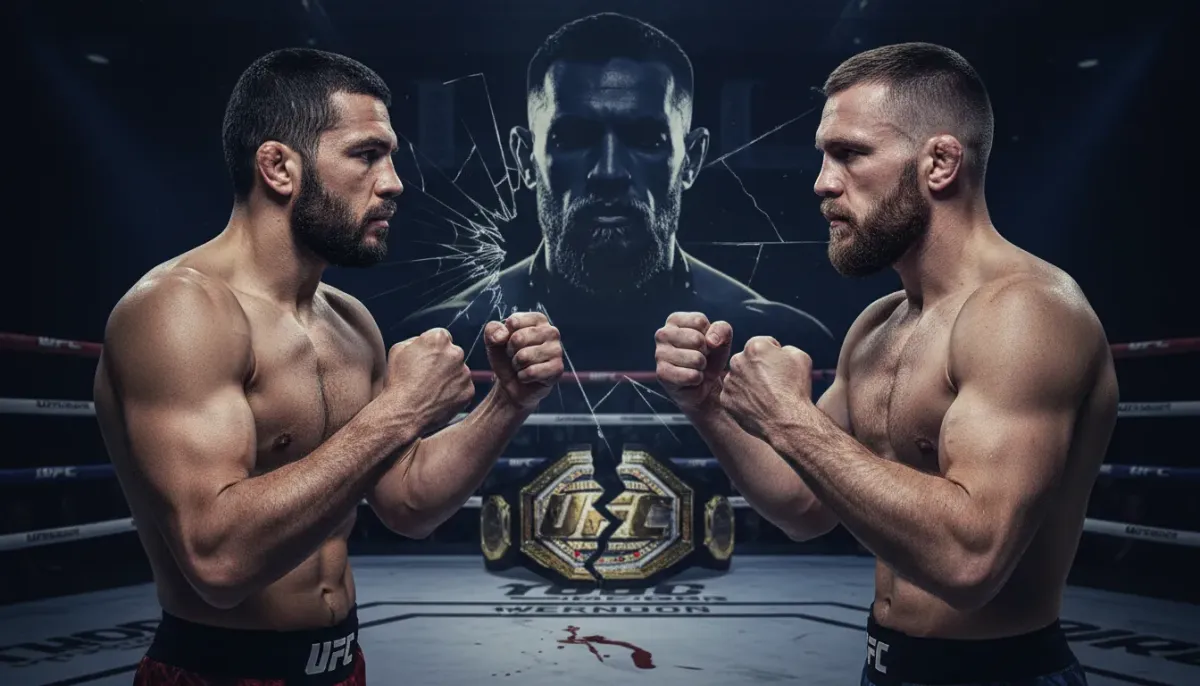
Nate Diaz Selects Netflix Over UFC Championship Opportunity
The MMA world recently received surprising news when Nate Diaz announced his return to competition, not through the UFC, but via a deal with Jake Paul's Most Valuable Promotions. The fight pairs Diaz against Mike Perry on the Rousey vs. Carano card, streaming on Netflix on May 16. This decision raised eyebrows given that the UFC had reportedly extended a lucrative offer for Diaz to return and face Conor McGregor in a highly anticipated trilogy.
After five years away from professional fighting, Diaz's choice seemed puzzling to many observers. The UFC's offer would have reunited him with one of the biggest names in MMA history. However, Diaz publicly claimed he intentionally rejected higher UFC compensation to pursue the Perry matchup instead. According to Diaz, competing against top-tier opposition mattered more than maximizing his financial return. The Netflix card under MVP represented a chance to face meaningful challenges outside the traditional UFC structure.
This narrative immediately drew scrutiny from seasoned observers of the sport, particularly those familiar with how fighter compensation and career strategy actually function in professional MMA.
Matt Brown's Financial Analysis: Following the Money
The Fighter Economics Perspective
Retired UFC welterweight Matt Brown weighed in on the situation, offering a perspective rooted in decades of experience navigating fighter compensation. Brown's fundamental argument centers on a universal principle: professional fighters invariably pursue maximum financial gain when presented with significant opportunities. This isn't cynicism but rather recognition of how athletes operate across combat sports.
Brown specifically highlighted Diaz's well-documented reputation for sophisticated financial decision-making throughout his career. The Diaz brothers have earned recognition for understanding their market value and negotiating deals that reflect their drawing power. Given this track record, the notion that Diaz would voluntarily accept lower compensation seemed inconsistent with his established business acumen.
"Money talks," Brown stated during his analysis. He emphasized that fighters comprehend prize fighting fundamentally involves pursuing the highest bidder, regardless of other considerations. This pragmatic view suggests that if Diaz truly selected the Netflix deal, the financial structure must favor that option substantially.
The Netflix Deal's Financial Architecture
Brown contends that Diaz's bank account benefits more significantly from the MVP-Netflix arrangement than any UFC offer could provide. The streaming giant's investment in MMA content has created competitive leverage previously unavailable to fighters. Netflix's resources allow for compensation packages that challenge traditional UFC economics.
The analyst suggests that simple purse comparisons fail to capture the complete financial picture. Contract structures in modern fighter deals extend beyond base fight payments. Bonuses, residuals from streaming performance, backend deals, and other revenue mechanisms might combine to exceed what the UFC offered upfront.
Brown's skepticism toward Diaz's public explanation reflects his belief that undisclosed contractual layers remain hidden from public scrutiny. The fighters, promoters, and platforms involved rarely disclose complete financial details, making accurate external analysis difficult.
Rejecting the Stated Narrative
Brown explicitly rejected Diaz's claim about preferring competition over money, stating directly that he "doesn't believe it for a second." This skepticism doesn't suggest dishonesty from Diaz but rather acknowledges that the Diaz brothers' public communication often oversimplifies complex situations. Their statements tend toward memorable soundbites that mask underlying business complexities.
The broader point suggests that multiple hidden factors likely influenced Diaz's decision beyond what he publicly articulated. Fans and analysts only glimpse the surface-level narrative while substantive negotiations occur behind closed doors.
The Competitive Case: Perry Against McGregor
Mike Perry's Legitimate Threat Level
Examining the matchup itself reveals why Perry represents a more challenging fight than the trilogy with McGregor might suggest. Perry's evolution in bare-knuckle boxing through BKFC has established him as "the King of Violence," bringing legitimacy and recent high-level competition experience. His striking power generates immediate danger for any opponent.
Meanwhile, McGregor has remained less active in pure MMA contexts recently, potentially affecting his ring sharpness. Perry's bare-knuckle success and demonstrated power advantages suggest a technical challenge that naked statistics might undervalue. Brown's technical breakdown indicated that Diaz would need to absorb significant striking punishment while maintaining his signature late-round aggression to secure victory.
The path to victory against Perry requires weathering hard shots that few fighters can ignore, then utilizing Diaz's notorious volume striking and pressure tactics in later rounds.
McGregor as the Obvious Commercial Draw
Despite Perry's legitimacy as an opponent, McGregor represents the substantially larger commercial opportunity. Diaz already defeated McGregor twice, establishing a proven competitive dynamic. A trilogy, while emotionally resonant for dedicated fans, lacks the unpredictability of unknown matchups. Yet the mainstream media attention and casual fan interest in Diaz versus McGregor dwarfs the Perry fight considerably.
Brown noted that only a handful of UFC matchups could compete with Diaz-McGregor in terms of total drawing power. Perhaps only Pereira versus Jones operates at similar commercial magnitude, and Brown argues even that comparison might underestimate the Diaz-McGregor appeal given broader mainstream recognition.
Behind the Scenes: What Might Actually Influence Decision-Making
Contract Structure Beyond Simple Purses
Brown speculated that the UFC's offer likely included multi-fight commitment requirements or extended contractual obligations that complicated its attractiveness. Returning to the UFC might have necessitated signing a deal that locked Diaz into multiple bouts, restricting his freedom to pursue other opportunities or retire on his timeline.
Conversely, MVP's agreement for a single Perry fight offered complete autonomy without long-term obligations. This structural difference might explain Diaz's preference despite potentially lower upfront compensation. The freedom to walk away after one fight provides psychological and strategic advantages that pure dollar comparisons ignore.
Independence as a Strategic Factor
The ability to control one's professional destiny has historically mattered significantly to the Diaz brothers. They've built careers partly around operating outside traditional promotional structures when possible. An offer that required surrendering future autonomy might prove less attractive than one preserving complete control, regardless of financial differences.
Brown acknowledged that industry negotiations involve considerations extending far beyond dollars and cents. Public statements from fighters rarely capture these nuanced realities, instead presenting simplified versions of complex decisions involving legal, financial, and personal autonomy factors.
This pattern of hiding substantial business realities behind memorable public statements represents a defining characteristic of the Diaz brothers' professional approach, one that has consistently baffled observers attempting to understand their decision-making purely through stated public rationales.