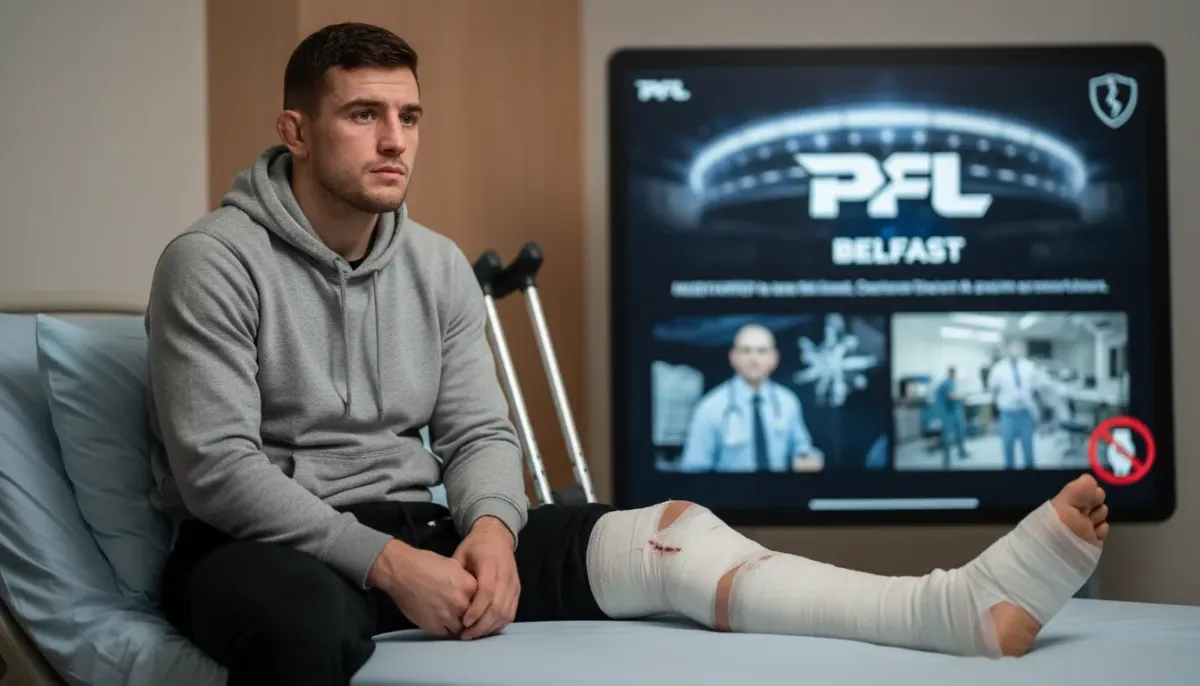
Irish lightweight Paul Hughes will not headline the upcoming PFL Belfast event after sustaining a knee injury during training camp. The fighter announced his withdrawal from the April 16 main event against Jay-Jay Wilson through social media, revealing that medical consultation has determined surgery is necessary to address the injury properly.
The Unexpected Setback
Hughes' Announcement and Injury Details
Hughes disclosed the injury through an Instagram statement, explaining that despite exploring various treatment options, continuing to train was no longer feasible. The 28-year-old competitor emphasized that he had consulted extensively with his coaching staff and medical professionals before making the difficult decision to step away from competition.
The fighter indicated that surgical intervention is imminent, marking the beginning of what he described as his next chapter focused on recovery. Hughes acknowledged the gravity of the situation, noting that this represents one of the lowest points in his career, though he remained committed to eventual rehabilitation.
A Hometown Fight Lost
What made this withdrawal particularly challenging was the significance of the matchup for Hughes personally. Headlining PFL Belfast represented a unique opportunity to showcase his abilities in front of his home crowd while simultaneously highlighting the depth of fighting talent present across Ireland.
In his statement, Hughes expressed genuine remorse toward supporters who had invested financially in attending the event. He acknowledged those who had purchased tickets and arranged travel, understanding the disappointment his absence would create. The fighter conveyed that this responsibility weighed heavily on him, stating it was something he would continue to grapple with emotionally.
Hughes' Path Forward
Recovery Timeline and Rehabilitation
No official timeline has been established for Hughes' return to competition. However, the nature of knee injuries and required surgical procedures typically necessitate an extended period away from training and fighting, potentially spanning several months.
Hughes acknowledged the psychological difficulty of watching from the sidelines while pursuing his competitive ambitions within the PFL organization. Nevertheless, he expressed determination to accelerate his rehabilitation process, emphasizing his desire to return to active competition as quickly as medically responsible.
Career Context and Motivation
The withdrawal comes following a title fight loss to Usman Nurmagomedov in October, where Hughes was seeking to reclaim championship glory. This injury interrupts his efforts to regain momentum in the lightweight division and return to winning form.
Despite this setback, Hughes maintained that his long-term championship aspirations remain unchanged. He referenced his history of overcoming adversity, noting that previous obstacles had consistently propelled his career forward and strengthened his resolve to reach the sport's highest levels.
Domino Effect on the Card
Main Event Replacement
Following Hughes' withdrawal announcement, Darragh Kelly was immediately promoted to headline the Belfast card. The undefeated featherweight prospect, boasting a perfect 9-0 record, will now face Jay-Jay Wilson (11-2) in the main event slot previously occupied by Hughes.
This represents a significant opportunity for Kelly to compete at an elevated level against an established opponent. Wilson brings considerable experience to the matchup, and the promotion creates compelling narrative implications for both fighters' trajectories within the organization.
Cascading Card Changes
Kelly's elevation from a preliminary bout triggered a series of adjustments throughout the event schedule. Kelly's original opponent, Sergio Cossio (19-11-1), required a new dance partner. In response, Pedro Carvalho, a veteran of both Bellator and UFC competition, agreed to move up in weight class to face Cossio.
Carvalho's willingness to accept the challenge demonstrates the flexibility required within professional fighting organizations when schedule disruptions occur. The Bellator-experienced fighter's transition to a new weight division adds another layer of intrigue to the revised card structure.
Additional Event Updates
New Additions to the Belfast Card
Beyond the main event reshuffling, the Belfast event welcomed notable additions. Rhys McKee, a seasoned competitor with experience in both UFC and Cage Warriors, was announced for the co-main event slot, marking his debut within the PFL organization.
McKee brings considerable credibility from his tenure in premier combat sports organizations, and his inclusion in a prominent card position underscores the event's elevated status. However, his opponent had not yet been confirmed at the time of initial announcements.
What's at Stake
The card restructuring fundamentally altered the competitive landscape and storylines for Belfast. New matchups created unexpected opportunities for several fighters while adjusting fan expectations regarding the evening's marquee attraction. The event maintained its significance despite the loss of its original headliner, with alternative compelling matchups taking center stage.
The Human Side of MMA
Understanding Combat Sports Injuries
Knee injuries represent among the most serious challenges facing combat athletes. Training camp injuries require particularly careful consideration, as they emerge during preparation phases when fighters are building toward peak performance.
Hughes' decision to prioritize surgical intervention over attempting to compete through injury reflects modern understanding of athlete health and longevity. Medical professionals and coaching staff presence in such decisions ensures that fighter safety remains paramount, even when significant opportunities are at stake.
The Cost of Disappointment
Beyond competitive implications, Hughes' withdrawal represents a financial and emotional loss for invested supporters. Fans who purchased tickets and arranged travel to Belfast encountered substantial personal costs that could not be recovered through simple rescheduling.
This reality underscores the unique burden athletes carry when representing their home regions, particularly when unforeseen circumstances intervene. The fighter's acknowledgment of this responsibility demonstrated professional maturity and awareness of his obligations to supporters who had invested in witnessing his performance.
What Comes Next
Hughes' Recovery Journey
Hughes' immediate future involves surgical intervention followed by a structured rehabilitation program. This process will involve gradual return to training, careful management of healing timelines, and eventual competitive reintegration.
The fighter's stated commitment to returning stronger and more prepared suggests a long-term perspective on career development rather than rushing back prematurely. This approach, while requiring patience and resilience, typically yields better outcomes for sustained competitive success.
The Bigger Picture
Hughes' injury setback joins a broader narrative within professional MMA regarding the unpredictable nature of athletic competition. While disappointing in the immediate term, such obstacles have historically served as defining moments within fighter careers, often fueling subsequent breakthroughs and elevated performances once return occurs.