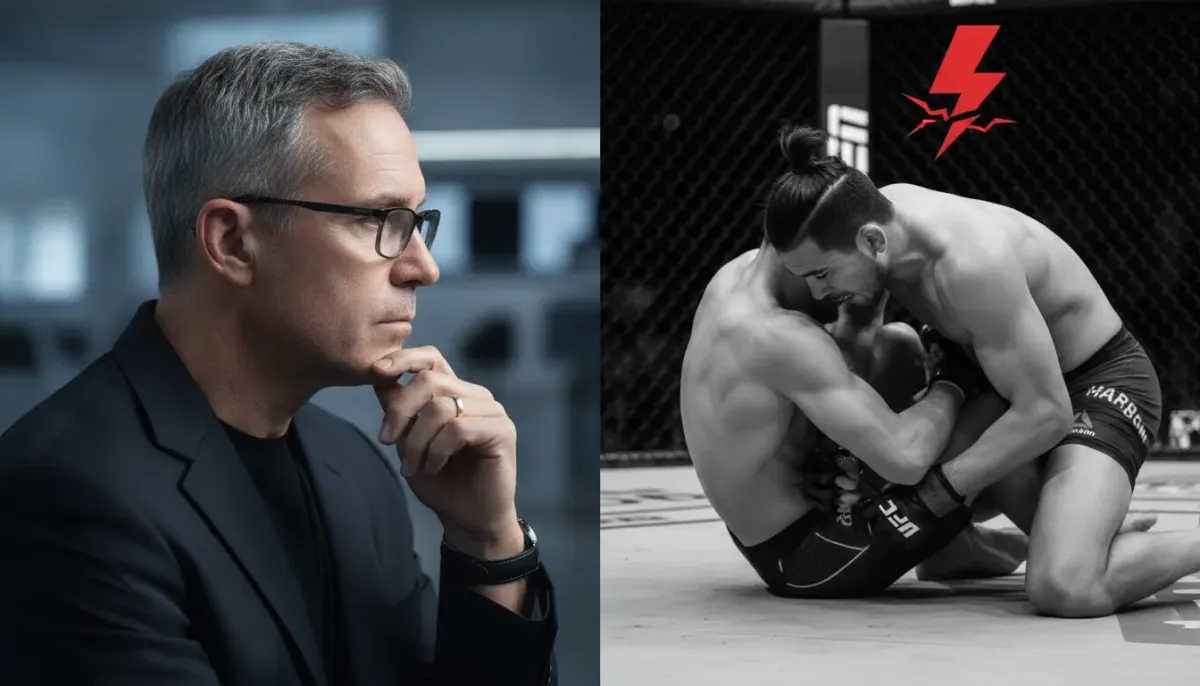
The light heavyweight division witnessed one of the most bewildering upsets in recent UFC history when Jiri Prochazka fell to Carlos Ulberg at UFC 327, losing his bid to reclaim the title. What made this defeat particularly striking was not merely the result, but the circumstances surrounding it. Veteran coach Ray Longo has since offered a scathing analysis of Prochazka's approach, questioning the fighter's mental fortitude and strategic choices during a pivotal moment.
The Shocking Turn of Events at UFC 327
Prochazka entered the main event as the heavy favorite, his technical prowess and experience pointing toward a path back to championship gold. The fight took a decisive turn when Ulberg sustained a significant leg injury, giving Prochazka what appeared to be an insurmountable advantage. With his opponent visibly compromised and struggling with mobility, the path to victory seemed straightforward. Yet the script flipped entirely when Ulberg, defying the odds and his physical limitations, mounted a comeback that culminated in a stunning knockout.
The sudden reversal left analysts and observers scrambling to understand what transpired. Prochazka had enjoyed dominance, tactical control, and a clear physical advantage, yet somehow found himself on the losing end. This wasn't a case of superior technique or preparation overcoming adversity—it was an opportunity squandered, a moment when focus and execution diverged dramatically from expectation.
Understanding the Mercy Narrative
What Prochazka Said After the Fight
In the aftermath, Prochazka addressed his decision-making, suggesting he had chosen to show mercy toward his injured opponent rather than pursue a finish. This statement immediately sparked debate within the combat sports community. The question at hand wasn't whether sportsmanship had value, but whether such restraint was appropriate during a professional championship fight where the stakes involved reclaiming a title.
The notion that a fighter might intentionally pull back during an opportunity to finish raises fundamental questions about the nature of professional combat sports. Can mercy coexist with the competitive demands of the octagon? This tension formed the crux of subsequent criticism from experienced coaches and analysts.
The Karate Kid Reference
Longo's critique took an unconventional but pointed turn when he invoked the 1984 film The Karate Kid. Specifically, he referenced the antagonist coach John Kreese's directive to his students to inflict injury on the protagonist. While the comparison might seem hyperbolic, Longo's intention was to highlight the logical inconsistency: if Prochazka chose mercy, then that decision should be accepted, not mourned as a loss.
The analogy underscored a deeper principle about the mental clarity required in championship fighting. Longo's point wasn't to encourage recklessness, but rather to question the confused mindset that led to the unexpected defeat.
Ray Longo's Harsh Assessment
The Core Criticism
Longo articulated concerns about the mental dimension of combat sports, specifically the psychological lapses that manifest when fighters lack clarity about their intentions. He questioned what was occurring in Prochazka's mind during those critical moments—the internal conflict that appeared to paralyze decision-making when action was most needed.
The veteran coach emphasized that mental discipline and focus become invaluable when circumstances present clear advantages. Prochazka's inability to capitalize on these favorable conditions suggested deeper psychological inconsistencies that extended beyond tactical considerations.
Technical Tactical Issues
Beyond the psychological dimension, Longo analyzed the actual strategies Prochazka employed. Despite targeting Ulberg's damaged leg with repeated kicks—a logical tactical choice—the approach failed to produce the desired result. The injured leg occasionally buckled, yet this visible weakness didn't translate into a decisive finish. Longo questioned whether Prochazka's selected tactics were genuinely effective for securing a knockout, or whether they represented a half-measure that satisfied neither the stated goal of mercy nor the practical objective of victory.
The Mental Game in Combat Sports
Longo expanded his criticism into broader observations about psychological consistency in professional fighting. The danger he identified wasn't unique to Prochazka but represented a widespread vulnerability in the sport: fighters who enter the octagon without mental unity often produce confused, ineffective performances.
The octagon forces absolute clarity. Fighters must choose their approach and commit fully to its execution. When conflicting emotions—mercy and aggression, respect and competition—occupy a fighter's consciousness simultaneously, the result is typically a diminished performance that satisfies neither impulse. Longo's fundamental argument suggested that once the cage door closes, external moral considerations must yield to the singular focus required for professional combat.
Ulberg's Resilience and Heart
Defying the Odds
While Longo directed substantial criticism toward Prochazka, he simultaneously acknowledged Ulberg's remarkable performance. The challenger refused to surrender despite carrying a significant injury that would have provided justification for any fighter to accept defeat. Ulberg's unwillingness to quit, combined with his ability to mount an effective counterattack, exemplified the fighting spirit that occasionally defies tactical expectations.
Earning the Win
Longo made clear that Ulberg's victory was earned through legitimate effort and refusal to accept his circumstances. He deserved credit for overcoming adversity and capitalizing on Prochazka's hesitation. The contrast between the two fighters' approaches—one committed and resolute, the other conflicted and uncertain—ultimately determined the outcome as much as any technical factor.
The Octagon Philosophy: All or Nothing
Longo articulated a fundamental principle that underpins professional combat sports: the moment the cage door closes, the normal rules of everyday interaction become suspended. What matters inside that arena differs fundamentally from what matters outside it. When two fighters enter that space, they implicitly agree to conduct themselves according to a different set of priorities where the primary objective becomes neutralizing the opponent.
This doesn't advocate cruelty or disrespect, but rather reflects the reality that hesitation and conflicting intentions create dangerous vulnerabilities. In an environment where single strikes can determine outcomes, uncertainty becomes a liability that opponents will exploit. Prochazka's experience at UFC 327 served as a visceral reminder of this principle.
Moving Forward: Lessons for Prochazka
The path forward requires Prochazka to reconcile his approach to professional fighting. Whether he maintains a philosophical commitment to showing mercy toward injured opponents, or whether he adopts a more conventional approach to championship competition, clarity remains essential. The worst outcome occurs when a fighter attempts to occupy both positions simultaneously.
This defeat, though devastating, offers an opportunity for introspection about mental preparation and strategic clarity in high-stakes situations. The question isn't whether Prochazka possesses the technical skills to compete at the championship level—his track record answers that definitively. Rather, the challenge involves achieving the psychological unity required to execute a coherent game plan when circumstances demand it most.