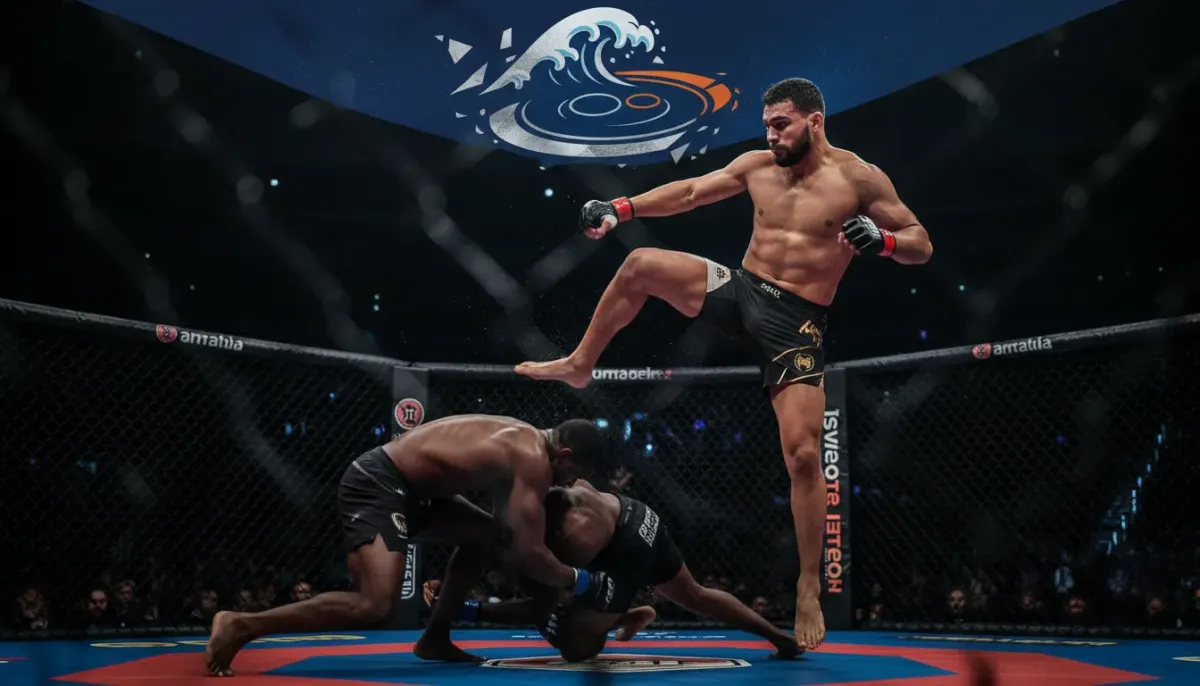
The "Problema" Effect: Why Opponents Fear His Striking Power
Renan Ferreira has carved out a reputation as one of the most dangerous strikers in heavyweight MMA. At 260 pounds, the Brazilian fighter possesses a physical presence that commands respect the moment he steps into the cage. His nickname, "Problema," translates directly to his fighting philosophy: he represents a significant problem for anyone willing to trade strikes with him.
Throughout his tenure in the PFL, Ferreira's record speaks volumes about his striking prowess. The vast majority of his victories have come by way of knockout, demonstrating his capacity to end fights decisively when opponents engage in stand-up exchanges. This knockout reputation has become both a blessing and a curse. While it establishes him as a formidable competitor, it also influences how opponents approach their matchups against him.
The psychological impact of facing such a powerful striker cannot be understated. Opponents recognize that standing and trading with Ferreira plays directly into his strengths. His distance management, footwork, and counter-striking abilities create a dangerous environment for strikers. Consequently, many competitors have begun to recalibrate their strategies, opting for approaches that mitigate his most dangerous assets.
Recent Defeats and the Wrestling Counter-Strategy
Learning from Ngannou and Nemkov
Ferreira's recent record includes consecutive defeats to elite-level competitors Francis Ngannou and Vadim Nemkov. Rather than occurring in striking exchanges, both victories came through wrestling-heavy approaches that neutralized his stand-up game. This pattern reveals a significant tactical shift in how top-tier heavyweights are approaching fights against renowned strikers.
Ngannou and Nemkov both employed a similar gameplan: establish control through takedowns and use grappling to reduce the distance where Ferreira's striking advantage is most pronounced. Both opponents recognized that competing in an open stand-up battle would be disadvantageous, so they systematically worked to control the fight on the canvas. This strategic approach highlights the sophistication of modern heavyweight MMA, where elite competitors study tape and develop specialized gameplans to exploit weaknesses.
Ferreira himself acknowledges the effectiveness of this strategy. He understands that fighting elite-level wrestlers presents unique challenges that cannot be overcome by striking alone. His setbacks against Ngannou and Nemkov represent valuable learning experiences against the highest echelon of competition.
The Reality of Heavyweight Grappling
The physics of heavyweight grappling present distinct advantages that cannot be ignored. When a 260-pound fighter with refined wrestling skills establishes top control, generating escape becomes exponentially more difficult. The combination of weight distribution and positional knowledge creates a nearly inescapable situation for opponents without elite-level bottom game.
Ferreira has trained extensively to develop his grappling arsenal at American Top Team in Florida. He recognizes that modern heavyweight competition demands complete fighters rather than specialists. His willingness to invest time in wrestling and submission defense demonstrates the evolution required to compete at the championship level. When Ferreira does establish top position, his power translates effectively from the ground, making him a threat in all facets of the sport.
Sergey Bilostenniy: A New Test of Striking versus Grappling
Analyzing the Next Opponent
Ferreira's upcoming opponent, Sergey Bilostenniy, brings a compelling fighting profile to their matchup. The Russian heavyweight boasts an impressive knockout record, with nine of his fourteen professional victories resulting in knockout finishes. This striking-oriented background suggests a stylistic alignment with Ferreira's preferred engagement range.
Ferreira has expressed optimism about this matchup, believing the stylistic composition favors his strengths. Bilostenniy's profile as a primarily striking-focused fighter offers the opportunity for stand-up exchanges where Ferreira's technical superiority and power could prove decisive. However, Ferreira remains realistic about his opponent's intentions, acknowledging that Bilostenniy will likely attempt to close distance and neutralize striking through wrestling, following the tactical blueprint established by previous opponents.
The Lightweight Heavyweight Factor
An interesting dynamic in this matchup involves physical differences between competitors. Bilostenniy operates at a lighter weight compared to some of Ferreira's previous heavyweights opponents. This distinction could create technical advantages for the Brazilian fighter, potentially allowing greater mobility and speed disparities in striking exchanges.
However, Ferreira's experience fighting elite competition has taught him that technique often supersedes raw physical advantages. Regardless of weight differentials, any opponent willing to engage in extended striking exchanges must be considered dangerous. Ferreira's preparation at American Top Team addresses all possible scenarios, ensuring readiness for either striking-focused or wrestling-intensive strategies Bilostenniy might employ.
Balancing Offense and Defense: Ferreira's Versatile Skillset
The evolution from specialized striker to complete mixed martial artist represents a critical development in Ferreira's career trajectory. Rather than resisting the need to develop grappling skills, he has embraced comprehensive training that encompasses wrestling, judo, and submissions. This versatility distinguishes elite heavyweights from adequate competitors.
His training philosophy at American Top Team reflects this commitment to balanced development. Ferreira continues honing his striking while simultaneously refining defensive wrestling and top control positions. When he establishes dominant positions, his power translates effectively from the ground, creating finishing opportunities that few opponents can survive.
Ferreira's acknowledgment that "everyone who fights me wants to grapple" reflects his pragmatic understanding of modern MMA strategy. Rather than viewing wrestling as a weakness in his opposition, he recognizes it as intelligent preparation. His willingness to adapt while maintaining his core identity as an aggressive, powerful fighter positions him well for sustained success in a competitive heavyweight division.
Road to Redemption: Championship Ambitions
No Pressure, High Stakes
Despite consecutive defeats, Ferreira maintains a composed perspective on his position within the promotion. He views his recent losses as setbacks against elite-level competitors rather than indictments of his capabilities. The distinction between losing to top-ranked opponents and losing to lower-ranked fighters carries significant psychological weight.
Ferreira has emphasized that fighting elite competition represents a credential in itself. Not every heavyweight receives opportunities to compete against contenders of Ngannou and Nemkov's caliber. From this perspective, his setbacks reflect his elite status rather than relegating him to lower ranks. This mindset allows him to approach upcoming fights with confidence rather than desperation.
Title Shot Ambitions and Promotion Growth
Ferreira's vision extends toward a rematch with Vadim Nemkov for heavyweight gold. He recognizes his value to the PFL promotion, particularly regarding drawing power and fan engagement. His aggressive fighting style and willingness to engage in explosive exchanges make him commercially valuable for the organization.
From a strategic standpoint, Ferreira positions himself as essential to the promotion's growth narrative. His ability to generate excitement through competitive performances has elevated the PFL's visibility within the MMA community. A successful return to victory against Bilostenniy would position him as a legitimate title contender, setting the stage for high-profile championship opportunities that the promotion would eagerly sanction.