A Breakthrough Moment for the British Heavyweight
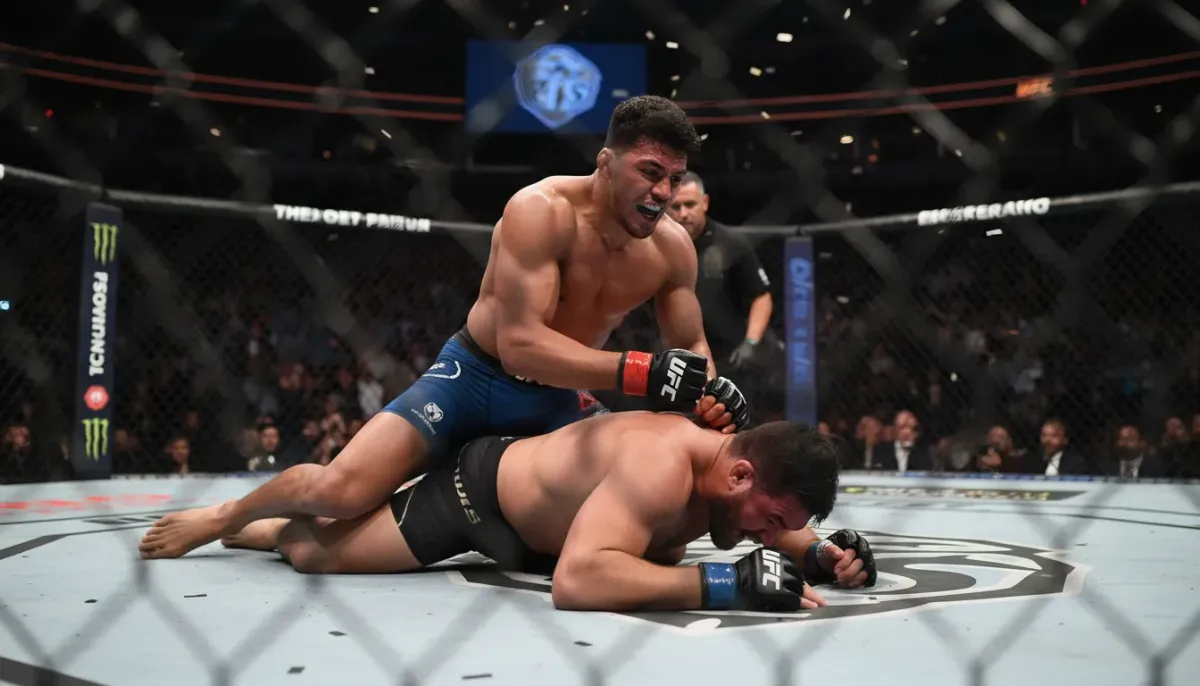
Louie Sutherland achieved a significant milestone at UFC Perth, securing his first promotional victory in impressive fashion against Tai Tuivasa. What makes this achievement particularly noteworthy is that Sutherland accepted the fight on short notice, stepping in to face an established heavyweight on minimal preparation time. Despite being the underdog against the Australian veteran, Sutherland executed a masterclass in control and execution, earning a unanimous decision victory with all three judges scoring the bout 30-26 in his favor.
The British fighter's emotional post-fight interview revealed his confidence and determination. Sutherland spoke candidly about his coaching adjustments and expressed his eagerness to continue climbing the heavyweight rankings. He demonstrated the mentality of a hungry competitor, immediately calling out established contenders like Marcin Tybura and emphasizing his readiness to face anyone in the organization. This display of confidence following a decisive first-round UFC victory signals that Sutherland has arrived as a legitimate heavyweight prospect.
How Sutherland Controlled the Octagon
Takedown Dominance Strategy
Sutherland's game plan centered entirely on wrestling dominance and ground control, a strategy that proved devastatingly effective against Tuivasa. From the opening moments, Sutherland consistently shot for takedowns, forcing Tuivasa to expend energy defending against the wrestling assault. While Tuivasa managed to escape the initial attempts through sheer strength and experience, Sutherland's persistence in pursuing the wrestling exchange gradually wore down his opponent.
The wrestling exchanges revealed the stark difference in grappling efficiency between the two fighters. Tuivasa found himself repeatedly on his back with minimal offensive options, while Sutherland maintained constant pressure through positional control. By limiting the fight to the ground, Sutherland neutralized any striking advantages Tuivasa might have possessed, forcing the veteran to operate in uncomfortable territory throughout the bout.
Ground Control and Positional Advancement
Once Sutherland established top position, he demonstrated solid fundamentals in maintaining and advancing his position. In the second round, after effectively tossing Tuivasa to the ground, Sutherland transitioned smoothly into side control before working toward mount position. At one point, Sutherland hunted for an arm triangle choke, applying pressure while keeping Tuivasa flat on his back with limited escape options.
The referee's involvement became notable as the action slowed, with officials warning Sutherland to maintain activity requirements for holding top position. Despite this caution, Sutherland executed his game plan effectively, keeping Tuivasa pinned and preventing any meaningful offensive output. His ability to transition between positions and maintain dominance from top position showcased the wrestling-heavy approach that earned him the decisive victory.
An Ugly Contest Marred by Controversy
Stand-Up Exchanges
The fight's opening phases featured intense striking exchanges when both fighters operated on their feet. Tuivasa landed powerful punches and elbows that momentarily suggested he might establish striking range, while Sutherland countered with a spinning back elbow and a clean knee strike to the midsection. These exchanges demonstrated both fighters' willingness to engage, though Sutherland's wrestling takedowns quickly dictated the fight's direction and prevented extended striking sequences from developing.
The Point Deduction and Fight's End
The bout's conclusion involved controversial moments that highlighted the fight's overall ugliness. In the final minute, Sutherland deliberately dropped to the ground in a questionable tactical display. Tuivasa responded with a knee strike to the head, a technique illegal against a grounded opponent. This costly infraction resulted in a point deduction for Tuivasa, demonstrating how even desperate offensive attempts backfired. The ref's repeated warnings about maintaining activity also underscored the fight's lack of consistent action, particularly during extended ground control sequences.
What This Means for Tuivasa's Future
Tuivasa's loss at Perth marked his seventh consecutive defeat, a devastating streak that raises serious questions about his continued viability in the UFC heavyweight division. The manner of the loss—being thoroughly dominated on the ground against a fighter who accepted the bout on short notice—suggests a significant decline in Tuivasa's competitive level. For a veteran heavyweight, this performance likely signals that his promotional future hangs in the balance.
Tuivasa likely entered this contest with the understanding that a loss could result in release from the promotion. The complete inability to mount effective offense from his back position throughout two rounds demonstrated a fundamental vulnerability that higher-ranked competitors will continue to exploit. With no victories in sight and mounting losses on his record, Tuivasa faces genuine uncertainty regarding his next opportunity in the octagon.
Sutherland's Road Ahead
Sutherland's first UFC victory has established him as a viable heavyweight contender worthy of continued opportunities. His willingness to fight on short notice, combined with his dominating performance, suggests a fighter unafraid of facing ranked or established competition. His immediate callout of Marcin Tybura indicated his ambition to continue climbing the heavyweight rankings against quality opposition.
Moving forward, Sutherland's wrestling-based approach and demonstrated control on the ground provide a solid foundation for success in the heavyweight division. If the British fighter can maintain this winning momentum and continue facing ranked competitors, he could establish himself as a serious contender within the next year. His combination of grappling prowess, composure under pressure, and mental toughness suggests that this first UFC victory will not be his last.