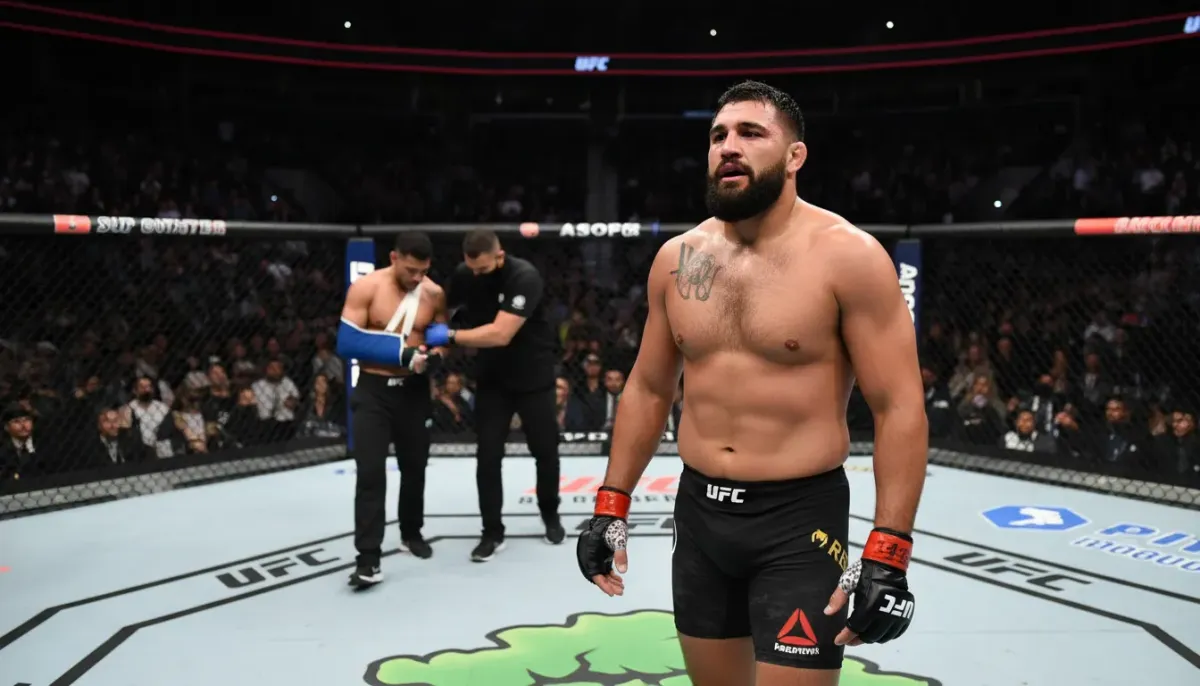
An Unexpected Blow for the Australian Heavyweight
Tai Tuivasa's scheduled bout at UFC Perth on May 2 has hit an unexpected snag. His intended opponent, Sean Sharaf, announced through social media that he would be forced to withdraw from the main card matchup due to injury. The announcement came Wednesday, leaving the promotion to determine whether a replacement opponent can be secured for Tuivasa or if the fighter will need to be rescheduled for a future event. This development adds another layer of uncertainty to an already complicated period in the heavyweight's career.
Understanding Sharaf's Medical Situation
Sean Sharaf took to social media to explain his withdrawal, posting a straightforward message to fans and the promotion. In his statement, Sharaf disclosed that he had sustained a fractured nose that would prevent him from competing on the scheduled date. He indicated plans to seek medical treatment and expressed his desire to return to competition once fully recovered. For professional fighters, nasal fractures represent a serious concern despite their apparent simplicity, as they require medical clearance before athletes can safely engage in high-contact sports. The UFC's medical protocols necessitate proper healing and physician approval, making Sharaf's decision to sit out medically justified even if it disrupts the event schedule.
Tuivasa's Career at a Critical Juncture
The timing of this cancellation could hardly be worse for Tuivasa. The heavyweight is currently enduring a six-fight losing streak that stretches back to 2022, representing the most challenging period of his professional career. This stark contrast highlights how quickly momentum can shift in mixed martial arts. Just years earlier, Tuivasa had established himself as a legitimate title contender, stringing together five consecutive victories that included a notable knockout of Derrick Lewis. His current position in the rankings sits far removed from those championship discussions, with each successive loss pushing him further down the competitive ladder. The bout against Sharaf represented a golden opportunity to reverse this troubling trajectory, as his opponent brought relatively modest credentials to the cage with a 4-2 record and zero UFC victories in two promotional appearances.
The Matchmaking Challenge Ahead
UFC officials must now navigate a significant decision regarding Tuivasa's immediate future. Two primary options present themselves: either the promotion secures a replacement opponent on short notice to keep Tuivasa competing in his home country, or they reschedule him for a subsequent event. Finding a late replacement would require convincing another fighter to accept a UFC-level bout on minimal preparation time—a difficult proposition that becomes increasingly unlikely as the event date approaches. The alternative of rescheduling offers greater flexibility in securing an appropriate matchup but sacrifices the promotional value of featuring a local Australian fighter competing before his home crowd. Each scenario carries distinct implications for Tuivasa's comeback efforts and his window for restoring competitive credibility.
UFC Perth Maintains Its Significance
Despite the disruption to one scheduled matchup, UFC Perth remains positioned as a substantial promotional event. The card is anchored by a compelling welterweight clash between former champion Jack Della Maddalena and Carlos Prates, taking place at RAC Arena in Perth, Australia on May 2. This headlining bout preserves the event's appeal and provides strong viewership potential regardless of developments elsewhere on the card. However, the loss of Tuivasa as a featured local competitor does diminish the particular appeal for Perth-based fans who were anticipating seeing one of Australia's heavyweight competitors in action.
Moving Forward: Tuivasa's Path to Recovery
The coming days will prove instrumental in determining Tuivasa's near-term trajectory. If the UFC manages to locate a willing replacement on relatively short notice, it could provide the momentum injection the fighter desperately requires. Should no replacement materialize, another postponement only extends his time away from competition and further compresses his window for reversing the current downturn. Tuivasa remains in a position where his career can still be salvaged, but each additional delay without meaningful competition inches him closer to the point of no return. The fighter's focus now shifts to circumstances beyond his direct control, awaiting the promotion's decision while preparing mentally for whatever opponent materialize next.