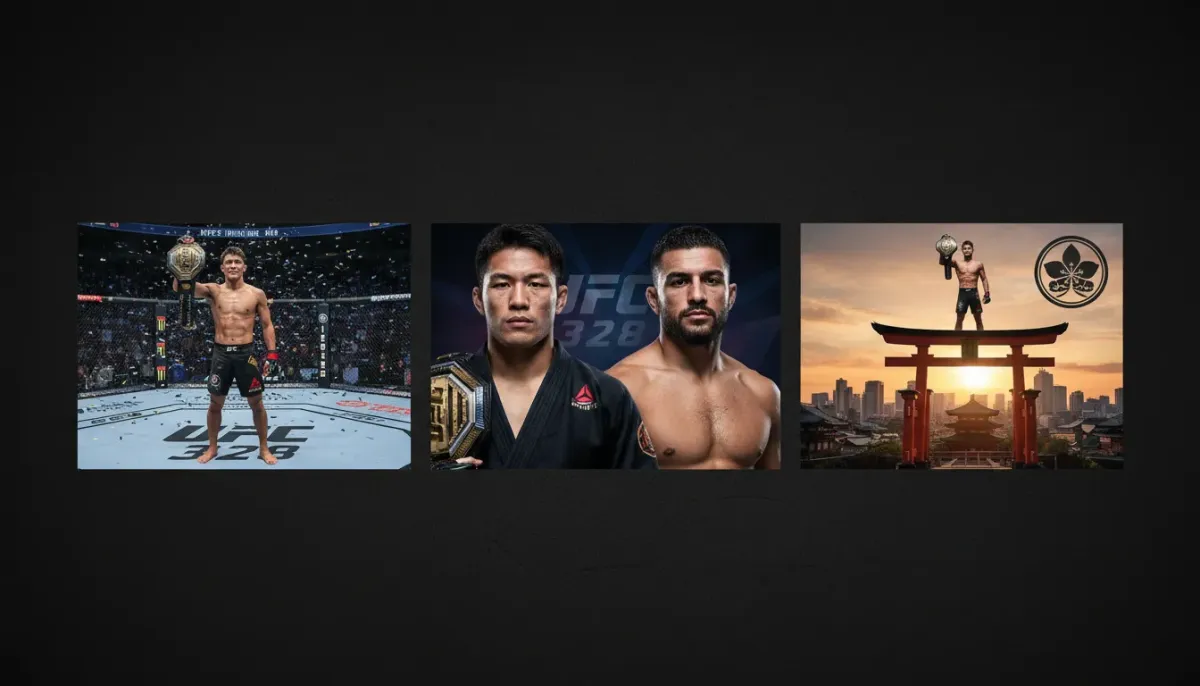
Japanese flyweight contender Tatsuro Taira stands at a pivotal moment in his mixed martial arts career. At just 26 years old, the rising star is positioned to challenge for the UFC flyweight championship at UFC 328, where he will face current champion Joshua Van. Despite the delayed timeline caused by Van's minor injury, Taira remains laser-focused on claiming his first major UFC title and the opportunities that await beyond.
The Road to UFC 328: Taira's Long-Awaited Title Opportunity
A Delayed But Determined Journey
The path to championship gold rarely follows a straight line, and Taira's journey exemplifies this reality. After spending several weeks training in the United States, the Japanese contender faced an unexpected delay when Joshua Van sustained a minor injury that pushed their title bout to UFC 328. Rather than viewing this setback as a hindrance, Taira embraced the extended training camp as an opportunity to further refine his craft and prepare mentally for the biggest fight of his career.
At 26 years old, Taira brings a distinctive combination of youth and technical maturity to the flyweight division. His rise through the ranks has been marked by consistency and measured progression, characteristics that suggest he possesses the mental fortitude needed to navigate the pressures of title contention. The delayed timeline, while initially frustrating, has allowed him to arrive at UFC 328 in peak physical and mental condition.
Respect Over Rivalry
What sets Taira apart in the competitive world of combat sports is his ability to maintain genuine respect for his opponents while remaining intensely focused on victory. When discussing Joshua Van, Taira speaks with admiration rather than dismissal. He acknowledges Van's exceptional striking ability, notable toughness, and impressive takedown defense—technical attributes that have directly contributed to Van's rapid ascent to champion status.
The two fighters have crossed paths previously, and these interactions have reinforced Taira's assessment of Van as a complete mixed martial artist. Rather than seeking psychological advantage through trash talk or manufactured drama, Taira prefers to engage with genuine competition and test his own abilities against elite talent.
The Controversial Path to Van's Championship: Setting the Record Straight
How Joshua Van Became Champion
The circumstances surrounding Joshua Van's championship acquisition at UFC 323 remain a topic of discussion within the MMA community. Van faced Brazilian veteran Alexandre Pantoja in what was billed as a title bout, yet the fight concluded under unusual circumstances. Just 26 seconds into the opening round, Pantoja suffered a freak injury that forced the referee to stop the contest. While the result technically counted as a victory for Van, the manner of his coronation sparked legitimate questions about whether he had genuinely earned the championship or merely benefited from extraordinary circumstance.
Public perception has been divided, with some suggesting that Van became champion through circumstance rather than conquest. However, such discussions overlook a fundamental truth about championship competition: fighters must be ready for every scenario, expected or otherwise.
Taira's Mature Take on Controversy
Rather than use Van's path to the title as motivation for dismissal or disrespect, Taira demonstrates maturity by separating the man from the situation. He acknowledges the genuine misfortune of Pantoja's injury while refusing to diminish Van's fighter credentials. Taira recognizes that Van was fully prepared, energized, and ready to compete on that fight night. The champion possesses legitimate technical skills and fighting ability that transcend how the title was ultimately won.
This perspective reveals Taira's understanding that championship legitimacy is ultimately determined by performances in the octagon, not by the circumstances of previous fights. By maintaining this viewpoint, Taira positions himself as a serious championship contender focused on his own performance rather than convenient narratives.
The Inevitable Next Chapter: Pantoja's Undisputed Claim to a Title Shot
Why Pantoja Deserves the Next Opportunity
Should Taira successfully capture the flyweight championship at UFC 328, the next phase of his career presents itself with remarkable clarity. Pantoja, despite the misfortune of his injury against Van, sits unquestionably at the front of the line for the next title opportunity. This isn't mere speculation—it's Taira's explicit acknowledgment of what sporting justice demands.
During Pantoja's previous reign as champion, he established himself as one of the UFC's most dominant champions across all weight classes. His victories over numerous elite 125-pound contenders demonstrated a level of technical excellence and consistency that warrants another opportunity to claim the title. The growing list of contenders at flyweight may be impressive, but none have established credentials comparable to Pantoja's championship pedigree.
Taira's Pre-Championship Study of Pantoja
Well before positioning himself as a legitimate title contender, Taira began studying Pantoja's body of work. Understanding Pantoja's dominant victories over top-ranked opponents became part of Taira's preparation for his own rise. This analytical approach demonstrates the strategic mindset Taira brings to championship-level competition, treating elite opponents as learning opportunities rather than obstacles to minimize.
The New Generation vs. The Champion: A Changing Landscape
Evolution of the Flyweight Division
The flyweight division has undergone significant transformation since Pantoja's championship reign. New contenders are emerging with impressive momentum and high-speed progression, bringing fresh technical approaches and athletic attributes to the competitive landscape. The ranked fighters at 125 pounds today represent a notably different competitive environment than those Pantoja faced during his championship tenure.
This evolution doesn't diminish Pantoja's accomplishments but rather contextualizes them within their historical moment. The rising talent represents a new generation of flyweight competitors, each arriving with modern training methods and updated technical approaches to the sport.
Taira's Vision for Championship Success
Taira expresses genuine excitement about eventually facing Pantoja as champion, viewing such a matchup as an opportunity to showcase the momentum and energy of a new generation. Rather than seeing generational change as threatening, Taira embraces it as evidence of the division's continued evolution and competitive depth. His confidence in facing Pantoja stems not from arrogance but from genuine belief in the capabilities of modern flyweight competitors.
Dreams Beyond Victory: Taira's Championship Ambitions
Defending at Home: The Japanese Megafight
While capturing the championship at UFC 328 represents the immediate objective, Taira's vision extends beyond that initial victory. His primary championship dream involves defending the title on Japanese soil, returning to his home country as the flyweight king. The UFC has conducted events in Japan throughout its history, though the promotion's presence there has become less frequent in recent years.
Championship status possesses unique power to reshape promotional schedules and generate event opportunities. A Japanese flyweight champion would provide compelling motivation for the UFC to establish a major card in Japan, potentially in one of the nation's premier venues.
The Ultimate Matchup: Kyoji Horiguchi
Beyond simply defending his title in Japan, Taira has identified the specific opponent who would make such an event historic: Kyoji Horiguchi. This potential championship bout transcends typical divisional matchups, representing the possibility of creating one of MMA's most significant moments on the Japanese sporting landscape. Horiguchi's prominence in Japanese combat sports, combined with Taira's potential championship status, would establish conditions for an elite-level arena event of genuine historical importance.
Such a matchup would represent more than a title defense—it would symbolize a generational moment in Japanese MMA, bringing together two exceptional flyweight talents on the sport's biggest stage.
The Roadmap Forward: One Step at a Time
Taira's approach to his championship aspirations demonstrates both ambition and pragmatism. UFC 328 remains the immediate priority, where he must prove his readiness by defeating Joshua Van. Should he succeed, Alexandre Pantoja awaits as the mandatory next opponent, a fight Taira acknowledges with respect and anticipation. Only after establishing himself as champion can the conversation turn to dream matchups and defending gold on Japanese soil against elite competition like Kyoji Horiguchi.
This measured approach—respecting the process while maintaining ambitious long-term vision—characterizes Taira's maturity as a championship-caliber competitor. By remaining present-focused at UFC 328 while clearly understanding the championship landscape, Taira positions himself as a fighter who understands both the immediate demands and the long-term possibilities that championship victory would create.