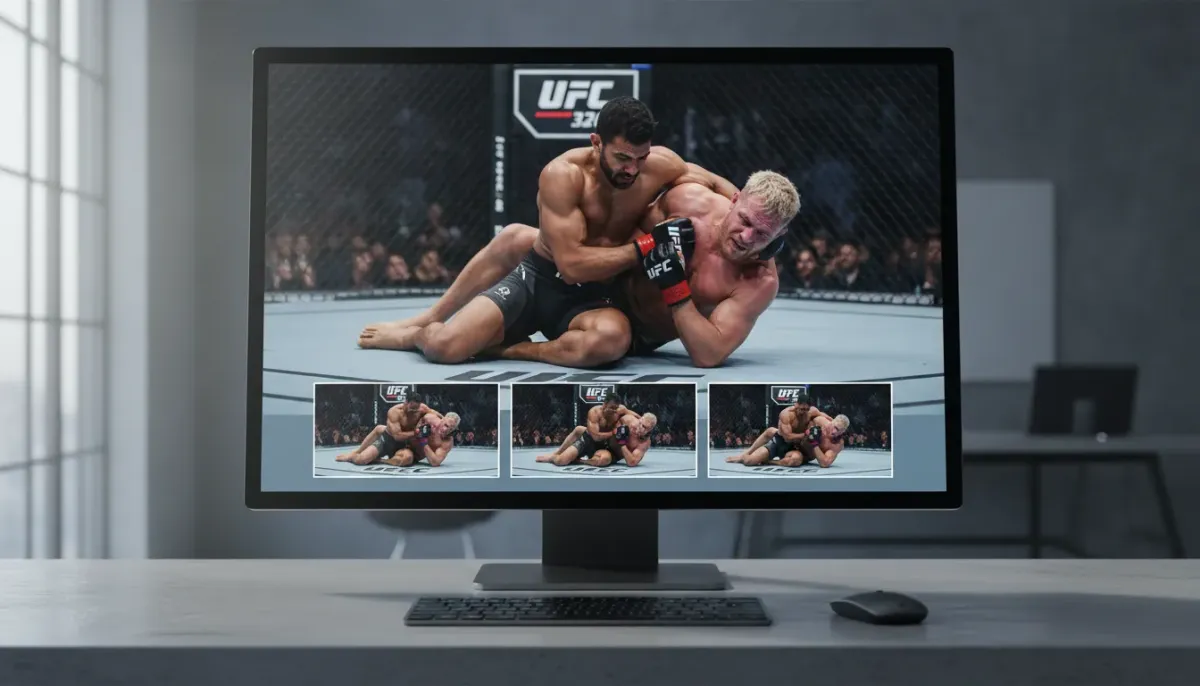
The much-anticipated rematch between Max Holloway and Charles Oliveira at UFC 326 delivered a masterclass in strategic fighting and technical expertise. Taking place on March 7 at the T-Mobile Arena in Las Vegas and broadcast live on Paramount+, this main event showcased two elite combatants employing vastly different approaches to achieve victory. What unfolded was a display of dominant grappling that left spectators witnessing the stark contrast between striking prowess and ground control at the highest level of mixed martial arts.
The Rematch That Showcased Grappling Mastery
When two fighters of this caliber step into the octagon for a second encounter, expectations run high. Holloway and Oliveira brought distinct fighting philosophies to their UFC 326 clash, creating a compelling narrative of contrasting styles. This rematch transcended typical competition—it became a philosophical battle between striking excellence and submission-oriented grappling dominance. The former lightweight champion demonstrated why he has earned respect as one of combat sports' most technically proficient grapplers, while the featherweight challenger sought redemption through his legendary striking combinations. The stakes extended beyond mere victory; they represented philosophical validation of different fighting approaches in modern mixed martial arts competition.
Pre-Fight Context and Fighter Profiles
Max Holloway's Search for Redemption
Max Holloway enters the octagon carrying an impressive record of 27 wins and 9 defeats, establishing himself as one of featherweight division's most accomplished strikers. Known for his relentless striking volume and devastating combinations, Holloway has built his career on pressure, movement, and precise hand placement. In this rematch, the Hawaiian fighter aimed to prove he could navigate through Oliveira's superior grappling and impose his will through superior striking range and tempo. His challenge lay not in striking ability—universally acknowledged as elite—but rather in executing a game plan that avoided the takedown attempts that had proven so effective against him previously.
Charles Oliveira's Dominance on the Ground
Charles Oliveira arrives with an extraordinary resume of 37 victories, 11 defeats, and one no-contest, having previously held the lightweight championship. The Brazilian fighter represents grappling excellence in contemporary MMA, combining explosive takedown entries with suffocating positional control. His arsenal includes devastating ground-and-pound strikes, technical submissions, and an intuitive understanding of how to neutralize superior strikers through relentless wrestling pressure. Oliveira's strategy centered on establishing physical dominance early, preventing Holloway from establishing his preferred striking range.
Event Details - UFC 326 at T-Mobile Arena
This championship-caliber main event took place in Las Vegas, one of combat sports' most prestigious venues. The T-Mobile Arena provided the stage for this technical showcase, with live broadcast on Paramount+ making the action accessible to global audiences. The prominence of this matchup underscored both fighters' elite status within their respective weight divisions.
Round-by-Round Analysis
Round One - Oliveira's Immediate Takedown Success
The opening moments established the fight's dominant pattern immediately. Oliveira opened with aggressive low kick combinations, seeking to establish control of the kicking range. Holloway responded with quick jab-straight combinations, landing early and appearing to set a striking rhythm. However, this offensive momentum proved short-lived. Oliveira explosively transitioned to a body lock, leveraging superior positioning to execute a powerful takedown that deposited Holloway directly onto the canvas. From top control, Oliveira demonstrated technical proficiency, immediately seeking submissions while landing consequential elbow strikes from the clinch. Holloway mounted effective defensive resistance, preventing the submission attempt while remaining cautious about exposing vulnerable positions. The round concluded decisively, with Oliveira's dominant ground control securing a clear 10-9 scoring advantage.
Round Two - Establishing Control Pattern
Holloway initiated the second frame with aggressive striking intent, landing meaningful shots and demonstrating his superior hand speed and range. Yet Oliveira countered by walking through Holloway's offense and securing another takedown through similar body lock mechanics. Once again establishing top position, Oliveira applied a body triangle while methodically landing short-range elbows. Holloway fought diligently to escape, but each attempt seemed to deepen his predicament. Oliveira's control resembled a boa constrictor's suffocating approach—not theatrically explosive but systematically effective. The former champion remained patient, taking minimal risks while accumulating striking points from dominant position. Another decisive round favored Oliveira.
Round Three - Strategic Grinding and Accumulation
The third frame followed an established script, with Oliveira continuing to dictate action through wrestling and grappling superiority. Notable moments included brief exchanges where Holloway regained standing position, yet Oliveira consistently reestablished takedowns before Holloway could generate meaningful offensive combinations. The crowd's restlessness reflected the diminishing prospect of momentum shifts. Oliveira's tactical approach—avoiding unnecessary risks once positional advantage was established—demonstrated championship-level intelligence. While less visually dynamic than striking exchanges, this grappling-dominant pattern secured additional scoring for Oliveira through consistent control and supplementary strikes.
Technical Breakdown - What the Fight Revealed
Oliveira's Grappling Mastery in Full Display
Oliveira's performance provided a technical masterclass in modern MMA wrestling. His takedown entries demonstrated explosive timing, with body locks seamlessly transitioning into positional advantage. Critically, Oliveira adjusted his gripping strategies throughout the contest, preventing Holloway from anticipating defensive counters. Once achieving top position, Oliveira avoided aggressive ground-and-pound combinations early, instead maintaining control before escalating offensive pressure. His body triangle application prevented Holloway's escape attempts while positioning himself optimally for short-range strikes. This measured approach prevented costly reversals or scrambles that might surrender accumulated advantages.
Holloway's Defensive Strategy and Limitations
Holloway's performance highlighted the limitations elite strikers face against superior grapplers. His defensive approach—remaining conservative while in dangerous positions—minimized submission risk but prevented meaningful offensive opportunities. Moments where Holloway achieved bottom position momentum were quickly suppressed through Oliveira's superior grappling fundamentals. The fight illustrated that surviving ground exchanges differs fundamentally from reversing tactical dominance, a distinction that proved pivotal throughout all three rounds.
The Striking Exchange - Limited Opportunities
Precious few opportunities emerged for extended striking exchanges. Those moments when action occurred standing demonstrated Oliveira's willingness to engage, though he consistently prioritized takedown opportunities over prolonged striking sequences. This selectivity exemplified tactical maturity—engaging where advantageous while avoiding unnecessary risks in Holloway's preferred range.
Combat Dynamics and Tactical Adjustments
Oliveira's Win Condition Strategy
Oliveira's game plan proved remarkably efficient: identify grappling superiority, establish takedowns early and often, maintain positional control with minimal risk, and accumulate scoring through consistent pressure. Neither fighter adjusted this dynamic—Oliveira achieved his objectives, while Holloway lacked tactical alternatives that might disrupt the pattern without exposing himself to further vulnerability.
Holloway's Search for Answers
Holloway's attempts to generate offensive momentum involved standing exchanges and controlled grappling engagement, yet Oliveira's technical superiority consistently overpowered these efforts. The featherweight competitor remained unable to establish sustained offensive sequences that might have influenced judges' scorecards beyond Oliveira's clear dominance.
Performance Ratings and Key Takeaways
The Significance of Dominant Grappling Display
This contest demonstrated that modern championship-level grappling can effectively neutralize elite striking at the highest competitive echelon. Oliveira's performance established a clear technical hierarchy in grappling exchanges, validating wrestling-based approaches within mixed martial arts strategy.
What This Means for Both Fighters' Trajectories
For Oliveira, the dominant victory reinforced his status as a threat regardless of weight class, showcasing techniques transferable across divisions. For Holloway, the loss highlighted the importance of addressing grappling deficiencies or accepting matchups against strikers. Both fighters' future paths will be shaped by this emphatic technical demonstration.