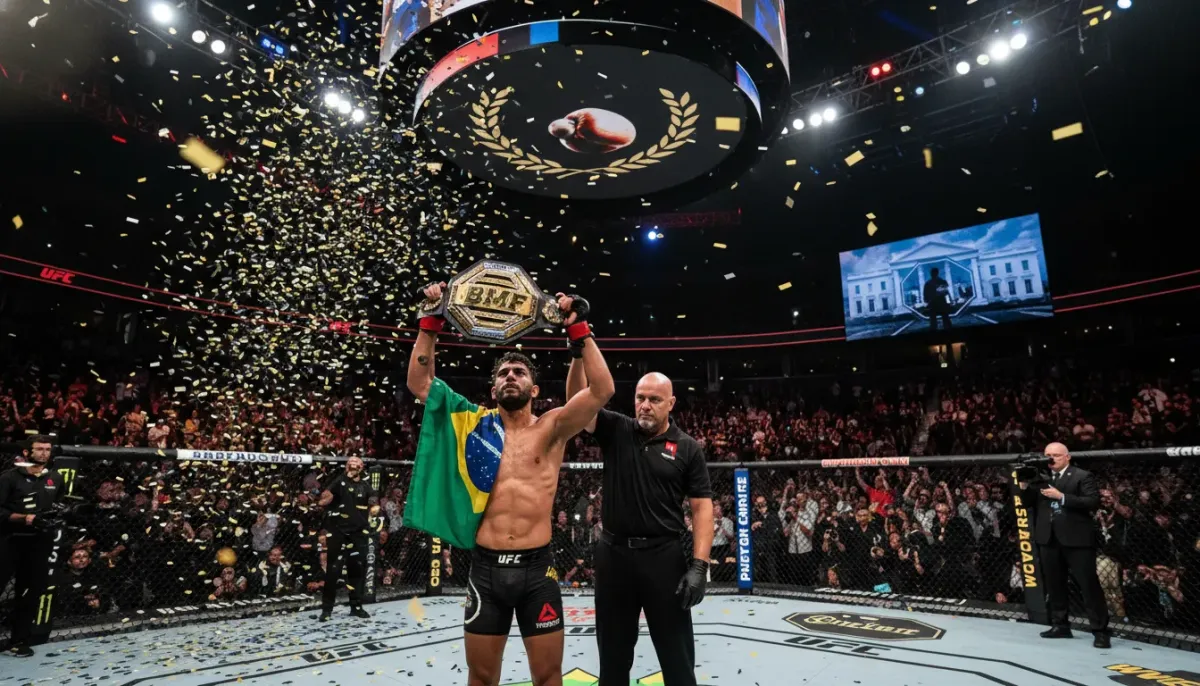
The UFC 326 event delivered a split decision in terms of fan satisfaction. Charles Oliveira's comprehensive victory over Max Holloway captured the BMF title, but the manner of his triumph sparked debate within the mixed martial arts community. Simultaneously, the promotion finally revealed its highly anticipated UFC White House card, headlined by Ilia Topuria facing Justin Gaethje, though reactions to the announcement remained decidedly mixed.
Oliveira Claims the BMF Belt With a Masterclass in Ground Control
Charles Oliveira entered the UFC 326 main event with a clear tactical blueprint, and he executed it with remarkable precision. The Brazilian fighter systematically dismantled Max Holloway through a relentless ground game that defined nearly every round of their contest. Oliveira's wrestling dominance proved nearly inescapable, as he repeatedly brought Holloway to the canvas and controlled him with suffocating pressure.
Throughout the five-round main event, Oliveira showcased technical superiority in positional control and ground positioning. He avoided getting drawn into striking exchanges where Holloway's footwork and experience could prove dangerous. Instead, the former lightweight champion implemented a workmanlike approach that prioritized accumulated advantages and rounds on the scorecard. The judges rendered a unanimous decision in Oliveira's favor, solidifying his status as the BMF champion.
While the performance itself demonstrated exceptional grappling credentials and fight IQ, the stylistic approach highlighted the eternal tension in combat sports between technical excellence and audience entertainment. Oliveira's calculated method proved effective but didn't generate the electrifying moments fans often anticipate from a prestige title fight.
Fan Reaction: Impressive Performance, Underwhelming Entertainment
The MMA community responded to UFC 326's main event with considerable ambivalence. Oliveira's wrestling mastery earned grudging respect from analysts, yet the fighting style left many viewers seeking more dynamic exchanges. The gap between technical proficiency and entertainment value became impossible to ignore, particularly given the BMF title's historical association with exciting, aggressive performances.
The BMF championship carries different expectations than traditional title bouts. This belt celebrates fighters embodying a particular ethos—boldness, aggression, and crowd-pleasing action. Oliveira's methodical, grinding approach, though strategically sound, contradicted these implicit expectations. The event itself reflected this letdown, with several segments lacking the spark that typically characterizes memorable UFC shows.
Industry observers noted that Oliveira deserves some accountability for the reception his victory received. While his technical display was undeniably impressive, elite fighters often bear responsibility for shaping their contests' narrative. The question of whether a fighter chose the optimal path to victory versus the most engaging path remained relevant in analyzing the evening's aftermath.
Should the BMF Title Take a Break?
Following the lukewarm reception to UFC 326's main event, serious conversations emerged regarding the BMF title's future. Some respected analysts questioned whether the championship might benefit from a temporary hiatus, allowing the novelty and prestige to rebuild before its next defense.
Arguments for resting the BMF title include preserving its cultural cachet. The belt gained tremendous traction through memorable performances by fighters like Nate Diaz and Jorge Masvidal. If each defense gradually diminishes fan enthusiasm, stepping back could reignite interest when the title eventually returns.
Alternative solutions included modifying the championship's format or redefining its criteria. Rather than shelving the belt entirely, the promotion might attract more naturally exciting stylistic matchups or implement specific guidelines favoring action-oriented fighters. These considerations reflected broader concerns about maintaining the BMF title's relevance as a marquee attraction within the UFC's event structure.
Beyond the Main Event: Notable Performances From the Card
Despite the main event's mixed reception, UFC 326 featured several noteworthy performances deserving recognition. Caio Borralho demonstrated impressive middleweight credentials with a dominant unanimous decision victory over Reinier de Ridder. Following the triumph, Borralho immediately called out rising contender Dricus du Plessis, signaling his ambitions at an increasingly competitive weight class.
In another compelling display, Raul Rosas Jr. controlled bantamweight action against Rob Font through overwhelming grappling proficiency. The young fighter executed 16 takedowns en route to a convincing unanimous decision, showcasing a wrestling skill set that could define his trajectory within the division. These victories collectively demonstrated that UFC 326 contained quality performances throughout its card, even if the headliner failed to capture universal enthusiasm.
The UFC White House Card Finally Unveiled
The promotion's announcement of its UFC White House card represented a significant moment for the sport. This special event carries tremendous prestige, offering the opportunity to showcase mixed martial arts at America's highest political level. The long-delayed revelation of the card details finally arrived at UFC 326, though initial reactions proved decidedly mixed among both fans and industry analysts.
The announcement process itself reflected broader discussions about the promotion's strategic direction. Expectations had built substantially during the lead-up to UFC 326, with considerable speculation about matchups and fighters who might headline this historic occasion. The actual card announcement satisfied some observers while disappointing others who harbored different hopes for how this event might unfold.
Topuria vs. Gaethje: Setting the Stage for a Marquee Showdown
The UFC White House main event pairs Ilia Topuria against Justin Gaethje, matching two of the promotion's most technically proficient strikers. This bout promises compelling striking exchanges between fighters known for precise technique and aggressive intent.
Both competitors bring distinct advantages and respective ambitions to their encounter. Gaethje carries extensive experience in high-profile contests and championship-level competition. Topuria represents an ascending force within the division, demonstrating consistent improvement and a hunger for marquee opportunities. The stylistic matchup suggests a competitive affair that should deliver the technical striking quality expected from a White House event.
This championship bout carries significant implications for both athletes' championship trajectories and their positioning within the sport's competitive hierarchy.
Jon Jones, the BMF Title, and UFC's 2026 Direction
Dana White's recent public statements regarding Jon Jones provided insight into the promotion's strategic thinking around its biggest names. White declared that Jones was "never, ever, ever" being considered for the UFC White House card, delivering remarkably emphatic language about the heavyweight legend's status.
These comments raised broader questions about how the promotion manages elite athletes and their involvement in marquee events. The statement's severity suggested deeper considerations about championship aspirations, promotional preferences, and potential retirement discussions. White previously characterized Jones' situation with language suggesting the fighter might effectively be considered retired despite maintaining an active profile.
The promotion's approach to the White House event and Jones' exclusion reflected calculated decisions about which fighters and storylines deserved elevated platforms for this historic occasion.