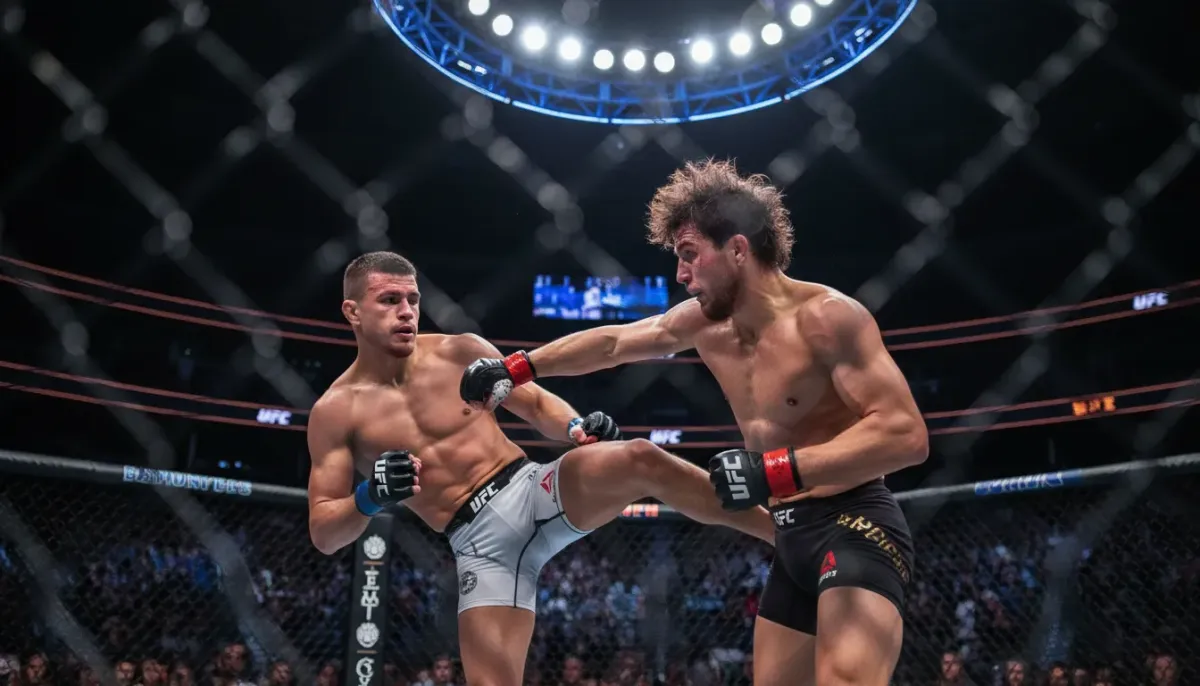
The vacant light heavyweight championship awaits its next occupant at UFC 327, held at the Kaseya Center in Miami. With Alex Pereira's departure to the heavyweight division, two compelling fighters will compete for the 205-pound throne. Jiri Prochazka, a former champion seeking redemption after two losses to Pereira, faces Carlos Ulberg, a surging contender riding an impressive nine-fight winning streak. This matchup represents a collision of contrasting fighting philosophies, with each competitor bringing distinct advantages and tactical possibilities to resolve the question of who will claim gold.
Setting the Stage - A Vacant Throne Awaits
The departure of Alex Pereira to test himself at heavyweight has created a significant opportunity within the light heavyweight division. UFC 327 serves as the stage where a new champion will be crowned, elevating the significance of this Miami event beyond typical title competition. The stakes extend far beyond a single belt—this fight will shape the trajectory of both fighters' legacies and establish the direction of the 205-pound division moving forward.
Prochazka's narrative carries the weight of unfinished business. As a former titleholder who fell twice to Pereira, reclaiming the championship would represent powerful redemption and validate his continued belief in himself. Conversely, Ulberg's journey reflects the meteoric rise of a promising prospect. His transition from troubled UFC debut to legitimate title contender demonstrates substantial improvement and positions Saturday's fight as his definitive statement about belonging at the sport's highest level. Both fighters arrive at this moment with compelling reasons to succeed, creating genuine uncertainty about the evening's outcome.
Understanding Jiri Prochazka's Fighting Philosophy
The Relentless Mental Edge
At the foundation of Prochazka's approach to combat lies an unwavering mental commitment that transcends conventional fighting wisdom. His mentality represents the bedrock of his success, enabling him to absorb punishment that would discourage most competitors while maintaining aggressive forward momentum. While Prochazka possesses legitimate offensive talent, his victories typically follow a distinctive pattern: he willingly trades two incoming strikes to land one of his own, grinding opponents down through relentless pressure rather than technical precision.
This psychological advantage manifests as an acceptance of damage that many fighters cannot tolerate. Prochazka's belief system treats fighting as sacred territory, where survival and adaptation mean more than pristine technique. His willingness to engage in prolonged exchanges, even when initially disadvantaged, creates an accumulating toll on opponents who gradually realize they cannot outlast his intensity.
Athleticism Meets Unorthodox Pressure
Supporting Prochazka's mental fortitude is a substantial array of physical tools: exceptional cardio, proven durability, and versatile athleticism. These attributes amplify his relentless pressure by enabling him to maintain devastating pace throughout full fights. Rather than perfecting a singular technique, Prochazka constantly diversifies his attacks, striking at multiple levels and adjusting his approach when initial strategies encounter resistance.
Recent fight footage reveals meaningful improvements in defensive head movement, allowing him to launch offense from superior positions. This evolution demonstrates that while Prochazka may never become a defensive mastermind, his technical development complements rather than replaces his primary strength: overwhelming opponents through sustained aggression over extended championship rounds.
Prochazka's Path to Reclaiming Gold
Prochazka's blueprint for victory remains consistent with his established formula. He must implement relentless pressure over 25 minutes, exploiting Ulberg's preference for distance-based striking. The critical strategic consideration involves the opening rounds—Prochazka cannot allow Ulberg to establish rhythm with clean striking combinations that might produce early finishes. If Prochazka survives the initial exchanges, his pace and pressure naturally compound as the fight progresses, progressively breaking down even durable opponents.
Carlos Ulberg's Blueprint for Victory
Momentum and Credentials
Ulberg arrives at UFC 327 with substantial credential improvements. His nine-fight winning streak includes six finishes and victories against ranked opponents in recent outings. This progression from troubled early UFC performances to legitimate title contention represents genuine development. His physical tools—length, power, and striking vision—position him as a credible threat to any 205-pound competitor. The narrative surrounding Ulberg frames this championship opportunity as the culmination of sustained improvement rather than premature advancement.
Tactical Strategy Against Prochazka
Ulberg's path to victory requires executing a multi-layered tactical approach that disrupts Prochazka's primary advantages. The most successful strategy involves replicating elements of Pereira's blueprint, which proved effective twice. This means implementing aggressive leg kicks early to reduce Prochazka's mobility and closing-distance capabilities. As Prochazka inevitably charges forward, Ulberg must capitalize with powerful counter-striking that punishes aggressive entries.
Unlike Pereira's devastating precision, Ulberg possesses good timing and solid power but lacks identical technical mastery. Nevertheless, consistent application of this strategy—targeting legs while punishing reckless entries—presents genuine winning conditions.
The Pereira Comparison
Pereira's dominance over Prochazka stemmed from systematic leg destruction that progressively limited his opponent's ability to close range effectively. This damage reduction forced Prochazka into increasingly compromised positions where his defensive vulnerabilities became exploitable. The critical question surrounding Ulberg's viability involves whether he possesses sufficient technical precision and power to implement similar disruption against a fighter actively seeking to prevent distance management.
The Unknown Variables
Takedown Implications
Most analysts anticipate this matchup will remain primarily striking-focused, yet introducing wrestling changes the entire tactical landscape. If either fighter successfully implements takedown entries, the fight dynamics shift dramatically. Prochazka's improved grappling credentials might surprise observers, while Ulberg's wrestling background could provide unexpected advantages. This unpredictability factor represents genuine wildcard potential that could reshape match outcomes regardless of striking proficiency.
Fight Duration Dynamics
The temporal dimension carries particular significance in this matchup. Ulberg's realistic victory window concentrates heavily in rounds one and two, where his technical approach can function before cumulative pressure effects become insurmountable. Prochazka's advantages escalate dramatically as rounds accumulate—championship rounds fatigue affects strikers more significantly than relentless grinders. This dynamic explains why early finishes represent entirely different scenarios from decision outcomes over five championship rounds.
The Expert Analysis - Who Leaves as Champion
The logical case supporting Ulberg presents reasonable tactical foundation: replicate Pereira's proven strategy and exploit Prochazka's defensive limitations. However, this analysis encounters a fundamental obstacle—Ulberg is not Pereira. While