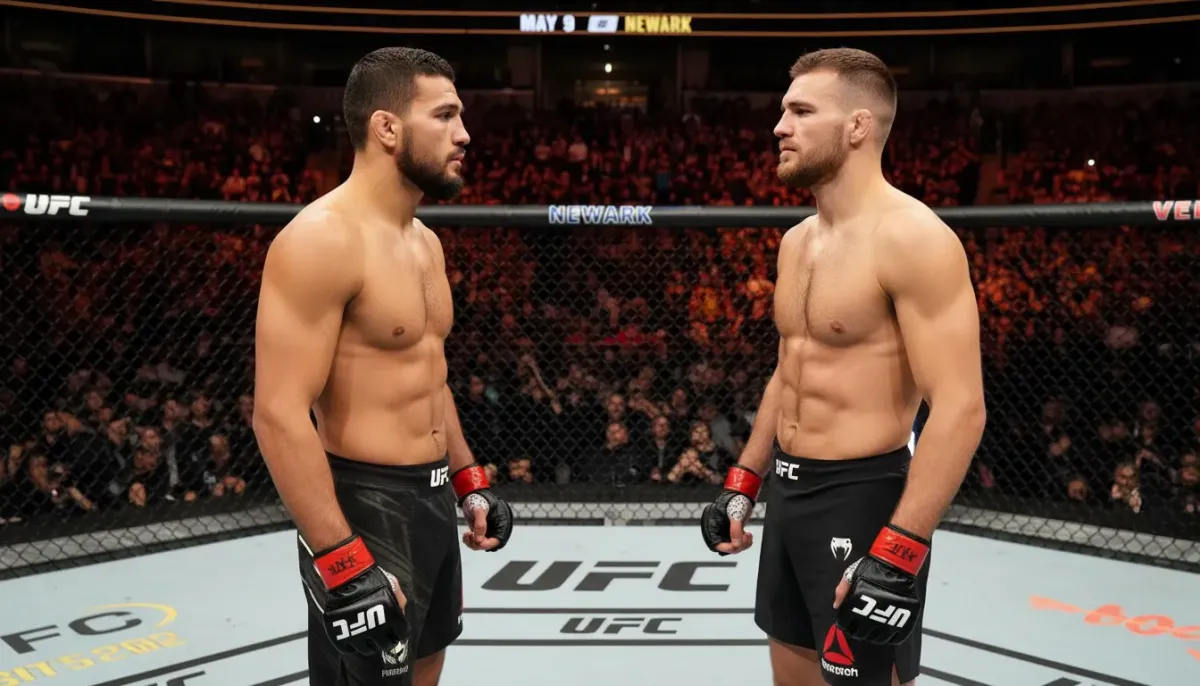
UFC President Dana White delivered substantial news during a recent announcement, unveiling the complete fight card for UFC 328. The headlining bout features Khamzat Chimaev defending his middleweight title against Sean Strickland, a matchup scheduled for May 9 at the Prudential Center in Newark, New Jersey. This revelation sparked considerable discussion within the MMA community, with reactions ranging from enthusiasm to measured skepticism about the promotion's overall direction.
Dana White's Major UFC 328 Announcement: What Fans Need to Know
The Main Event Is Set: Chimaev vs. Strickland for the Middleweight Title
The centerpiece of UFC 328 pits incumbent champion Khamzat Chimaev against challenger Sean Strickland in what promises to be a compelling middleweight title bout. Chimaev earned his championship status through a dominant performance against Dricus du Plessis at UFC 319 last August, establishing himself as a formidable force in the division. Strickland, meanwhile, enters this contest as an experienced competitor who has competed in multiple championship fights throughout his career, seeking to capture his second UFC title.
The Newark venue provides an established platform for hosting premier combat sports events, and the May 9 date allows both fighters adequate preparation time. This matchup represents a significant test for Chimaev's championship reign, as Strickland brings technical proficiency and proven ability to perform at the highest level of competition.
Why This Fight Matters for Both Competitors
For Chimaev, this bout constitutes his first title defense, a critical juncture that will define his tenure as champion. A successful defense solidifies his position atop the middleweight hierarchy and establishes legitimate championship credentials. The dominant nature of his previous victory over du Plessis elevated expectations considerably, and another convincing win would further cement his legacy.
Strickland approaches this opportunity as a fighter determined to reach championship status once again. His journey through multiple title contests demonstrates resilience and high-level striking abilities. Success against Chimaev would represent a major career accomplishment and would reshape the middleweight landscape significantly. The stakes for both athletes make this a marquee matchup worthy of main event consideration.
Beyond the Headline: Other Key Fights Announced for UFC 328
Muhammad vs. Bonfim: Another Title Contention Battle
Complementing the main event, Belal Muhammad faces Gabriel Bonfim in a bout with significant divisional implications. This matchup represents another opportunity for title contention conversations, as the winner positions themselves prominently within their respective weight class hierarchy. Muhammad brings extensive championship experience, while Bonfim continues his ascent through the promotional ranks.
Figueiredo Takes on Song Yadong in a High-Stakes Clash
Deiveson Figueiredo competes against Song Yadong in a contest that showcases the depth of talent across multiple divisions. Both fighters bring distinctive technical attributes and fighting philosophies to the octagon, promising an engaging technical display. This bout reflects UFC's commitment to featuring established competitors in prominent card positions.
Allen and Costa Round Out the Stacked Card
The card further features Arnold Allen taking on Melquizael Costa, another matchup designed to provide compelling entertainment while maintaining competitive balance. The accumulated talent across these announced fights demonstrates the promotion's effort to construct a substantive event worthy of the numbered designation.
Fan Reaction and Industry Analysis: Did the Announcements Deliver?
Mixed Reception Despite Star Power
Despite the assembly of notable fighters and championship-level competition, fan sentiment following the announcements proved decidedly mixed. While the Chimaev versus Strickland headline possesses legitimate appeal, portions of the fanbase expressed reservation about the overall direction of UFC programming. Social media responses ranged from cautious optimism to disappointment regarding specific pairings and promotional decisions.
This phenomenon reflects broader concerns within the fighting community regarding product quality and matchmaking philosophy. Even with established champions competing on the card, engagement metrics suggest audiences harbor questions about whether the promotion delivers sufficient variety and compelling narratives to sustain consistent viewership levels.
Breaking Down the Surprises and Potential Controversies
Certain matchups generated discussion regarding unexpected pairings and fighter positioning. The specific combinations of competitors, while technically sound from a competitive standpoint, did not universally excite the fanbase. Some observers questioned whether certain fighters might have been better served with alternative opponents or card placement, highlighting ongoing debates about optimal matchmaking strategy.
These discussions underscore the challenge facing promotion officials when balancing competitive integrity with entertainment value. Each fighter positioning carries implications for ranking systems, title trajectories, and long-term narrative development within weight classes.
The Bigger Picture: Consumer Interest in UFC's Direction
The lukewarm reception to what the promotion likely envisioned as a strong card announcement raises questions about consumer appetite for current UFC offerings. Declining enthusiasm despite the presence of championship-level bouts suggests deeper concerns within the fanbase regarding overall product quality, fighter development, or scheduling saturation. Market dynamics indicate that even prestigious matchups cannot guarantee robust audience engagement if broader concerns about promotional direction persist.
What This Card Reveals About UFC's Strategic Direction
The UFC 328 card demonstrates the promotion's approach to distributing championship opportunities across multiple weight classes. By featuring several title-level bouts on a single event, the organization signals confidence in various divisions while attempting to maximize viewer appeal through star power aggregation. The specific fighter combinations chosen reflect calculated decisions regarding marketing potential, competitive balance, and narrative positioning within ongoing divisional storylines.
This strategic approach, while conventional in contemporary MMA promotion, invites ongoing scrutiny regarding whether concentrating premium content on individual events serves long-term audience development objectives effectively.