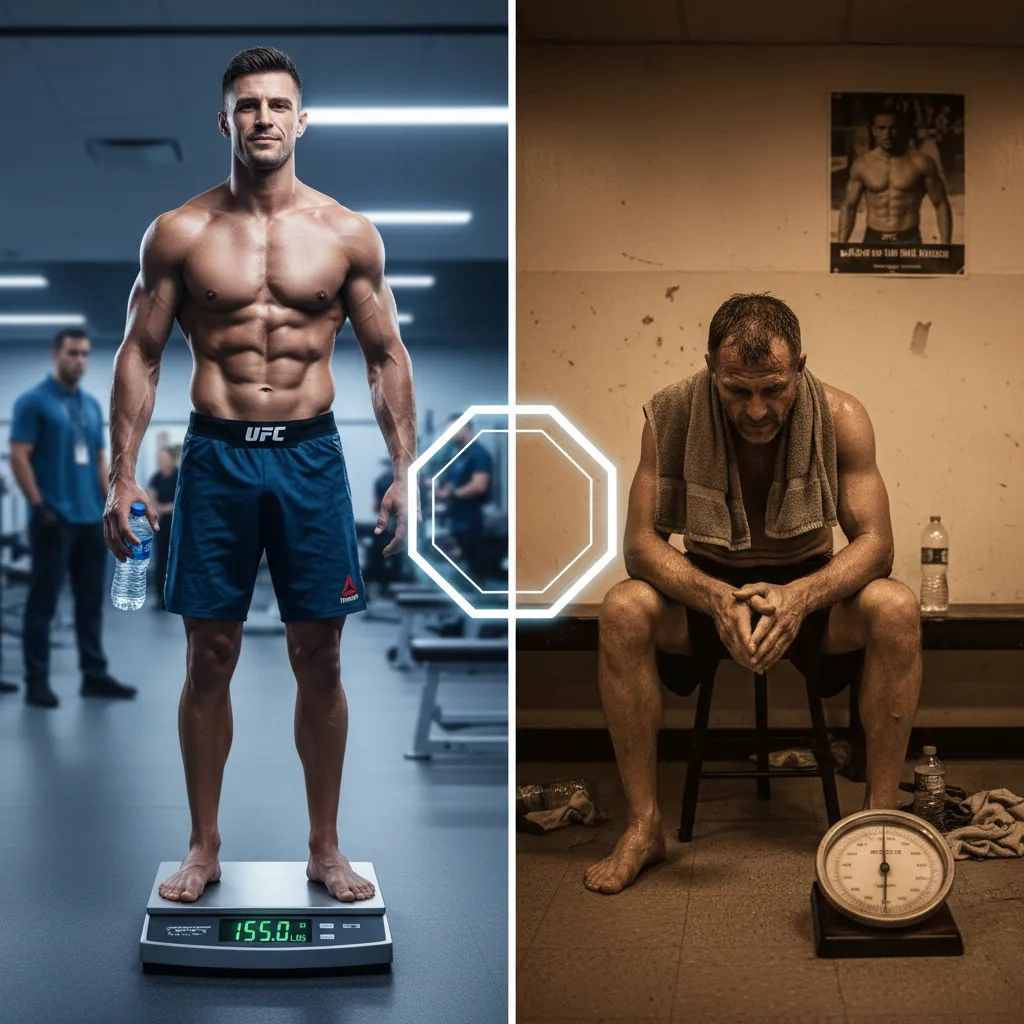
The Main Event Takes Shape – Most Fighters Make Weight
The UFC Houston weigh-in results demonstrated the precision required at the highest level of mixed martial arts competition. While most of the card came in on target, the official weigh-in session would reveal significant disparities in fighter preparation and discipline.
The headlining middleweight contest garnered particular attention as both competitors executed flawless weight cuts. Sean Strickland stepped on the scales at exactly 185 pounds, demonstrating the control expected from a seasoned professional. His opponent, Anthony Hernandez, made strategic use of the one-pound allowance granted for non-title bouts, registering at 186 pounds. This matchup represented a pivotal moment for both fighters, with significant implications for their respective career trajectories within the middleweight division. The fact that both competitors executed their weight management successfully underscored their professionalism and commitment to the sport's standards.
A Familiar Problem: Phil Rowe's Third Weight Miss
The Numbers Don't Lie – Rowe's Recurring Issue
As the final fighter to step on the scales, veteran welterweight Phil Rowe once again encountered the scale as an adversary rather than a neutral checkpoint. Rowe registered at 172 pounds, coming in one pound over the allowable limit for non-title competition. This placed him in an uncomfortable position just hours before his scheduled bout against Jean-Paul Lebosnoyani, who successfully made weight at 170.5 pounds.
The timing of Rowe's weigh-in as the last fighter of the day added another layer to the narrative. This wasn't an isolated incident or a minor miscalculation—it represented a troubling pattern that raises questions about fighter accountability and professionalism in the sport.
A History of Misses – Previous Incidents
The UFC Houston miss marked Rowe's third official weight miss in UFC competition. In two previous encounters, Rowe had come in 2.5 pounds over the limit against both Niko Price and Orion Cosce. Remarkably, both opponents fell to Rowe via knockout, suggesting that his success between the ropes had not been hampered by the weight-related complications.
However, winning fights despite missing weight creates a troubling precedent. While Rowe's knockout victories demonstrated his fighting capabilities, the pattern of weight misses raises legitimate concerns about his commitment to the sport's fundamental requirements. Success on fight night cannot excuse the unprofessionalism that precedes it.
The Circumstances Behind the Latest Miss
Late Notice Replacement – A Complicating Factor
Context matters in professional sports, and Rowe's situation at UFC Houston included significant mitigating circumstances. Rowe accepted this fight with approximately one month's notice, stepping in as a replacement after original opponent Austin Vanderford withdrew for undisclosed reasons. Short-notice bookings present genuine challenges for fighters managing their weight and camp preparation.
When fighters must scramble to find opponents and compress their training camps, weight management becomes exponentially more difficult. The body requires proper conditioning and recovery time to safely cut weight. However, this explanation, while valid, becomes less persuasive when a fighter has already missed weight twice before in his UFC career.
What Happens Next? The Catchweight Question
Following the weigh-in complications, uncertainty remained regarding the bout's format and financial implications. Typically, fights involving weight misses can proceed at catchweight, with the heavier fighter forfeiting a percentage of his purse to his opponent. As of the weigh-in results, the specific arrangements between promotion officials and both fighters remained undetermined.
Catchweight bouts alter the negotiated terms of competition and can significantly impact fighter compensation. The percentage forfeiture calculation and whether the bout would even proceed at catchweight depended on further discussions between UFC officials and both Rowe and Lebosnoyani.
The Broader Implications for UFC Houston
Professionalism and Fighter Responsibility
Weight cutting represents a foundational responsibility within combat sports. Unlike other professional sports where athletes control most variables, MMA fighters voluntarily enter a sport with specific weight class requirements. Meeting those requirements demonstrates basic professional competency and respect for opponents.
When fighters repeatedly miss weight, they signal a troubling lack of discipline or commitment. Each miss suggests either inadequate preparation, poor planning, or indifference to the professional standards governing the sport. For a veteran like Rowe, who should possess extensive experience managing this aspect of competition, repeated failures become increasingly indefensible.
What's at Stake
UFC Houston deserved to showcase the sport at its best—competitors executing their craft with professionalism and precision. Weight misses, particularly when they become habitual, undermine this objective. They create complications, generate disputes over bout conditions, and distract from the legitimate competition taking place inside the octagon.
For fighters like Strickland and Hernandez who executed their weight cuts perfectly, a compromised fight card due to a veteran's repeated failures represents an unfortunate distraction. The broader MMA community watches these situations carefully, noting how promotions enforce accountability and whether professional standards genuinely matter or simply serve as suggestions for established athletes.