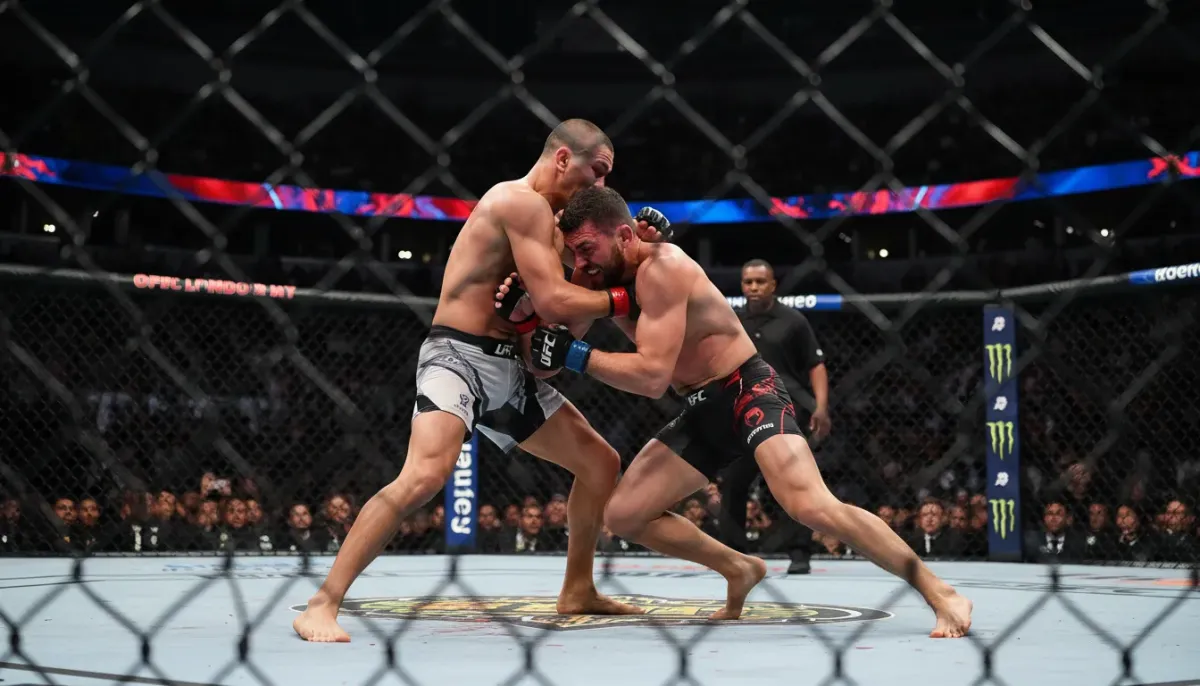
The High Stakes for Two Deserving Featherweight Challengers
The UFC London main event between Movsar Evloev and Lerone Murphy represented far more than a typical featherweight matchup. Both competitors arrived at the O2 Arena carrying the weight of unfulfilled championship aspirations, making this bout a critical juncture in their respective careers.
Evloev brought an immaculate 19-0 record to the octagon, yet remained conspicuously absent from title consideration despite his perfect resume. Featherweight champion Alexander Volkanovski had publicly advocated for Evloev to receive a championship opportunity, but the UFC's decision-makers had consistently looked elsewhere. For Evloev, anything less than a dominant performance threatened to further complicate his path to gold.
Murphy entered with an equally impressive 17-0-1 record, having earned his own shot at contention through spectacular performances. His devastating knockout victory over Aaron Pico the previous year appeared to position him perfectly for a Volkanovski matchup, yet the promotion opted for Diego Lopes instead. Like Evloev, Murphy faced a must-win scenario if he hoped to finally reach championship conversations.
Pre-Fight Circumstances and Fighter Dynamics
The physical matchup favored Evloev slightly on paper. The undefeated fighter held a two-year age advantage while standing two inches shorter than his opponent. Oddsmakers reflected this assessment, installing Evloev as a -250 favorite with Murphy positioned at +205. The betting lines suggested a competitive affair with a slight technical edge to Evloev's corner.
The crowd provided an interesting psychological backdrop for the contest. Murphy earned enthusiastic support from the London fans, projecting visible intensity and focus during walkout proceedings. Evloev, conversely, absorbed considerable booing from the spectators yet displayed remarkable composure, responding with heart gestures that betrayed no emotional reaction. This mental fortitude suggested a fighter comfortable operating in hostile environments.
Early Round Establishment and Strategic Evolution
The opening rounds established a deliberate, methodical pace. Neither combatant rushed to force exchanges, instead opting to feel out positioning and range. Evloev demonstrated superior control of the center of the octagon, while Murphy preferred working from the perimeter, utilizing lateral movement to avoid being backed toward the fence.
Evloev initiated with body kicks that found their target with regularity, yet Murphy countered effectively with crisp one-two combinations. A peculiar aspect of Evloev's approach involved his complete absence of takedown attempts during these early exchanges, surprising analysts given his known wrestling credentials. Murphy continued landing more total strikes through the first two rounds, though Evloev's offensive output, though limited, appeared more calculated and efficient when delivered.
Mid-Fight Momentum Shifts and Tactical Adjustments
By the third round, Murphy had grown increasingly comfortable, landing sharp combinations that demonstrated superior range control. The undefeated fighter from London began mixing kicks with punching combinations, accumulating damage while Evloev remained reluctant to employ his full arsenal.
Finally, desperation forced Evloev's hand. Multiple takedown attempts emerged, suggesting a strategic recalibration, though Murphy successfully defended and escaped grappling exchanges quickly. Low kick infractions complicated the round's flow, creating momentary stoppages that disrupted rhythm for both competitors. By round's end, Murphy had established substantial advantages, appearing fresher and more decisive with his offensive outputs.
The Critical Final Round and Strategic Implications
The fourth round began with another low kick incident requiring referee intervention. This injury-induced break preceded a dramatic awakening from Evloev, who finally displayed the urgency and aggression his championship aspirations demanded. Multiple takedown attempts suddenly appeared, with Evloev transitioning to back control and unleashing hammerfists in desperation.
The timing, however, proved problematic. Evloev's transformation into a complete fighter came far too late. Murphy, though vulnerable during these grappling exchanges, managed to escape back to his feet. The final moments showcased glimpses of what Evloev could have accomplished had he implemented his wrestling strategy from round one, rather than waiting until nearly defeated.
What This Performance Revealed About Title Contention
The bout exposed a troubling paradox within featherweight title picture discussions. Evloev's perfect record should have guaranteed immediate championship consideration, yet his selective approach to utilizing available tools raised legitimate questions about readiness. Murphy's near-perfect resume similarly failed to translate into obvious next-challenger status.
Both fighters demonstrated technical proficiency, yet neither delivered the dominant, complete performance typically required for title shots. Evloev's reluctance to implement wrestling against an opponent unfamiliar with his grappling likely cost him victory. Murphy's adequate but unspectacular striking performance, while effective, failed to generate the excitement typically expected from title contenders.
The broader championship landscape now raises critical questions about what the UFC actually demands from featherweights before granting Volkanovski matchups. Both competitors leave the octagon with legitimate grievances regarding championship access, yet both also departed with lessons about employing complete skillsets and maintaining urgency throughout competition.