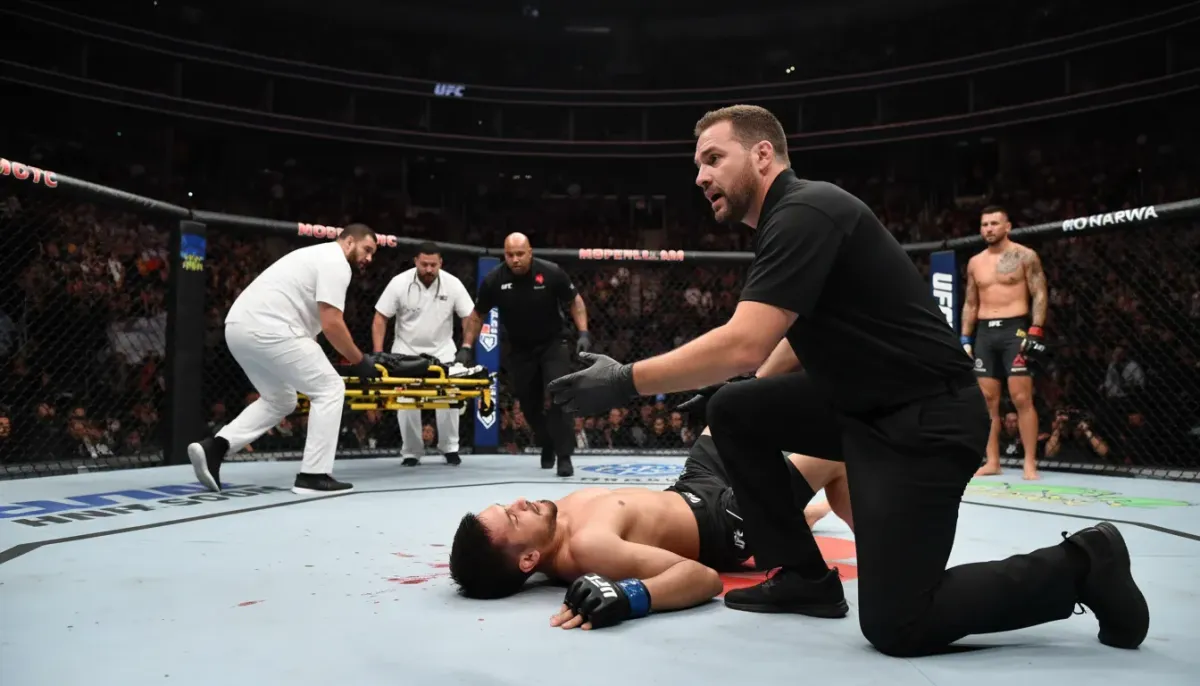
Mixed martial arts competition requires referees to make split-second decisions in unusual circumstances. The Cody Garbrandt incident at UFC 326 highlighted how proper officiating procedures can appear controversial to fans unfamiliar with MMA rulebooks. Understanding these protocols reveals why experienced referees like Herb Dean are trained to handle medical situations with both fairness and fighter safety in mind.
The UFC 326 Incident: What Happened Inside the Octagon
During a preliminary bout between Cody Garbrandt and Xiao Long at UFC 326, the fight took an unexpected turn when Xiao delivered a low blow to the former bantamweight champion. This illegal strike forced referee Herb Dean to pause the competition and allow Garbrandt recovery time. While Garbrandt was recovering from the impact of the foul, he experienced nausea that resulted in vomiting.
The sequence of events occurred during a stoppage in action rather than mid-fight, which became an important detail in how the situation was ultimately handled. The broadcast did not show the complete incident, which contributed to confusion among viewers about what actually transpired and why Dean made his officiating decisions. This lack of visibility sparked significant discussion on social media platforms and among MMA enthusiasts questioning the legitimacy of allowing the fight to continue.
Why Fans Questioned the Referee's Decision
Many MMA fans believed that any expulsion of bodily fluids automatically results in a technical knockout loss. This misconception stems from general MMA safety rules designed to protect fighter health and maintain competition standards. However, the actual rulebook contains nuances that most casual viewers don't understand.
The gap between fan expectations and official regulations became apparent as spectators expressed confusion about why Garbrandt wasn't disqualified or why the fight continued. This highlighted a broader issue in combat sports: the difference between what appears obvious to observers and what the technical regulations actually permit. Education about these distinctions helps fans appreciate the complexity of modern officiating.
John McCarthy's Expert Breakdown of Proper Officiating
Big John McCarthy, one of the most respected referees in MMA history, publicly defended Herb Dean's decision-making on social media. McCarthy explained that Dean and the Nevada State Athletic Commission ringside physician handled the situation correctly according to established protocols.
McCarthy emphasized that fighters receive up to five minutes to recover from a foul. During this recovery window, medical staff brought a bucket for Garbrandt due to his nausea stemming from the illegal low blow. The ringside physician then assessed whether Garbrandt could safely continue competing or if the fight needed to be stopped due to his medical condition. Since the physician cleared him to continue, Dean deducted a point from Xiao for the illegal strike and restarted the bout. This sequence demonstrates how experienced officiating balances fighter safety with fair competition.
The Legal Blow vs. Illegal Blow Distinction
McCarthy highlighted a crucial difference in how officials handle identical outcomes depending on their cause. If Garbrandt had vomited from a legal strike rather than the illegal low blow, the result would have been completely different.
In a scenario involving a legal blow, Herb Dean would have immediately stopped the fight and awarded a technical knockout victory to Xiao. However, because the vomiting resulted from an illegal foul, the five-minute recovery window applied, and the ringside physician retained authority to determine if competition could safely continue. This distinction protects fighter health while maintaining competitive integrity, ensuring that illegal techniques don't go unpunished and legitimate techniques produce consistent results. The physician's authority to stop any fight supersedes competitive concerns, making fighter welfare the highest priority throughout decision-making processes.
Break in Action vs. Mid-Fight Complications
The timing of this incident significantly influenced how officials managed the situation. Because the vomiting occurred during an established stoppage rather than mid-action, Herb Dean and the medical team had more flexibility in their response protocols.
When incidents happen between rounds or following a foul, officials can employ procedures similar to those used for standard medical evaluations. This differs substantially from medical emergencies occurring during active fighting, where referees must make faster decisions with less opportunity for physician consultation. The break in action allowed the ringside physician adequate time to assess Garbrandt's condition, make recommendations, and determine if he could safely continue. Understanding this timing distinction explains why the same medical event might be handled differently depending on when it occurs during competition.
Historical Context: Other Bodily Fluid Incidents in MMA
The Garbrandt situation wasn't unprecedented in combat sports history. A notable incident occurred between Felice Herrig and Justine Kish, when bodily fluids became a factor during their fight. Different bodily fluid incidents have produced varying outcomes depending on their causes, what caused them, and when they occurred.
The MMA community maintains archives of fights where vomiting or other bodily fluid incidents directly influenced final results. These historical examples demonstrate that athletic commissions and referees have long considered these rare situations when establishing modern regulations. Rules have evolved to address these scenarios fairly, ensuring that both fighter health and competitive standards remain prioritized in decision-making.
The Role of Athletic Commission and Ringside Physician
The Nevada State Athletic Commission and its ringside physician played essential roles in the Garbrandt decision. These medical professionals maintain authority to stop any fight immediately if they determine a competitor cannot safely continue, regardless of the competitive situation or round number.
The ringside physician's authority supersedes competitive considerations, meaning fighter welfare always takes priority over match outcomes. When referees like Herb Dean make real-time decisions, they collaborate closely with medical staff to ensure that competition continues only when it's safe to do so. This partnership between officials and physicians creates a system where multiple trained professionals evaluate each situation, reducing the likelihood of poor decisions that could endanger competitors. The commission's oversight further ensures that officiating remains consistent and protective of all athletes under its jurisdiction.