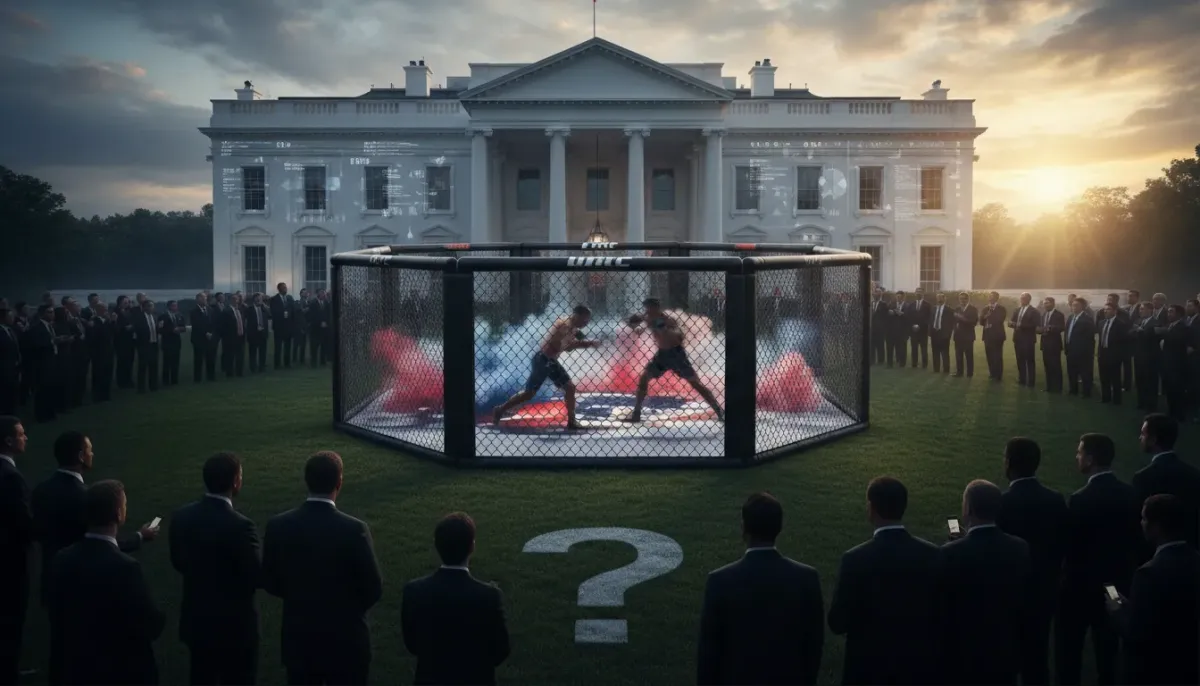
When the UFC announced its historic White House event for June 14, the mixed martial arts world erupted with excitement. President Donald Trump's involvement and Dana White's grandiose promises of an unprecedented card created enormous expectations. However, as the official lineup materialized, a stark disconnect emerged between the ambitious promotional messaging and what the organization actually delivered to fans. This analysis examines whether the UFC White House card truly lives up to its extraordinary hype or represents a significant shortfall in execution.
The Hype vs. Reality Disconnect
The promotional campaign for the White House event was nothing short of theatrical. Dana White and President Trump painted a picture of an unprecedented gathering featuring the sport's absolute elite. Comparisons to historic events and promises of a card unlike anything previously witnessed set an exceptionally high bar. Yet when the matchmaker's final selections were announced, the reception among seasoned MMA observers revealed a troubling gap between expectation and delivery.
What should have been a lineup featuring the sport's most compelling matchups instead featured several questionable booking decisions. Generational talents like Ilia Topuria and Alex Pereira deserve the highest level of opposition, yet their matchups, while competitive, don't represent the obvious first-choice opponents fans anticipated. This pattern of compromise permeates the entire card, raising legitimate questions about whether the UFC prioritized marquee names over optimal matchmaking during this extraordinary opportunity.
Breaking Down the Main Card Attractions
Topuria vs. Gaethje: The Legitimate Championship Clash
The headlining unification bout between undefeated lightweight champion Ilia Topuria and interim champion Justin Gaethje represents the card's most compelling element. Topuria's perfect record and widespread recognition as a pound-for-pound elite fighter justify his position atop the card. Gaethje, despite being interim champion, offers a legitimate stylistic challenge with his aggressive striking and wrestling capabilities.
This fight carries genuine championship significance and could yield exciting developments regardless of the victor. The winner will control the lightweight division's narrative going forward, potentially setting up future title defenses or dominant runs. While some fans hoped to see Topuria face additional contenders first, Gaethje represents respectable opposition for a legitimate title unification.
Pereira vs. Gane: The Interim Title Compromise
Alex Pereira's ascension to heavyweight status represents one of modern MMA's most remarkable achievements. His decision to challenge for interim heavyweight gold rather than pursuing a direct title shot against Tom Aspinall raises eyebrows within the competitive community. An interim title fight, by definition, creates ambiguity about who legitimately controls a division—a particularly relevant concern given Aspinall's existing heavyweight supremacy.
Ciryl Gane presents legitimate dangers. His technical striking and footwork could frustrate Pereira's approach, while the Brazilian's devastating finishing power remains a constant threat. However, defeating an interim opponent won't definitively establish Pereira as the undisputed heavyweight champion, potentially leaving his legacy in disputed territory.
Secondary Matchups Worth Your Time
Beyond the main events, several bouts deserve attention. Diego Lopes versus Steve Garcia offers featherweight excitement, with Garcia's seven-fight winning streak and knockout prowess contrasting against Lopes' proven ability to deliver engaging performances. Michael Chandler's return against Mauricio Ruffy provides star power and the potential for spectacular action. Bo Nickal faces a crucial test against Kyle Daukaus, while Sean O'Malley headlines a matchup that has generated substantial controversy among matchmaking analysts.
The Matchmaking Missteps
O'Malley Deserved Better Opposition
Sean O'Malley's bantamweight prominence deserved marquee opposition at the White House event. Cory Sandhagen has campaigned extensively for this opportunity, representing a stylistically intriguing matchup with genuine title implications. Instead, the UFC selected Aiemann Zahabi, a capable competitor with respectable credentials but lacking the narrative weight and fighting prominence that O'Malley's platform demanded.
While Zahabi has compiled an impressive win streak, his opponents don't match Sandhagen's pedigree or relevance. This decision epitomizes the card's broader pattern: competent matchmaking that settles for adequacy rather than pursuing excellence. A O'Malley versus Sandhagen showdown could have elevated this entire event's championship credentials and provided fans with a genuinely significant bantamweight clash.
Notable Absences and Controversial Decisions
Jon Jones' exclusion stung the MMA community considerably. Islam Makhachev remained unavailable for a potential Topuria superfight, while Arman Tsarukyan and other elite contenders mysteriously received no invitations. These absences suggest either contractual complications, scheduling conflicts, or strategic decisions that prioritized less obvious opponents over the sport's most demanding matchups.
Expert Analysis and Fan Reception
The Consensus Among MMA Observers
Professional analysts offered measured verdicts ranging from favorable to critical. Some awarded the card grades around 89 out of 100, acknowledging its competitive merit while emphasizing its failure to meet historic promises. Others compared it unfavorably to UFC events that required far less promotional buildup. The consensus holds that while this represents a solid modern UFC card, it catastrophically underdelivers on promises of unprecedented greatness.
When serious observers debate whether this White House card surpasses previous events headlined by retired fighters and unheralded opponents, the promotional strategy has clearly backfired. The UFC set expectations so elevated that meeting them became impossible, ensuring predetermined disappointment regardless of actual lineup quality.
What Fans Are Actually Saying
Documented fan reactions reveal substantial backlash across social media platforms and MMA forums. Observers note that the UFC's indifference to criticism signals an organization unconcerned with audience satisfaction. Dana White's dismissive posture at press conferences further inflamed sentiment, suggesting the promotion prioritized star power over substantive championship narratives. This disconnect between organizational confidence and community perception threatens long-term viewership and fan investment.
Finding the Silver Linings
Genuine Talent on Display
Despite organizational missteps, the event features undeniable star power. Topuria and Pereira represent generational fighters whose very presence legitimizes the card. Several matchups carry authentic competitive merit and narrative significance beyond mere marketing concerns. The possibility of explosive finishes throughout the evening remains substantial, and six-fight cards arguably provide superior entertainment value compared to oversaturated, bloated event lineups.
Fights Most Likely to Steal the Show
Lopes versus Garcia emerges as a potential Fight of the Night candidate, offering genuine stylistic intrigue and competitive balance. Chandler's involvement guarantees energetic performances and crowd engagement. Several bouts feature unpredictable outcomes beyond the obvious championship conclusions, suggesting the evening could deliver satisfying surprises that transcend its questionable promotional foundation.
What This Reveals About the Current State of the UFC
This event exposes fundamental organizational challenges within modern UFC operations. The promotion struggles to balance ambitious promotional promises with realistic championship matchmaking. Star power and narrative convenience increasingly override the pursuit of truly compelling matchups. The White House card demonstrates how contemporary MMA struggles with expectation management, ultimately damaging brand credibility when grandiose promises collide with pragmatic competitive realities.