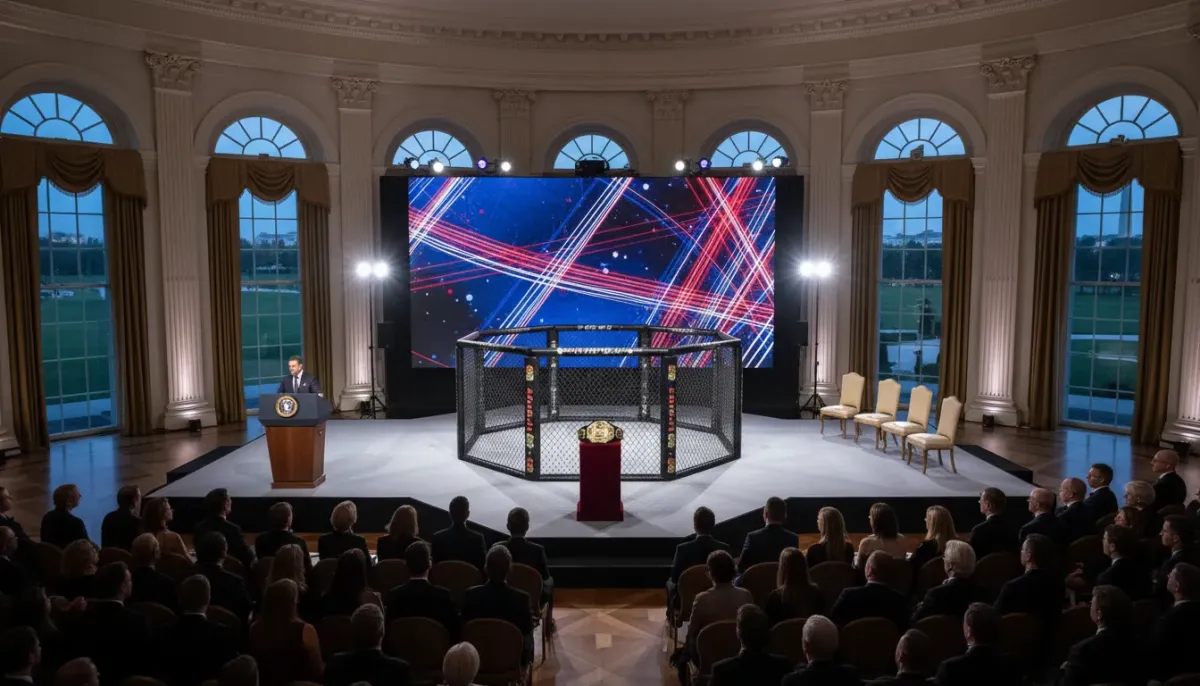
The UFC finally lifted the curtain on its highly anticipated White House event, unveiling a card that has ignited considerable discussion within the combat sports community. With championship-level matchups and some notable absences, the organization has set the stage for what promises to be a marquee occasion. Here's a comprehensive breakdown of what the announcement means for fighters, fans, and the future of the sport.
The Lightweight Unification Battle: Topuria Faces Gaethje for Championship Glory
Following months of speculation and anticipation, the UFC has confirmed that Ilia Topuria will challenge Justin Gaethje in a lightweight championship unification bout serving as the main event. This clash represents far more than a standard title defense, as both fighters bring compelling narratives to the octagon at such a prestigious venue.
Topuria arrives as the dominant current lightweight champion, having established himself as one of the division's most formidable competitors. Gaethje, conversely, represents the elite challenger tier with an impressive resume and the striking prowess to challenge anyone at 155 pounds. The unification aspect adds significant weight to the encounter, determining which fighter will be recognized as the undisputed lightweight champion moving forward.
This matchup carries tremendous implications for the lightweight division's trajectory. Victory for either competitor establishes clear divisional hierarchy and shapes the landscape for potential future contenders. The technical chess match between Topuria's well-rounded skills and Gaethje's aggressive striking approach promises compelling action that befits a White House event.
The Heavyweight Interim Title Clash: Pereira Takes On Gane
Complementing the main event is a heavyweight interim championship affair featuring Alex Pereira opposing Ciryl Gane. This co-main event selection underscores the UFC's intent to create championship depth while addressing the current heavyweight title picture's complexities.
The interim title framework allows the organization to maintain momentum in a division where the champion may be temporarily unavailable or dealing with circumstances requiring time away from competition. Both Pereira and Gane possess the credentials and accomplishment necessary to legitimately contend for heavyweight supremacy. Pereira brings his signature striking excellence, while Gane offers technical prowess and athleticism that has challenged division stalwarts.
The outcome of this interim title bout will significantly influence the heavyweight division's immediate future, potentially establishing a clear pathway toward a heavyweight championship unification matchup down the line. Such a structure keeps the division's momentum intact while ensuring the legitimacy of title credentials.
Community Response: Dissecting the Mixed Reception
The White House card announcement has generated varied reactions throughout the MMA landscape. While the two championship matchups garnered substantial enthusiasm, the overall composition of the event prompted discussion about what worked and what fell short of expectations.
Supporters appreciated the star power concentration in the main and co-main events, viewing these championship clashes as worthy of the prestigious venue. Critics, however, questioned certain fighter exclusions and suggested that additional marquee names could have strengthened the supporting card structure. Social media sentiment reflected this polarization, with passionate advocates on both sides of the debate.
The mixed response indicates that while the UFC delivered championship-caliber headline attractions, questions remain regarding the complete event architecture. Some fans perceived absences as conspicuous, while others felt the lineup adequately represented the organization's top talent.
The Jon Jones Exclusion: A Controversy Reshaping Narratives
Jon Jones's notable absence from the White House card has emerged as perhaps the most contentious aspect of the announcement. The legendary fighter's omission comes amid an ongoing and well-documented tension between Jones and UFC President Dana White, creating substantial narrative implications.
Jones's exclusion from such a high-profile event signals broader complications in his relationship with the promotion. Whether the snub reflects strategic promotion decisions, contractual disagreements, or other organizational factors remains subject to industry speculation. The incident reinforces broader conversations within MMA regarding fighter-promotion dynamics and how disputes influence opportunities.
Media outlets and analysts have scrutinized the decision extensively, questioning whether the UFC's most accomplished light heavyweight belongs on its marquee events. This controversy transcends the immediate White House card, raising fundamental questions about athlete treatment and the nature of professional relationships in combat sports.
Supporting Developments and Intersecting Narratives
Beyond the main attractions, several significant developments contribute context to the White House event landscape:
- Francis Ngannou's Addition: Following his recent release from the Professional Fighters League, Ngannou's inclusion on the card demonstrates the UFC's commitment to featuring heavyweight talent and provides the decorated striker an opportunity to compete on a prestigious platform.
- Charles Oliveira's Dominant Display: Oliveira's recent performance against Max Holloway showcased elite-level lightweight excellence, reinforcing divisional hierarchy considerations and raising questions about potential future heavyweight opportunities given his physical attributes.
- Colby Covington and Dillon Danis Matchup: The announcement of this welterweight clash at RAF 7 represents significant interest in both competitors and adds depth to promotional offerings beyond the White House event itself.
Federal Partnership and Combat Evolution
Beyond fight announcements, the UFC has established a partnership with the Federal Bureau of Investigation focused on developing new hand-to-hand combat techniques for law enforcement agents. This collaboration signals the sport's expanding influence beyond entertainment, demonstrating how mixed martial arts principles translate to real-world applications and professional development.
Such partnerships underscore MMA's evolution from niche entertainment to a legitimate training resource with practical applications for security and law enforcement personnel.
Other Significant Developments Shaping the Sport
Several additional moments deserve attention: Aljamain Sterling faces a pivotal matchup against Youssef Zalal at UFC Vegas 116 in April, with significant bantamweight divisional implications. Simultaneously, Reinier de Ridder suffered his second consecutive loss against Caio Borralho, representing a notable shift in light heavyweight positioning and career trajectory.
These results collectively reshape divisional rankings and influence the competitive landscape across multiple weight classes, reminding fans that the sport's narrative extends far beyond marquee headline attractions.