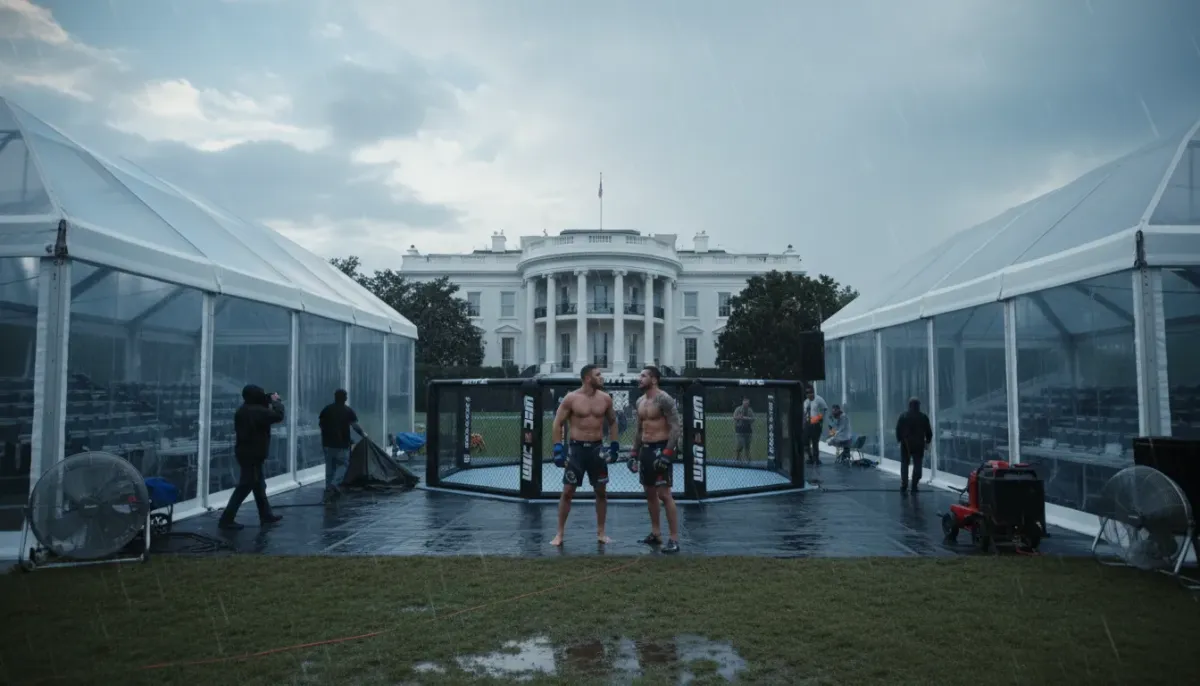
The UFC's historic White House event scheduled for June 14 represents a watershed moment for mixed martial arts promotion. However, this unprecedented opportunity comes with significant logistical challenges, particularly surrounding unpredictable weather conditions on the south lawn of the nation's most iconic residence. Dana White has been candid about the weather-related complexities that typically keep him away from outdoor event promotion, yet he's committed to overcoming these obstacles for this once-in-a-lifetime opportunity.
The Weather Gamble Behind the White House Octagon
Why Dana White Avoids Outdoor Events
Throughout his tenure leading the UFC, Dana White has consistently opted for controlled indoor venues. This preference stems from his deep understanding of how unpredictable environmental factors can disrupt event flow and create complications for fighters, production crews, and spectators alike. Rain, wind, humidity, and even insect populations present genuine challenges when hosting combat sports outdoors.
White has been explicit about these concerns during recent interviews, explaining that outdoor promotion introduces variables that are simply difficult to manage at a professional level. The need to control temperature, lighting, sound quality, and numerous other technical aspects becomes exponentially more complex under open skies. Yet the White House venue represents such a unique and historically significant opportunity that White determined the risks were worth accepting. The UFC has invested substantially in constructing a comprehensive protective structure around the octagon itself, designed to shield both athletes and the competition area from adverse weather conditions.
Building Protection: The Structural Solution
To address environmental concerns, the UFC is implementing an engineering solution specifically designed for this event. The organization is building a complete enclosure and roof structure around the octagon on the south lawn, which should significantly minimize weather-related disruptions during fights.
This structural approach represents a departure from typical outdoor event management. Rather than simply accepting weather as an uncontrollable variable, the UFC is taking proactive measures to create a protected fighting environment. The construction of this protective framework requires extensive planning, materials coordination, and installation expertise. Craig Borsari, who oversees all live production operations for the UFC, has been instrumental in designing and implementing these protective measures, and he's already begun the process of relocating to Washington D.C. to oversee preparations.
Lightning: The Only True Deal-Breaker
Dana White's Uncompromising Stance
When discussing potential weather scenarios that might affect the June 14 event, White demonstrated remarkable determination regarding most meteorological challenges. His position is unequivocal: the event will proceed regardless of rain, snow, or heavy winds. He has stated plainly that these conditions, while uncomfortable and problematic, will not force cancellation or significant delays.
The singular exception to this commitment is lightning. Electrical storms present genuine safety hazards that cannot be overcome through structural protection or sheer determination. If lightning activity develops in the Washington D.C. area during the event, White acknowledges that fights would need to be delayed until the electrical storm passes. This represents the only weather scenario that White considers capable of truly disrupting the scheduled card.
White's unwavering commitment reflects the historic significance of hosting a UFC event at the White House. This is not a typical promotion where rescheduling or modest delays might be acceptable. The convergence of logistics, political considerations, and unprecedented circumstances means that the UFC will work through virtually any environmental adversity short of genuine electrical hazards.
The June Timing Uncertainty
Hosting an outdoor event in Washington D.C. during mid-June introduces inherent unpredictability. Summer weather in the nation's capital can be highly variable, with possibilities ranging from perfectly clear skies to severe thunderstorms. Long-range meteorological forecasting remains imprecise this far in advance, meaning the UFC and White House organizers will essentially be rolling the dice on atmospheric conditions.
This uncertainty is precisely why White has historically avoided outdoor events. The inability to predict or control weather patterns creates genuine stress for promoters and organizers. However, the historic opportunity presented by the White House venue has overridden these traditional concerns. The UFC has essentially decided that the prestige and significance of hosting at the White House justify accepting weather-related risks that would normally be unacceptable.
An Unprecedented Production Timeline
Early Setup Begins in May
The complexity of hosting this event is underscored by an extraordinarily compressed timeline. Unlike typical UFC events that involve setup beginning days before the card, the White House event requires infrastructure construction beginning in May. This represents approximately one full month of advance preparation, during which crews will be loading equipment, constructing the protective structure, and implementing the extensive technical requirements necessary for professional broadcast quality.
Craig Borsari, who manages all UFC live production operations, is essentially relocating to Washington D.C. for an extended period to oversee these preparations personally. His presence on-site demonstrates the magnitude of the undertaking and the importance the organization places on executing flawlessly for this historic event. The staging work on the south lawn requires careful coordination with White House officials and involves complex logistical considerations unique to this venue.
The UFC 327 Preview Strategy
To build anticipation and provide the public with their first comprehensive look at event preparations, the UFC has strategically planned to reveal the complete south lawn layout during the UFC 327 broadcast from Miami. This television reveal will show how the octagon will be positioned relative to the structural protections and viewing areas. Featuring this preview during another major UFC event serves multiple purposes: it builds excitement for the June card, demonstrates the scale of construction efforts, and provides context for the historic nature of the upcoming event.
This two-event promotion strategy effectively creates narrative momentum leading toward June 14, keeping the White House event in the consciousness of MMA fans and casual viewers simultaneously.
Why This Event Justifies the Weather Risk
The White House represents an extraordinarily rare opportunity for the UFC. Hosting a major sporting event at this location transcends typical promotional considerations. The historic significance, political implications, and unprecedented nature of the event create a compelling rationale for accepting weather-related risks that would normally be rejected outright. The investment in protective infrastructure, the extended production timeline, and White's unwavering commitment all reflect an organization treating this as perhaps the most significant card in its history.