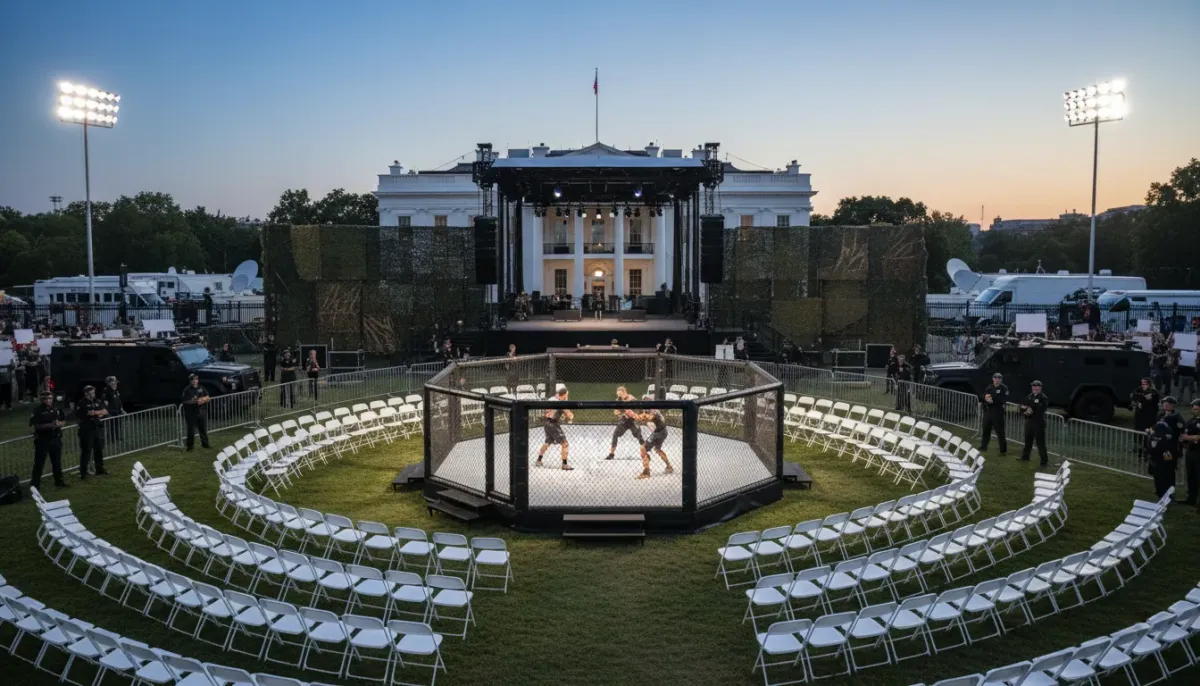
The UFC's decision to host a major event at the White House in June marks a significant moment for mixed martial arts, yet the announcement has sparked considerable debate about whether the timing is appropriate given current global circumstances. The partnership between the sport's premier organization and the nation's highest office represents an unprecedented opportunity, but growing concerns about security and geopolitical stability are prompting serious questions from athletes, commentators, and fans alike.
The High-Profile UFC White House Card: What We Know
Event Details and Scale
The UFC has confirmed plans for an exclusive White House event scheduled for June 14, representing a historic moment for the sport. The card will feature approximately 5,000 invited guests, making it a relatively intimate gathering by major event standards. Notably, the UFC has opted not to sell tickets to the general public, instead relying on an invitation-only model that underscores the event's exclusive nature and controlled access. This decision reflects both the prestige of the venue and the practical constraints of hosting such an event at one of the world's most secure locations.
Unprecedented Security Measures
Organizers have implemented enhanced security protocols that go well beyond standard event procedures. The UFC has partnered directly with federal law enforcement agencies, including the FBI, to coordinate comprehensive safety measures. These protocols involve multiple layers of screening, surveillance, and threat assessment to ensure the protection of all attendees. The collaboration between sports officials and federal agencies demonstrates the seriousness with which organizers are treating the event's security infrastructure, yet these very measures also highlight the elevated risk profile that necessitates such precautions.
Geopolitical Tensions and Safety Implications
The International Context
The timing of this White House event coincides with heightened international tensions. Recent military operations have escalated regional conflicts, and the global community remains closely monitoring how these situations might develop. The backdrop of international instability has added an unexpected layer of scrutiny to the UFC's June event. What might have been viewed as an entirely positive development in any other circumstance is now being examined through the lens of whether proceeding during a period of geopolitical uncertainty is prudent.
Threats on American Soil
Federal law enforcement agencies have issued specific warnings regarding potential security threats to American soil. Intelligence assessments have identified possible retaliatory measures that could be directed at U.S. targets, with particular concern focused on aerial threats in certain regions. These official warnings have naturally influenced how event planners are approaching the White House card. The existence of documented threat intelligence means that organizers cannot simply proceed with business as usual, and every aspect of the event's planning must account for these very real security concerns.
Joe Rogan's Candid Assessment of the Risk Factor
Commentary from the Commentary Booth
Prominent UFC commentator Joe Rogan has expressed notable reservations about the event's timing and security profile. Rogan, who will be calling the fights, has acknowledged feeling nervous about concentrating thousands of people in a single, high-profile location during a period of heightened geopolitical tension. His concerns reflect a practical worry about creating what he views as a potential vulnerability. When asked about the event, Rogan noted that gathering such a significant number of prominent individuals and attendees in one place presents inherent risks that cannot be ignored, describing the scenario as asking for trouble by virtue of the very nature of the gathering.
Mixed Messaging on the Event
Rogan's skepticism about the White House card extends beyond mere logistical concerns. Prior to offering his thoughts on the event itself, he had already criticized the geopolitical decisions that have contributed to the current international climate. His commentary reflects not just personal nervousness but also a broader questioning of whether the decision-making processes surrounding both international affairs and sporting events are adequately weighing potential consequences.
The Broader Conversation Around Event Safety and Symbolism
MMA Community Reaction
Throughout the mixed martial arts community, reactions to the White House event announcement have been decidedly mixed. Some fighters and personalities view the event as a tremendous honor and an opportunity to elevate the sport to new heights of legitimacy and prestige. Others have expressed concerns that prestige alone cannot justify proceeding when legitimate security threats exist. The debate has become a proxy discussion about risk tolerance, with different stakeholders weighing the symbolic importance of the event against practical safety considerations in markedly different ways.
Balancing Opportunity and Caution
The UFC faces a genuine dilemma: canceling or postponing the event would signal concern about current conditions, yet proceeding during uncertain times carries its own set of risks. The organization must weigh the historic significance of hosting fights at the White House against the possibility that the timing might not be optimal. Some observers have suggested that postponement until conditions stabilize might represent the more prudent approach, while others argue that allowing security concerns to dictate the sporting calendar sets a problematic precedent. The resolution of this tension will likely influence how future major events are planned during periods of heightened tension or uncertainty.