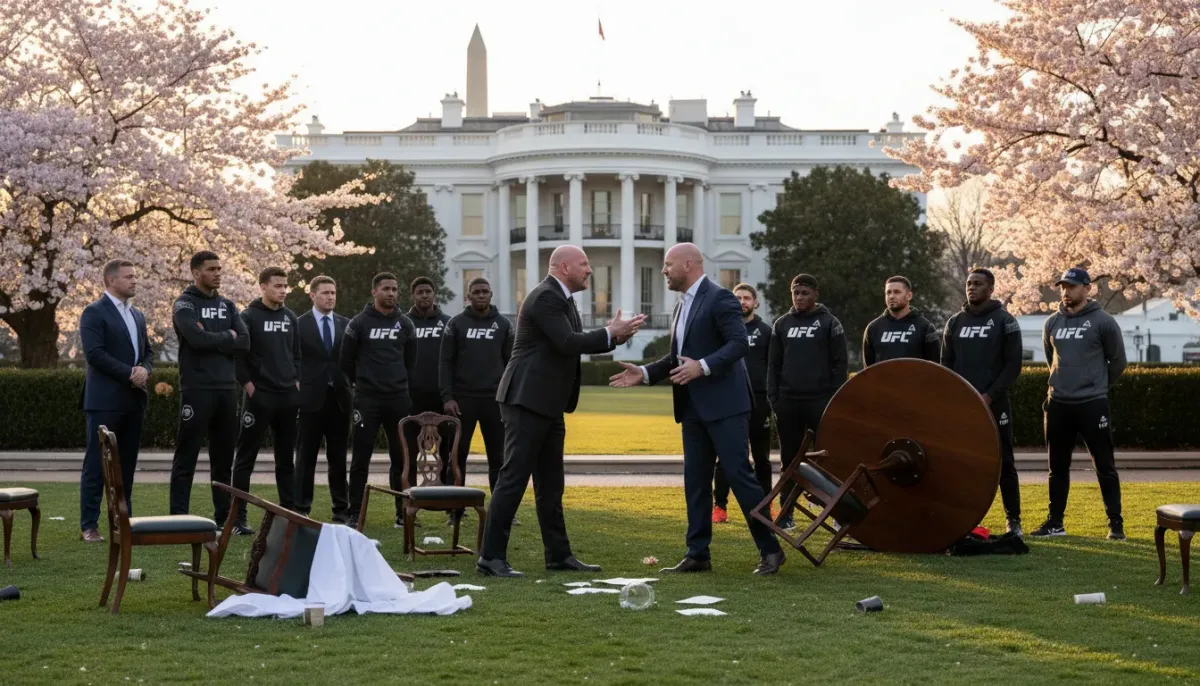
Inside the White House Card: When Prestige Meets Financial Reality
The UFC's first-ever event at the White House promised to be a historic milestone for mixed martial arts. However, behind the polished public announcements lay a complex web of negotiations, strategic positioning, and last-minute scrambling that nearly derailed the entire card. New insights from fight managers reveal that what appeared seamless on the surface was anything but stable during the deal-making process.
When the UFC announced Ilia Topuria versus interim lightweight champion Justin Gaethje as the main event for June 14, the organization presented it as a carefully orchestrated plan. The reality, according to insider accounts, tells a markedly different story—one where timing, financial leverage, and strategic maneuvering determined which fighters ultimately secured spots on this prestigious platform.
How the White House Card Came Together
A Landmark Venue Changes Everything
The White House represents unprecedented territory for combat sports. The venue's historical significance elevated expectations across the sport, attracting top-tier fighters eager for association with such a momentous event. Yet the prestige of location did not automatically translate into attractive financial packages, as subsequent negotiations would demonstrate.
Topuria's main event slot against Gaethje was finalized remarkably late in the process. Negotiations continued through Friday night and into Saturday morning, with final terms agreed just hours before the public announcement during a UFC broadcast. This compressed timeline revealed how fragile the entire arrangement remained until the very last moment.
The Unexpected Main Event Pairing
Justin Gaethje's elevation to headline status surprised many observers. The interim lightweight champion's inclusion represented a significant shift from earlier discussions about potential opponents. The belt unification angle added legitimacy to the matchup, yet the path to this specific pairing involved considerable negotiation and adjustment as other scenarios fell through.
Jon Jones' Pursuit of the White House Spotlight
A Fighter's Public Campaign
Jon Jones, the former light heavyweight and heavyweight champion, made his intentions clear through media appearances and statements. He publicly expressed interest in facing Alex Pereira at the White House, positioning himself as a natural draw for the historic event. However, his vocal pursuit did not translate into actual negotiations that satisfied either party's requirements.
When Numbers Don't Align
According to Jones' manager Malki Kawa, the UFC's initial proposal for his client was insufficient. When asked about inclusion on Wednesday, Kawa stated that the organization presented a number that was immediately rejected. The offer was characterized as small relative to previously discussed financial terms for similar matchups, regardless of the venue's prestige.
After declining the initial bid, Kawa heard nothing further from the UFC. No additional offers materialized, no counter-proposals emerged. The lack of follow-up communication effectively ended Jones' participation before serious negotiations could develop. This outcome underscored a fundamental principle in fight promotion: prestige venue plus high-profile opponent does not guarantee adequate compensation.
Pereira's Pivot to Gane
Rather than facing Jones, Alex Pereira was matched with Ciryl Gane for the interim heavyweight title. This co-main event positioning remained significant within the card's hierarchy, yet it represented a substantial deviation from earlier discussions. The reshuffling of potential matchups illustrated how fluid the card remained throughout the negotiation period.
Strategic Leverage in High-Stakes Negotiations
The Power of Uncertainty
Topuria's manager executed a strategic move weeks before the announcement. Kawa contacted UFC chief business officer Hunter Campbell with a specific question: would Topuria be featured on the White House card? If not, he indicated he would return to Spain rather than remain in the United States waiting for potential offers.
This move created significant financial implications for any future discussions. Should the UFC subsequently contact Topuria's camp with a later offer, bringing the fighter back from Spain would prove considerably more expensive than retaining him in the country. This positioning transformed what might have been routine negotiations into a scenario where the UFC bore additional cost considerations.
Limited Options Create Leverage
By the time serious negotiations accelerated, several high-profile fighters were unavailable. Conor McGregor, Amanda Nunes, and Kayla Harrison were not fighting. Islam Makhachev faced injury concerns. This narrowed roster of available top-tier competitors meant reduced alternatives for UFC matchmakers. When options become scarce, those remaining secure enhanced negotiating positions.
The Islam Makhachev Question
Correcting the Record
Public rumors suggested that a potential Makhachev versus Topuria matchup was cancelled at the last moment, implying a dramatic breakdown. Kawa clarified that this narrative misrepresented what actually occurred. Agreement existed on fighting Makhachev, and agreement existed on facing Gaethje. The sticking point centered exclusively on financial terms.
Makhachev's ongoing injury problems further complicated discussions. These health concerns may have influenced both the fighter's availability and the financial parameters the UFC was willing to offer. The welterweight champion's status remained uncertain throughout negotiations, making him an unreliable option despite theoretical willingness to participate.
The Final Push: Saturday Morning Agreement
Unexpected Complications
A cardiac ablation procedure scheduled for Thursday created an unexpected complication. Kawa's medical procedure forced a pause in active negotiations during a critical window. Contact with Hunter Campbell resumed Friday night at 11:30 PM, restarting discussions that had stalled during the medical procedure.
Around-the-Clock Finalizing
The overnight negotiation session extended through Friday night and into Saturday morning. Terms were refined, financial details were adjusted, and contractual language was finalized across multiple hours of discussion. Agreement on all elements was reached at 11:00 AM Saturday, allowing the announcement to proceed during the UFC broadcast hours later.
This compressed timeline demonstrated how negotiations can accelerate when deadlines approach and venue announcements become imminent. The Saturday morning agreement meant there was no opportunity for additional counteroffers or extended deliberation once terms were presented.
What the Negotiations Reveal About MMA Deal-Making
Public Narrative Versus Private Reality
Dana White's public statements regarding which fighters were