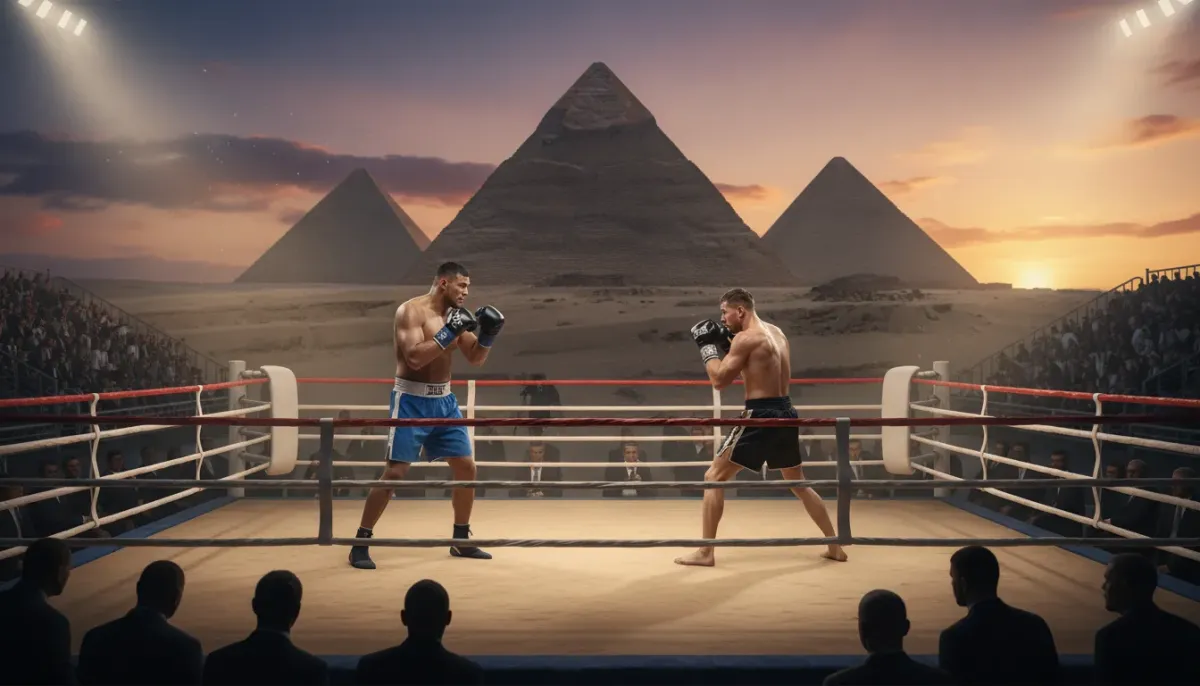
The combat sports world is bracing itself for one of the most unprecedented events in fighting history. This May, two of the most dominant champions across different disciplines will meet in a superfight at one of the world's most iconic locations: the ancient Pyramids of Giza. Oleksandr Usyk and Rico Verhoeven represent the pinnacle of their respective sports, and their collision promises to reshape how we view crossover matches in combat athletics.
Two Combat Legends Collide in an Unprecedented Matchup
The significance of this May bout cannot be overstated. Oleksandr Usyk arrives as an undefeated heavyweight boxing champion, holding the WBC title and maintaining his position as the top pound-for-pound fighter in professional boxing. His technical mastery, defensive prowess, and tactical intelligence have made him virtually untouchable in the squared circle.
On the other side stands Rico Verhoeven, widely acknowledged as one of the greatest kickboxers to ever compete. The Dutch striker has not suffered defeat in over a decade, a testament to his exceptional striking ability, footwork, and ring IQ within the kickboxing sphere. Verhoeven represents the elite of his discipline, commanding respect on the global stage.
What makes this matchup truly revolutionary is the fusion it represents. Rather than two boxers squaring off or two kickboxers battling for supremacy, this bout brings together the very essence of these two distinct combat philosophies. The setting at the Pyramids of Giza elevates the spectacle even further, creating a historic stage for this unprecedented collision of fighting worlds.
First Face-to-Face: What the Staredown Revealed
During the official press conference, Usyk and Verhoeven locked eyes for the first time, engaging in an extended staredown that lasted over a minute. The moment carried significant weight—two apex predators from different domains finally meeting face-to-face.
What made this encounter particularly intriguing was the contrast between the visual intensity and the verbal exchange. While the staredown suggested underlying competitive fire, the subsequent comments from both fighters revealed a different dynamic. Rather than the typical pre-fight hostility, both champions demonstrated genuine respect for one another's accomplishments and the magnitude of the upcoming clash.
The extended gaze between the two suggested the seriousness with which each fighter approaches this opportunity. There were no smiles, no showboating—just two focused athletes acknowledging the historical nature of what they're about to undertake. This moment foreshadowed a rivalry built on mutual recognition rather than personal animosity.
A Respectful Rivalry: Both Champions Show Each Other's Worth
Usyk spoke thoughtfully about Verhoeven during the press conference, describing him as both a great person and a dangerous adversary. The Ukrainian champion revealed something deeper about his mindset, expressing his desire to finally compete on his own terms rather than following external expectations. For years, Usyk has done what others demanded—boxing strategies dictated by advisors and fight strategies prescribed by his team. This matchup represents liberation from those constraints.
Verhoeven's response was equally measured and reflective. Rather than issuing threats, he acknowledged the historic opportunity before them. He emphasized that achieving greatness requires a certain obsession and controlled intensity, whether in boxing, kickboxing, or any combat discipline. More importantly, he celebrated the larger purpose of their collision: bringing new audiences to combat sports by merging two distinct worlds.
The mutual admiration between these champions was evident. Both understood they were participating in something larger than personal glory. They recognized that their shared willingness to cross traditional boundaries would expand the reach and appeal of combat sports globally. This philosophical alignment, despite being opponents, created an atmosphere of collaborative history-making rather than bitter competition.
The Confidence Factor: Predicting Victory
While both fighters maintained respect throughout the press conference, Verhoeven didn't shy away from projecting confidence in his abilities. He made a bold prediction about the outcome should he land his signature strikes cleanly. The Dutch kickboxer acknowledged the physical differences between the competitors, noting that he represents a naturally developed heavyweight while Usyk operates as a built-up cruiserweight moving up in weight class.
This distinction matters significantly in combat sports. Verhoeven's point about carrying approximately twenty kilograms of additional natural weight wasn't arrogance—it was tactical analysis. Heavyweight fighters conditioned from their natural weight class often possess advantages in power generation and physical endurance at that weight tier. Verhoeven's confidence stemmed from understanding these biomechanical realities rather than mere bravado.
Usyk, meanwhile, expressed his perspective through the lens of finally doing what he wanted rather than what he needed to do for others. This subtle shift suggested the Ukrainian champion possesses his own quiet confidence, rooted not in predictable outcomes but in the freedom to compete on his terms. Both fighters carried themselves with the assurance befitting their respective dominance.
Why This Fight Transcends Traditional Combat Sports Boundaries
Beyond the individual accomplishments of each fighter, this superfight represents something transformative for combat sports as a whole. Verhoeven articulated this vision clearly, emphasizing that their collision brings fresh audiences to boxing and kickboxing simultaneously. Neither fighter viewed this as a threat to their respective disciplines but rather as an expansion opportunity.
The narrative both champions embrace is one of breaking barriers. Combat sports have traditionally operated in silos—boxing exists in one ecosystem, kickboxing in another, with limited meaningful crossover. This May bout challenges that compartmentalization. It positions combat sports not as competing entertainment products but as a unified global phenomenon with multiple valid pathways to excellence.
For fans, this means exposure to two distinct fighting philosophies colliding at the highest level. Boxers will witness elite kickboxing footwork and distance management. Kickboxing enthusiasts will see boxing's defensive mastery and ring generalship. The result promises to be intellectually stimulating for serious combat sports analysts while remaining spectacularly entertaining for casual viewers. By hosting this event at one of humanity's most iconic monuments, the organizers have signaled that this fight transcends sports—it's a cultural moment.