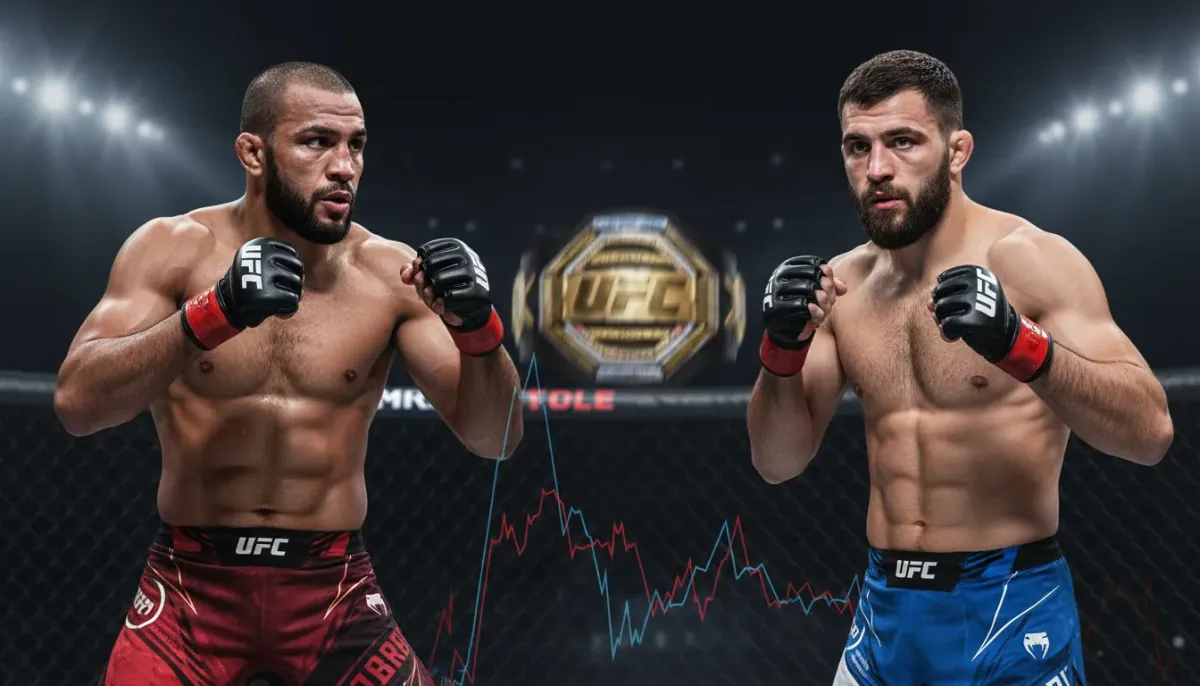
The question lingers in MMA circles like an unresolved tension: Will Arman Tsarukyan ever get his shot against Ilia Topuria? The featherweight landscape has become increasingly complicated, with Tsarukyan positioning himself as the obvious contender while Topuria consistently signals interest in pursuing bigger opportunities elsewhere. A recent incident at RAF 6, where Tsarukyan assaulted an influencer, only added fuel to an already contentious debate about whether this matchup will ever materialize. The answer reveals something uncomfortable about how championship boxing and MMA have evolved in the modern era.
The McGregor Effect on Championship Ambitions
How One Fighter Changed Everything
Understanding Topuria's reluctance to fight Tsarukyan requires examining a fundamental shift in how fighters approach titles. Before Conor McGregor entered the championship conversation, title holders were expected to defend their belts repeatedly, building legacies through successful defenses. McGregor shattered this paradigm. Instead of accepting the traditional champion's burden, he pursued multiple titles across different weight classes, reshaping what fighters now view as the optimal career path.
This transformation wasn't merely tactical—it was cultural. McGregor demonstrated that the financial and prestige rewards of chasing second belts vastly outweighed the risks of defending against skilled contenders. Today, the moment a fighter captures a championship, discussions immediately pivot to their next divisional conquest. The structure McGregor created has become the blueprint, and nearly every elite champion has adopted it.
Topuria's Clear Blueprint
Topuria's career trajectory exemplifies this new orthodoxy. He captured the featherweight title and, having completed his championship objectives at 145 pounds, views moving to lightweight as the logical next step. One or two title defenses followed by a shift upward remains his stated preference. Following this strategy, a potential welterweight challenge against Islam Makhachev would represent the kind of high-profile matchup that justifies promotional backing and financial rewards.
Tsarukyan simply does not fit into this lucrative roadmap. He represents what Topuria has already conquered, not what lies ahead. From Topuria's perspective, accepting such a fight would mean accepting significant risk for minimal reward—a calculation that runs counter to every incentive structure currently governing elite MMA competition.
Why Topuria Isn't Interested (And Why He Doesn't Need to Be)
The Risk-Reward Calculation
Topuria's reluctance becomes logical when examined through simple risk-reward analysis. Tsarukyan represents an incredibly difficult opponent in his prime, capable of pushing any featherweight to his absolute limits. Yet success against him offers minimal additional leverage for Topuria's career trajectory. He gains no path to financial windfall, no second belt, and no boxing opportunity—the three elements that actually motivate his decision-making.
Compare this to Jon Jones's final strategic decisions, where the former champion actively avoided the most dangerous opponents available once title pursuit became secondary to financial optimization. This approach isn't ethically complicated when viewed pragmatically: if the promotional structure rewards avoiding difficult fights, fighters will avoid them. The UFC has created these incentives, and champions simply navigate accordingly.
What Topuria Actually Wants
Topuria's public comments reveal his actual priorities. His previous dismissal of Max Holloway as a priority opponent, followed by reluctant acceptance only after overwhelming public pressure, demonstrates how he allocates his focus. When Topuria calls out opponents, they're invariably higher-profile targets—Conor McGregor chief among them—rather than the next logical challenger to his crown.
Moving up to welterweight to challenge Islam Makhachev represents the kind of high-stakes, financially rewarding opportunity that drives his decision-making. This trajectory offers dual benefits: victory secures a second elite title, while defeat still carries prestige against an undisputed pound-for-pound great. Fighting Tsarukyan offers neither advantage.
Tsarukyan's Self-Inflicted Problems
Incidents That Give the UFC Cover
Tsarukyan's recent behavioral issues complicate his championship narrative. The headbutt against Dan Hooker and the assault on a wrestling influencer at RAF 6 provide the UFC with convenient justification for deprioritizing him. While these incidents alone may not eliminate him from title consideration, they supply perfect cover for the promotion to pass him over without facing external criticism.
The UFC views such incidents as evidence of poor judgment and unprofessionalism. Whether or not the promotion uses these as genuine reasons or merely convenient excuses becomes somewhat irrelevant—the practical effect remains identical. Tsarukyan has handed his employers ammunition they can deploy whenever convenient.
The Promotion's Lack of Support
More fundamentally, the UFC has demonstrated limited interest in building Tsarukyan as a championship contender. Had promotion leadership viewed him as the inevitable next challenger, they would have orchestrated his path accordingly—perhaps arranging interim title opportunities against lower-ranked threats or strategically eliminating other contenders. Instead, Tsarukyan remains in limbo while others advance.
This inaction speaks volumes. The UFC's booking decisions reveal institutional priorities, and Tsarukyan currently sits outside their preferred championship narrative. Without promotional support, even the most talented fighter struggles to force his way into title conversation against an uninterested champion.
What Would It Take for This Fight to Happen?
The UFC's Role as Gatekeeper
Realistically, Topuria will not voluntarily accept this fight. The only scenario enabling this matchup requires the UFC to mandate it—to unilaterally decide that championship obligations supersede fighter preferences. This has become increasingly unlikely in modern MMA, where fighter leverage continues growing and promotional control diminishes.
Even if Tsarukyan continued dominating competitors, securing an undeniable claim to a title shot, Topuria could still refuse or demand astronomical compensation. The UFC would then face a choice: enforce the matchup they clearly don't want, or accept Topuria's departure to welterweight. Historical precedent suggests they'll choose the latter.
The Bleak Outlook
The most probable scenario unfolds straightforwardly: Topuria defeats Justin Gaethje and moves to lightweight. Within this timeframe, Tsarukyan either captures an interim title by defeating lower-ranked contenders or begins aging out of championship relevance. By the time a potential matchup could theoretically occur, Topuria has already pursued higher-profile objectives elsewhere.
This outcome reflects broader structural changes in elite MMA competition. Dreams of "perfect matchups" increasingly collide with fighter economics and promotional priorities. Sometimes, the fight that should happen simply never does.
The Welterweight Division: A PPV in Itself
Why 170 Pounds is Currently on Fire
While contemplating unfulfilled featherweight promises, welterweight demands attention for entirely different reasons. The division has entered a genuinely compelling phase, with new championship dynamics and multiple elite contenders positioning themselves for title opportunities. This represents the kind of divisional depth that could sustain its own premium event.
Unlike most weight classes with one or two standout names surrounded by secondary talent, welterweight currently offers extraordinary breadth. Championship composition has shifted recently, creating organic narratives around succession and legitimate contention across multiple athletes simultaneously.
A Hypothetical Welterweight Card
An all-welterweight premium event would feature Islam Makhachev defending his title against Ian Machado Garry, with Michael Morales versus Carlos Prates as co-main event. Kamaru Usman and Belal Muhammad could provide the feature bout, while Joaquin Buckley faces Sean Brady, and Gabriel Bonfim opens the main card. This lineup demonstrates the division's remarkable talent concentration—and this represents merely the highlighted competitors. Numerous other elite 170-pounders remain available but unstated, further illustrating how saturated this weight class currently is with legitimate threats and emerging challengers.