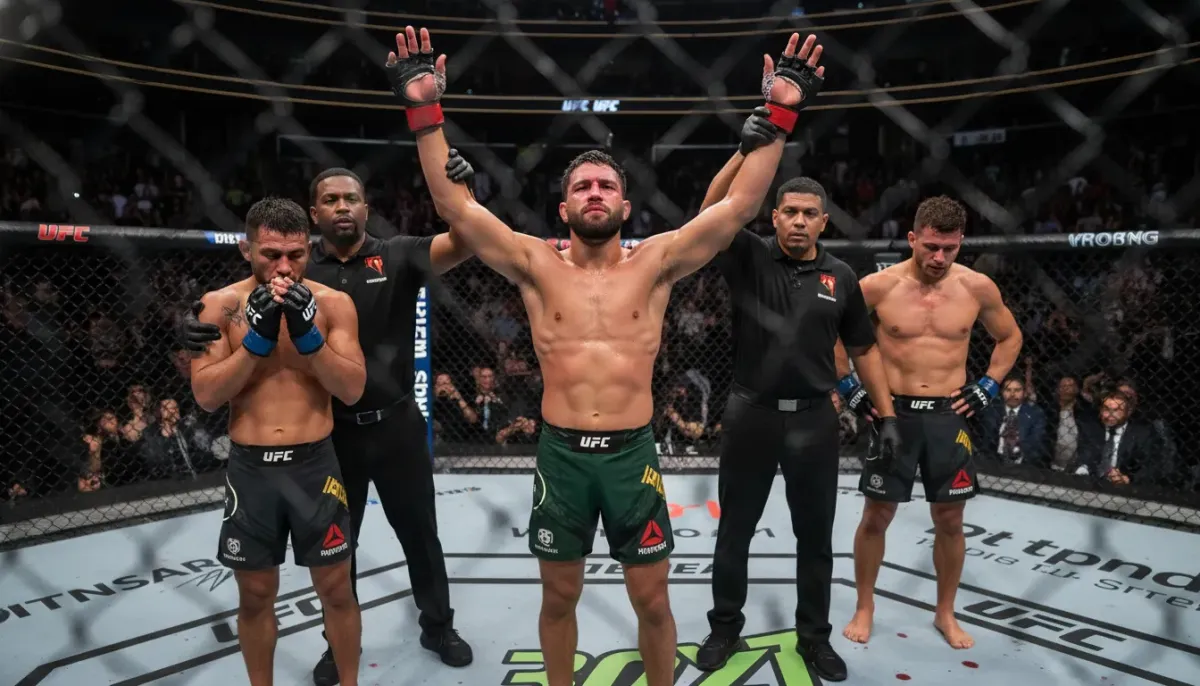
UFC 327 showcased a wide range of performances, but one matchup stood out for its lack of excitement rather than its excellence. The bout between Dominick Reyes and Johnny Walker delivered a result that satisfied the judges while disappointing the live audience and broadcast commentators alike. This clash became a cautionary tale about defensive fighting strategies overriding fan engagement.
The Fight Nobody Wanted to Watch
A Disappointing Spectacle in Miami
The Miami crowd made their sentiment crystal clear during the Reyes-Walker encounter, with audible chants of discontent echoing through the venue. The audience reaction was unmistakable, featuring sustained boos and expressions of frustration that transcended typical sporting displeasure. High-profile analysts watching from the broadcast booth shared the crowd's sentiment, with commentators openly acknowledging the fight's shortcomings.
Joe Rogan offered a blunt assessment, while Daniel Cormier drew unfavorable comparisons to historically criticized UFC decisions, specifically referencing the infamous Esparza versus Namajunas rematch—a bout routinely ranked among the organization's least entertaining performances. These observations from respected voices in the sport underscored how unusual it was for such prominent figures to express such candid disapproval during a televised event.
A Cautious Approach from Both Competitors
Neither Reyes nor Walker demonstrated willingness to implement aggressive strategies that might create openings for significant counterattacks. Both fighters appeared content to prioritize defensive positioning over offensive momentum. This mutual hesitancy created a psychological stalemate where each competitor feared the consequences of taking calculated risks more than they desired competitive advantage.
Numerous opportunities emerged throughout the contest where either fighter could have elevated their offensive output, yet both consistently chose measured approaches instead. The fear of counter-striking appeared to overshadow the pursuit of victory, resulting in a technical standoff that lacked the intensity fans anticipated.
Round-by-Round Breakdown
First Round - Walker Sets the Tone
Walker initiated his game plan with methodical leg kick attacks targeting Reyes' lead leg. Within two minutes, visible bruising appeared on Reyes' foundation, suggesting Walker's early strikes were connecting effectively. Reyes countered by maintaining an unusually wide stance while returning fire with hand combinations, attempting to keep his opponent at manageable distance.
The round's most significant moment came near its conclusion when Walker exploded forward with a stiff combination that clearly registered with Reyes. The Brazilian's momentum seemed to shift following this exchange, and Reyes responded with a well-timed left jab that briefly stunned his opponent. However, Walker's constant circular movement prevented Reyes from developing sustained offensive sequences despite these momentary successes.
Middle Rounds - The Staring Contest Intensifies
As the fight progressed, Walker remained more active in terms of strike frequency, though his combinations remained poorly connected and sporadic. Reyes struggled to maintain offensive volume against his opponent's constant movement and footwork. The fighters exchanged single strikes rather than engaging in sustained exchanges, creating a rhythm that felt entirely disconnected from competitive MMA.
The atmosphere in the arena deteriorated noticeably as the pattern repeated without variation. What began as mere inactivity had solidified into an apparent strategy of mutual avoidance. The crowd's frustration grew proportionally with each passing minute of defensive posturing from both competitors.
Final Round - Running Out the Clock
The third round offered no departure from the established pattern. Sporadic leg kick exchanges represented nearly the entire offensive output, with neither fighter attempting combinations, takedowns, or any tactics that might demonstrate genuine competitive intent. The fighters appeared content to allow time to expire without escalating engagement, resulting in a bout that concluded exactly as it began—devoid of meaningful action.
The Official Decision and Its Implications
Split Decision Result
The judges rendered a split decision favoring Reyes, with two officials scoring the bout 29-28 for the American while the third judge awarded identical scoring to Walker. This narrow verdict reflected the competitive yet thoroughly uninspired nature of the matchup. Neither fighter earned clearly dominant rounds, yet the scoring system still necessitated a winner declaration.
Career Context for Both Fighters
For Reyes, the victory provided redemption following a knockout loss to Carlos Ulberg in his previous outing. The win improved his record to 4-1 across his last five competitions, suggesting a recovery trajectory after the previous setback. Conversely, Walker's loss dropped his recent record to 1-4 over the same five-fight span, representing a troubling decline that raises questions about his organizational future.
The contrasting narratives proved significant: Reyes salvaged momentum with a winning decision, while Walker faced mounting pressure from persistent losses that threatened his UFC tenure.
What Went Wrong? Analyzing the Performance Gap
Risk Assessment and Conservative Fighting
Both competitors prioritized avoiding mistakes over actively seeking victory, implementing defensive mentalities that prioritized safety above engagement. The psychological threat of significant counterattacks created an invisible barrier preventing either fighter from testing offensive boundaries. This tactical hesitation represented the fundamental difference between technical competence and entertaining competition.
The Entertainment Factor vs. Technical Merit
The result highlighted a critical disconnect in modern MMA: judges evaluated the bout using traditional scoring criteria, but the performance failed to satisfy entertainment expectations. Seasoned commentators openly expressed their dissatisfaction, acknowledging that a technical